How Much Should I Feed My Cat? Calories and Portions

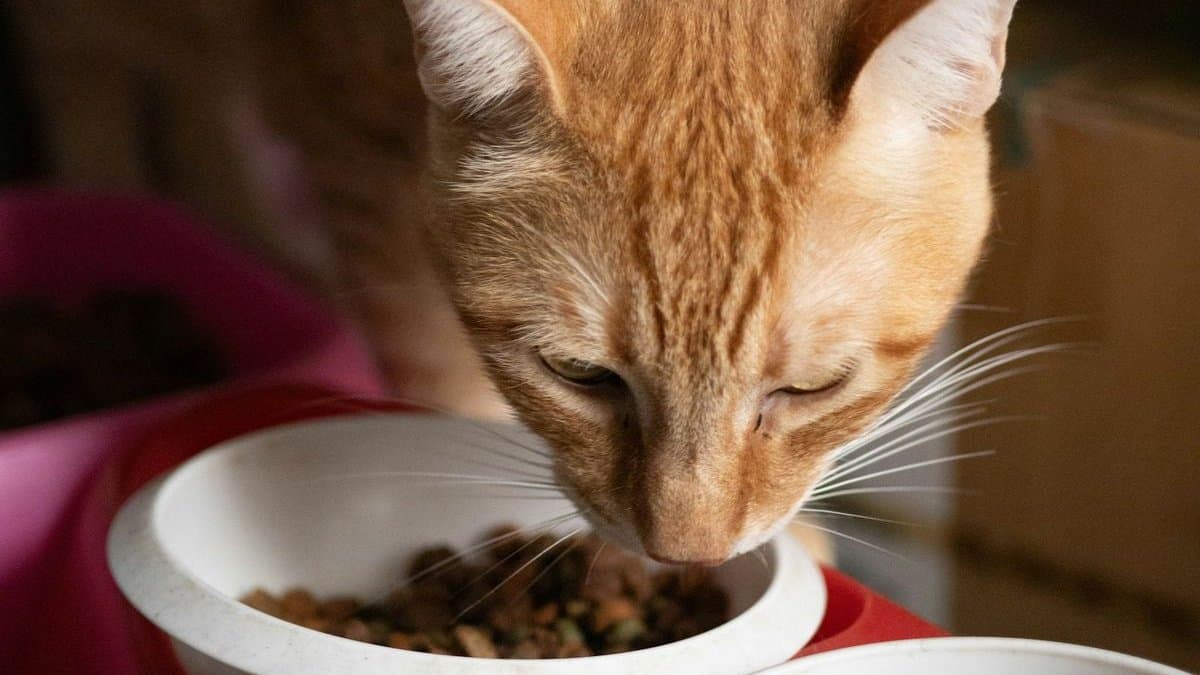
There is no single calorie allowance that suits every cat. Start with your cat's weight, body condition, life stage and health, then use the food's calorie label to turn an appropriate daily target into measured portions. This guide provides general information, not a veterinary-reviewed or individualized feeding plan. Your veterinarian should set the target if your cat needs to lose or gain weight, is growing, is pregnant or nursing, or has a medical condition.
The Short Answer: How Many Calories Does a Cat Need?
A healthy adult's calorie needs depend on more than its weight. Two cats of the same size can need different amounts because of activity, neuter status, body composition and other factors. Merck Veterinary Manual: nutritional requirements explains that calculated requirements are starting estimates, not fixed prescriptions. A universal 200 to 250 kcal target is not appropriate for every adult cat.
On a pet-food label, a kilocalorie (kcal) is the same food-energy unit commonly called a Calorie. Count the whole day's intake: dry food, wet food, treats, toppers and any food used to give medication. Once you have an appropriate target, the amount to put in the bowl depends on the particular product, not just whether it is wet or dry.
How to Calculate Calories From Your Cat's Weight
The following calculation illustrates maintenance feeding for a healthy adult already at an appropriate weight. It is not a weight-loss calculator. For an overweight or underweight cat, ask your veterinary team which target weight, calorie allowance and diet to use rather than plugging its current weight into a generic formula.
Step 1: Calculate the Resting Energy Requirement (RER).
RER estimates the energy needed by a healthy, fed animal at rest in a comfortable-temperature environment. Merck gives this equation, which can be used across body weights:
RER (kcal/day) = 70 x (body weight in kilograms)^0.75
For a 4.5 kg adult cat, that is about 216 kcal/day. RER is not automatically the amount to feed. Merck also describes the approximation 30 x body weight in kg + 70, but only for animals over 2 kg and under 45 kg. The two equations produce slightly different estimates; this example uses the exponential equation consistently.
Step 2: Multiply by a life-stage factor to get the Maintenance Energy Requirement (MER).
MER estimates daily energy needed to maintain weight. Merck's daily maintenance-energy table lists these starting factors for healthy adult cats:
Neutered or spayed healthy adult: RER x 1.2.
Intact healthy adult: RER x 1.4.
Obesity-prone healthy adult: RER x 1.0.
These are alternative starting estimates, not factors to multiply together. For the 4.5 kg neutered adult in our example, 216 x 1.2 gives approximately 260 kcal/day. That is an illustration, not a recommendation for every 4.5 kg cat. The right amount may be higher or lower and needs checking against the individual cat's weight, body condition and muscle condition.
Weight loss is a separate treatment plan. An obesity-prone maintenance factor does not prescribe a calorie deficit for a cat that already has obesity. Your veterinarian should select the food, calorie target and monitoring schedule. Simply feeding much less of an ordinary maintenance food can also reduce essential nutrient intake; a purpose-formulated therapeutic diet may be needed.
Factors That Change How Much Your Cat Should Eat
Age
Kittens need food formulated for growth and enough energy to support it. Merck lists 2.5 x RER as a starting estimate for healthy kittens, not 2.5 times an adult's calories per pound. Needs change as a kitten grows, so an adult maintenance allowance is not a suitable shortcut. AAHA's age-specific diet guidance recommends a growth diet until skeletal maturity, typically around one year for cats, with individual assessment.
Older cats do not automatically need fewer calories. Some less-active mature cats need a lower intake, while some senior cats need more because they digest food less efficiently or are losing weight and muscle. AAHA and AAFP guidance for mature and senior cats emphasizes individual adjustment. AAFCO does not define a separate senior nutrient profile, so a senior label alone does not establish that a food is right for your cat. Unexplained weight loss needs a veterinary assessment, not an automatic switch to a lower-calorie food.
Activity Level and Indoor vs. Outdoor
Activity matters, but indoor or outdoor status does not determine an exact calorie allowance. Watch the individual cat's weight and condition rather than assuming every indoor cat needs restriction. Play sessions and appropriate food puzzles can make mealtimes more engaging; food used in puzzles still comes out of the daily portion. Health problems and mobility limitations also affect what activity is appropriate.
Spayed and Neutered Cats
Energy needs often fall after neutering, which is one reason Merck uses a lower adult maintenance factor for neutered cats than intact cats. Weight gain is not inevitable, and there is no single percentage reduction that fits every cat. Review portions with your veterinarian after surgery and monitor body condition. A kitten that has been neutered still needs a diet appropriate for growth.
Pregnant and Nursing Cats
Pregnancy and milk production are different stages with different demands. VCA's pregnancy-feeding guidance recommends monitoring body condition, avoiding both overfeeding and underfeeding, and using an appropriate growth or reproduction diet. Multiple measured meals can help meet needs during pregnancy. Unlimited food is not a blanket recommendation for every pregnant cat.
During nursing, needs depend on litter size and stage of lactation and can be much higher. VCA's nursing-cat guidance describes frequent meals or free-choice access as options, with the amount offered and eaten measured. Your veterinarian should tailor that approach to the mother and litter and adjust it as kittens wean. Do not apply the adult maintenance examples above to a pregnant or nursing cat.
Dry Food vs. Wet Food: The Calorie Difference
Dry food generally provides more calories per gram as fed because it contains less water. However, calorie content varies considerably between recipes and package sizes. There is no reliable universal number of cups or cans to feed. Check the actual label each time you change products.
AAFCO's guide to calorie statements explains the kcal/kg figure and the familiar-unit figure, such as kcal per cup or can. The kcal/kg value is for the food as fed, including its moisture. Divide it by 1,000 to find kcal per gram.
Here is a separate portion-size example, using invented food labels for illustration. Suppose your veterinarian sets a daily allowance of 240 kcal and you reserve 12 kcal for suitable treats. That leaves 228 kcal for complete-and-balanced food:
Dry food labelled 4,000 kcal/kg supplies 4 kcal per gram. For dry food alone: 228 / 4 = 57 grams per day.
Wet food labelled 90 kcal per can: 228 / 90 is about 2.53 cans per day. Use the actual can size and calorie statement.
For a mix of those two foods: one 90-kcal can plus 34.5 grams of the dry food supplies 228 kcal. Adding the 12-kcal treat allowance brings the total to 240 kcal.
These are three alternative ways to supply the same food allowance, not amounts to feed together. Choose foods appropriate for your cat's life stage and any prescribed diet. If a new product has a different energy density, recalculate instead of keeping the same scoop or can count.
Wet food can contribute water to a cat's intake, but it does not automatically cause weight loss or treat urinary disease. Fresh drinking water should always be available. If your cat has a urinary, kidney or other medical condition, discuss the actual diet with your veterinarian rather than choosing by moisture content alone.
How to Read the Feeding Chart on the Bag
Treat package directions as a starting point, not a guaranteed requirement or a universal maximum. They can differ from what an individual cat needs. Do not automatically subtract 10 or 20 percent from the label, and do not assume manufacturers intentionally inflate feeding amounts. Compare the suggested amount with your veterinary feeding plan and the cat's weight trend.
AAFCO's label-reading guide distinguishes feeding directions, calorie content and the nutritional adequacy statement. Look for a complete-and-balanced food appropriate for the life stage. A treat or product labelled for intermittent or supplemental feeding is not a complete everyday diet unless used under veterinary direction.
Check whether the amount is per day or per meal, and whether it assumes dry food alone or mixed feeding.
Check the units: grams, cups, cans and pouches are not interchangeable. A cup is a volume measure, not a fixed weight of kibble.
Count what is actually eaten, including treats and any access to another pet's food. Ask the manufacturer for missing calorie information.
The Cat Obesity Epidemic
In APOP's 2022 clinical survey, 61% of cats evaluated by veterinary professionals in the United States were classified as overweight or having obesity. That describes the cats assessed in that survey; it is not a current census of every US cat. Later opinion surveys measure owners' perceptions and should not be treated as the same kind of prevalence estimate.
Excess body fat is a health concern, not a character judgment about the cat or its owner. Veterinary resources associate it with problems including diabetes and osteoarthritis. Causes and management are multifactorial, so there is no single feeding habit that explains every case. An individualized plan is more useful than blaming free-feeding alone.
Body Condition Scoring: Is Your Cat at a Good Weight?
Body condition scoring assesses body fat, while muscle condition scoring assesses muscle loss. They are different checks: a cat can have excess fat and still lose muscle. On the WSAVA nine-point cat body-condition chart, a score around 4 or 5 is typically ideal, although your veterinarian may set a different goal for an individual cat, particularly an older one.
Ribs should generally be easy to feel beneath a small covering of fat; pressing through a thick layer is different from gentle palpation.
Viewed from above, the waist behind the ribs should be visible. Use touch as well as sight, especially with a long-haired cat.
Look at the whole body, not just a hanging belly pouch or the number on the scale. Have your veterinary team demonstrate the assessment and check muscle condition too.
If your cat is above or below its appropriate condition, ask for a plan rather than using the score to choose your own calorie cut. In VCA's guide to a supervised cat weight-loss plan, diet selection, food quantity and regular reassessment are all part of treatment. Severe restriction or rapid loss can cause harm, and reducing ordinary food substantially may leave nutrient intake inadequate.
How Many Meals Per Day?
There is no single best meal count for every cat. Many cats prefer several small meals, but the schedule needs to work with their age, health, food type and household. VCA's general cat-feeding guidance recognizes both meal feeding and grazing, with individual calorie intake and activity taken into account.
Divide the daily allowance into suitable meals rather than adding extra food each time the cat asks. A timed feeder can help distribute measured portions. Free-choice feeding can work for some cats, but unlimited top-ups make intake harder to monitor, particularly in multi-cat homes. If you allow grazing, measure the day's supply and leftovers. Follow the food manufacturer's storage instructions; wet food should not be left out indefinitely.
Use a Kitchen Scale, Not a Measuring Cup
A gram scale makes small portion adjustments more repeatable than an estimated scoop. VCA's weight-loss guidance recommends weighing food rather than relying on cups. Put the empty bowl on the scale, zero it, then weigh the planned portion. Use the label's kcal/kg figure to convert grams to calories, or ask your veterinary team to give the daily allowance in grams.
Write down the day's allowance so everyone in the household knows what has already been offered. If you weigh leftovers to estimate intake, use a consistent routine and account for spilled food or other pets eating from the bowl. Measuring is useful, but it does not replace checking whether your cat is maintaining an appropriate weight and condition.
Treats: Keep Them Under 10% of Calories
WSAVA's cat-treat guidance recommends keeping treats under 10% of daily calories. This is a limit, not a target to fill. In the 240-kcal example above, 12 kcal of treats is 5% of the total and is included within the allowance, not added on top.
Count toppers and table food too. Do not assume a piece of chicken or fish is lower in calories than a commercial treat; size, preparation and calorie content matter. Treats should not displace the complete-and-balanced diet. Cats with allergies or a prescribed therapeutic diet may need specific treats or none of the usual extras, so check with the veterinary team.
When to Talk to Your Vet About Weight
Your cat is gaining or losing weight unexpectedly, losing muscle, drinking more, vomiting or having diarrhea.
You are considering weight loss, or your cat is underweight or consistently above its appropriate body condition.
Your cat is growing, pregnant, nursing, or has a medical condition that could change its diet or energy needs.
Your cat is eating much less than usual or has stopped eating, including after a food change.
Contact a veterinarian promptly if your cat stops eating; do not wait for a scheduled weigh-in or try to make it accept a new food by withholding meals. Cornell's guidance on loss of appetite warns that not eating can seriously affect an adult cat in as little as 24 hours, and very young kittens can deteriorate faster. Reduced intake may signal illness and can be associated with dangerous fatty liver disease, particularly in overweight cats.
For intentional weight loss, your veterinarian should choose a safe rate and arrange follow-ups. Do not crash-diet a cat, skip meals as a weight-loss technique, or use a maintenance-calorie example as a treatment plan. Record food intake and weight as instructed, and report reduced appetite or other changes promptly.
Putting It All Together
Choose an appropriate complete-and-balanced food, agree on a daily calorie target, and use the product's actual calorie density to measure portions. Include treats in that total. Reassess weight, body condition and muscle condition with your veterinary team, and adjust for the individual cat rather than chasing a universal number. The goal is a sustainable feeding routine that meets nutritional needs, not the smallest possible portion.
Sources
Sources checked October 14, 2026. Links throughout the guide identify the veterinary manuals, professional guidelines and other primary resources supporting the relevant sections. This source-based editorial fact-check is not a clinical review by a veterinarian.
Keep reading
If you found this helpful, you might also like our guides on when to switch kitten to adult food, how diet links to hairballs and how diet affects lifespan.
Comments (0)
Join the conversation
Sign up to share your thoughts.
Loading comments...