Is Your Cat Food Safe? Recalls, Raw Diets, and Label Truths
Recalls, raw diets, byproducts, and the one label claim that actually means something

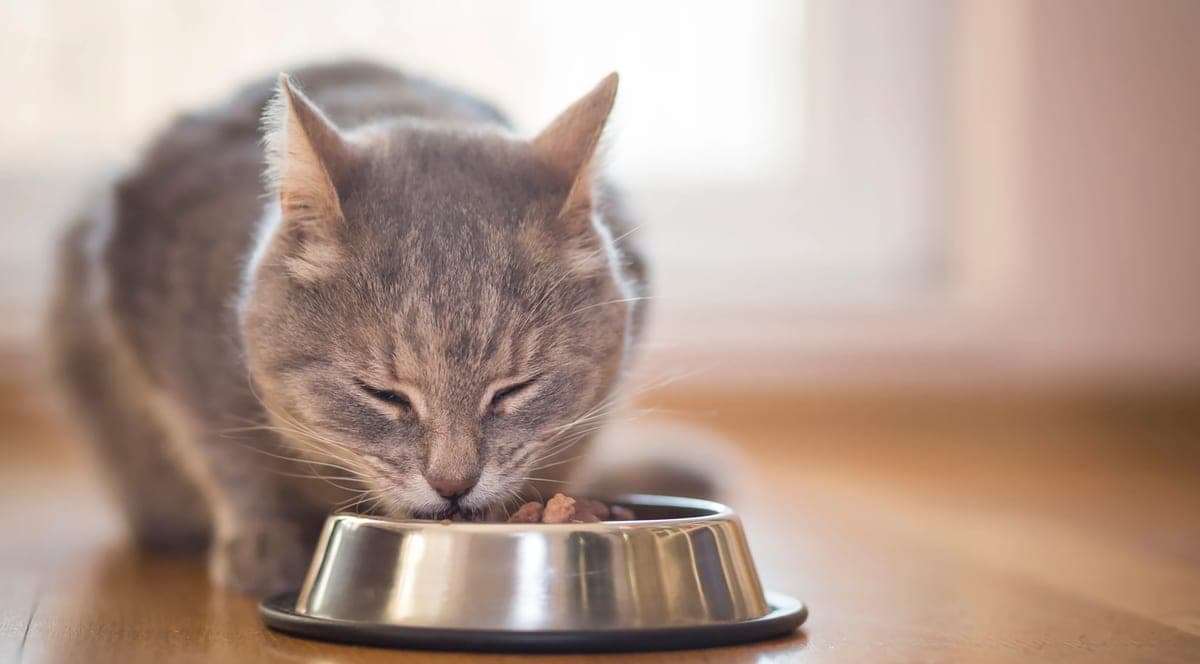
If you have ever stood in the pet food aisle and felt a little overwhelmed, you are in good company. There are dozens of brands, a wall of claims like grain-free and human-grade and natural, and a steady drip of recall headlines that make you wonder whether the bag you are holding is actually safe to pour into your cat's bowl.
I have spent a lot of time digging into how cat food is regulated, what goes wrong when it goes wrong, and which of the things people worry about are real risks versus marketing noise. The honest answer is that most commercial cat food is safe, most of the time, but there is a lot more going on under the label than you might think, and a few specific things are worth paying attention to.
Let us walk through the recalls, the raw diet debate, the byproduct question, the grain-free controversy, and what the label on the bag actually tells you. By the end you should have a clearer picture of what is safe, what is hype, and what to watch for.
How cat food is actually regulated
Cat food in the United States is regulated by a patchwork of bodies, and understanding that patchwork is the first step to understanding why problems slip through. The Food and Drug Administration regulates pet food as animal feed under the Federal Food, Drug, and Cosmetic Act. The FDA sets rules about what can go into pet food, how it is processed, and what counts as adulterated or misbranded. But the FDA does not approve pet foods before they hit the market. There is no pre-market review process the way there is for human drugs.
On top of the FDA, each state has its own feed laws, and most states adopt a version of the model regulations written by the Association of American Feed Control Officials, or AAFCO. AAFCO is not a government agency and does not have regulatory power itself. It is a voluntary membership organization of state, federal, and international feed officials. Its model regulations define ingredient names, label requirements, and what a company has to prove to call a food 'complete and balanced.' Most states adopt those models into their own laws, so for practical purposes AAFCO's rules are the standard.
The key thing to understand is that the system is largely reactive. A company formulates a food, puts it on the market, and the regulatory bodies step in when a problem is reported or detected through sampling. There is no inspector tasting every batch before it ships. This is why recalls, when they happen, often come after the food is already on shelves and sometimes after animals have already gotten sick.
Recalls happen more than you think
If you want to know how often cat food safety actually fails, the recall record is the most honest source we have. And it is more active than most people realize.
In late 2023, Mid America Pet Food issued a voluntary recall that expanded multiple times to cover all the pet food brands it manufactured with a best-by date before October 31, 2024. That included Victor, Eagle Mountain, Wayne Feeds, and two varieties of Member's Mark pet foods, sold nationwide. The reason was Salmonella contamination. Seven people reported Salmonella infections linked to the products. The company later settled a class action lawsuit for $5.5 million. This was not a small boutique brand. Victor is a widely sold premium brand.
Raw pet food has been the source of an even more alarming string of recalls. In September 2024, the FDA issued an advisory telling people not to feed certain lots of Darwin's Natural Pet Products due to Salmonella and Listeria monocytogenes contamination. Five FDA samples tested positive for Salmonella and a sixth for Listeria. The manufacturer refused to recall, and the FDA issued another advisory in 2025 for more lots from the same manufacturer, this time for E. coli O157:H7 and Salmonella.
Then there is the one that got a lot of attention. In December 2024, a house cat in Oregon died from H5N1 avian influenza after eating raw frozen pet food made by Northwest Naturals. The Oregon Department of Agriculture confirmed that samples of the 2-pound turkey recipe tested positive for the highly pathogenic H5N1 strain. Northwest Naturals recalled the affected batch. It was the first known case in the United States of a cat dying from bird flu traced to raw pet food. Since the H5N1 outbreak in dairy cattle began in March 2024, dozens of cats have contracted the virus, and raw food has been a documented transmission route.
The point of listing these is not to scare you. It is to make a specific point: recalls are not rare, they affect both budget and premium brands, and the companies involved are not always quick to act. The FDA maintains a public recall list on its website, and sites like Petful track recalls on an ongoing basis. It is worth checking when you buy a new bag.
The raw diet debate
Raw feeding has a passionate following, and the people who do it generally believe they are giving their cat the most natural, species-appropriate diet possible. The idea is that cats evolved eating raw prey, so a raw meat-based diet must be healthier than processed kibble. It is an appealing argument. The problem is that the evidence does not back it up, and the safety risks are serious.
The American Veterinary Medical Association, the FDA, and the CDC all take the position that feeding raw food to cats is potentially dangerous to both the cat and the human handling the food. The AVMA's official policy discourages feeding any animal-source protein that has not first been subjected to a process to eliminate pathogens. Multiple peer-reviewed studies have found that raw pet foods are frequently contaminated with Salmonella, Listeria, and E. coli. The CDC notes that the bacteria in raw food can spread to humans through contact with the food, the cat's bowl, the cat's feces, or the cat itself, through licking and rubbing.
Tufts University's Cummings School of Veterinary Medicine, which runs a pet nutrition site called Petfoodology, has been tracking raw pet food research for years. Their position, updated in 2025, is that the documented risks of raw diets, both bacterial contamination and nutritional imbalance when the diet is not carefully formulated, outweigh the unproven benefits. There is no robust body of peer-reviewed research showing that raw diets are healthier than properly formulated commercial cooked diets. The benefits people report are almost all anecdotal.
If you are committed to raw feeding for philosophical reasons, the safest approach is to use a commercially produced raw diet that has undergone high-pressure processing, or HPP, which uses pressure rather than heat to kill pathogens. But even HPP-treated raw food is not risk-free, and the H5N1 cases show that some pathogens can survive or be introduced after processing. This is one area where I have to be honest with you: the mainstream veterinary consensus is clear, and it is not in favor of raw.
The grain-free question and DCM
A few years ago, grain-free cat food became a huge trend, driven by the idea that cats do not need grains and that grains are fillers or allergens. The truth is more complicated, and the story of what happened with grain-free diets and heart disease is a good lesson in why nutrition fads deserve scrutiny.
Dilated cardiomyopathy, or DCM, is a heart condition where the heart muscle becomes stretched and weak and cannot pump blood effectively. In cats, DCM used to be one of the most common heart diseases, until a landmark discovery in 1987. A team led by Dr. Paul Pion, publishing in the journal Science, found that many cases of feline DCM were caused by taurine deficiency and could be reversed with taurine supplementation. After cat food manufacturers started adding taurine to their formulas, feline DCM became rare.
Then, starting around 2018, the FDA began investigating a new wave of DCM cases, this time primarily in dogs, but with over 20 cats reported as of July 2020. The common thread was that many of the affected animals were eating boutique, grain-free, or exotic-ingredient diets. The FDA's investigation, which is ongoing, has not conclusively proven that grain-free diets cause DCM, and the picture is messy. Some researchers think the issue may be ingredient sourcing, processing methods, or the bioavailability of taurine and other nutrients in certain formulas, rather than the absence of grain itself. A 2024 study in the journal Animals found that both grain-free and grain-inclusive diets that provide complete and balanced nutrition supported normal cardiac function in healthy adult dogs over an 18-month period.
What does this mean for your cat? The taurine connection is real and well-established. Cats have an absolute dietary requirement for taurine because, unlike dogs and humans, they cannot synthesize enough of it from other amino acids. Any commercial cat food labeled as complete and balanced under AAFCO standards must contain adequate taurine. The risk arises when people feed unconventional diets, home-prepared diets, or boutique formulas that have not been properly formulated or tested. If you are feeding a mainstream commercial cat food that meets AAFCO standards, the grain-free versus grain-inclusive question is probably not something to lose sleep over. But if you are feeding a boutique grain-free diet from a small company with no feeding trials, it is worth a conversation with your vet.
What byproducts actually are
If you have ever looked at an ingredients list and seen 'chicken by-product meal' and felt a little queasy, you are not alone. The word byproduct has a marketing problem. But the reality is less alarming than the name suggests.
AAFCO defines meat byproducts as the non-rendered, clean parts of slaughtered mammals other than muscle meat. That includes lungs, spleen, kidneys, brain, liver, blood, bone, and partially defatted fatty tissue. It does not include hair, horns, teeth, or hooves. In wet food, byproducts are basically organ meats, the liver, kidneys, lungs, and spleen. These are the parts a cat would eat first if it caught a mouse, and they are dense sources of vitamins, minerals, and protein. In dry food, byproduct meal is rendered, meaning it has been cooked to kill bacteria and ground into a uniform particle size.
AAFCO's official position is that byproducts can be safely used to provide nutrition, and they note that byproducts include parts that humans in some cultures eat, like liver and tripe, as well as parts the USDA does not deem edible for humans but that are safe and nutritious for animals. The Pet Nutrition Alliance, a coalition of veterinary organizations, states that byproducts are used because they are excellent sources of protein and other nutrients. Purina, Hills, and other major manufacturers make the same case: organ meats are often more nutrient-dense than muscle meat.
Now, is every byproduct ingredient equally good? No. The quality of byproducts varies depending on the supplier and the processing. A byproduct meal from a reputable manufacturer using USDA-inspected sources is different from a vaguely labeled 'meat meal' from an unknown source. The ingredient name matters. 'Chicken by-product meal' tells you the species. 'Meat meal' does not. This is one of those cases where the ingredient list tells you something, but you have to know how to read it.
The one label claim that actually means something
Most of the marketing language on cat food packaging is regulated but not very meaningful. 'Natural' has an AAFCO definition but it basically just means the ingredient has not been chemically synthesized. 'Human-grade' requires that the food be made in a human-food facility with human-edible ingredients, but it says nothing about nutritional adequacy. 'Premium' and 'gourmet' have no legal definition at all.
The claim that actually carries weight is the nutritional adequacy statement, sometimes called the AAFCO statement. It is usually in small print on the back or side of the bag. It tells you two things: what life stage the food is formulated for, and how the company proved it is nutritionally adequate.
There are two ways a company can substantiate that claim. The first is by formulation, meaning they calculated the nutrient profile to match AAFCO nutrient profiles for a given life stage. This is cheaper and faster but does not involve actually feeding the food to cats. The second is by feeding trials, where the food was actually fed to cats under controlled conditions and the cats were monitored for health and nutrient absorption. The statement will say something like 'Animal feeding tests using AAFCO procedures substantiate that this food provides complete and balanced nutrition for all life stages.' Feeding trials are the gold standard because they test the food in real animals, not just on paper.
If a food does not have an AAFCO nutritional adequacy statement, or if it says 'for intermittent or supplemental feeding only,' it is not a complete diet. That is fine for a treat or a topper, but it should not be the only thing your cat eats. This is the single most useful piece of information on the label, and most people never read it.
Dry food versus wet food, and why water matters
One of the most practical safety and health questions is whether to feed dry kibble, wet food, or both. The answer is not just about nutrition. It is about water.
Cats evolved as desert animals that get most of their water from their prey. A mouse is about 60 to 70 percent water. Cats have a low thirst drive, meaning they do not naturally drink enough water to compensate for a dry diet. Dry kibble is typically only 6 to 10 percent moisture. Wet food is around 70 to 80 percent. This matters because chronic dehydration stresses the kidneys and the urinary tract, and kidney disease is one of the leading causes of death in older cats, as we covered in the lifespan article.
International Cat Care, a respected veterinary charity, notes that wet food helps produce more dilute urine, which can help manage urinary tract problems like cystitis and bladder crystals. Multiple veterinary sources recommend including at least some wet food in a cat's diet, especially for cats with a history of urinary issues or kidney disease. A pet water fountain can also help, because cats are more attracted to moving water than still water in a bowl.
This is not a safety issue in the recall sense, but it is a long-term health issue, and it is one of the few diet choices where the evidence points clearly in one direction. If you are feeding only dry food and your cat is not a big drinker, adding wet food or using a fountain is a simple change with real upside.
What you can actually do
Putting all of this together, here is a practical approach to cat food safety that is based on the evidence rather than the marketing:
Check the AAFCO nutritional adequacy statement on the bag. Look for one substantiated by feeding trials, and make sure it covers your cat's life stage (kitten, adult, or all life stages).
Check the FDA recall page or a tracker like Petful before starting a new bag, especially if you feed raw or small-batch brands.
Be cautious with raw diets. The AVMA, FDA, and CDC all warn against them. If you feed raw, use HPP-treated commercial products and be meticulous about hygiene.
Do not assume grain-free is safer. The grain-free and DCM investigation is unresolved, and there is no evidence that grains are harmful to cats. If you feed grain-free, choose a brand with feeding trials behind it.
Do not panic about byproducts. Organ meats are nutritious. Pay more attention to whether the ingredient names specify the species (chicken, turkey, salmon) versus vague terms like meat meal.
Include some wet food in the diet, especially if your cat does not drink much water. It helps the urinary tract and the kidneys.
Store food properly. Keep dry food in its original bag inside an airtight container, in a cool dry place. Wash bowls and scoops regularly. Rancid fat and bacterial contamination in the home are real risks that people overlook.
The bottom line
Most commercial cat food from established manufacturers is safe. The regulatory system is imperfect and reactive, but it does catch problems, and the major brands have the resources and the testing infrastructure to produce consistent, nutritionally adequate food. The real risks cluster in a few areas: raw diets, small-batch brands without feeding trials, and the rare but real contamination events that lead to recalls.
The single most useful thing you can do is read the AAFCO statement on the bag. It is not sexy, it is not on the front of the package, and it is not something the marketing department wants you to focus on. But it is the one claim that is actually backed by a defined standard, and it tells you whether the food has been tested in real cats or just formulated on a spreadsheet.
Beyond that, keep an eye on recalls, include some wet food for hydration, and do not get too swept up in the marketing arms race. Your cat does not care whether the bag says premium or natural. They care whether the food is complete, balanced, and free of Salmonella. Those are the things worth checking.
Keep reading
If you found this helpful, you might also like our guides on when to switch kitten to adult food, how diet links to hairballs and how diet affects lifespan.
Comments (0)
Join the conversation
Sign up to share your thoughts.
Loading comments...