Why Does My Cat Pee on My Bed? Causes and How to Stop It
Medical problems, litter box trouble and stress, and what to do about each

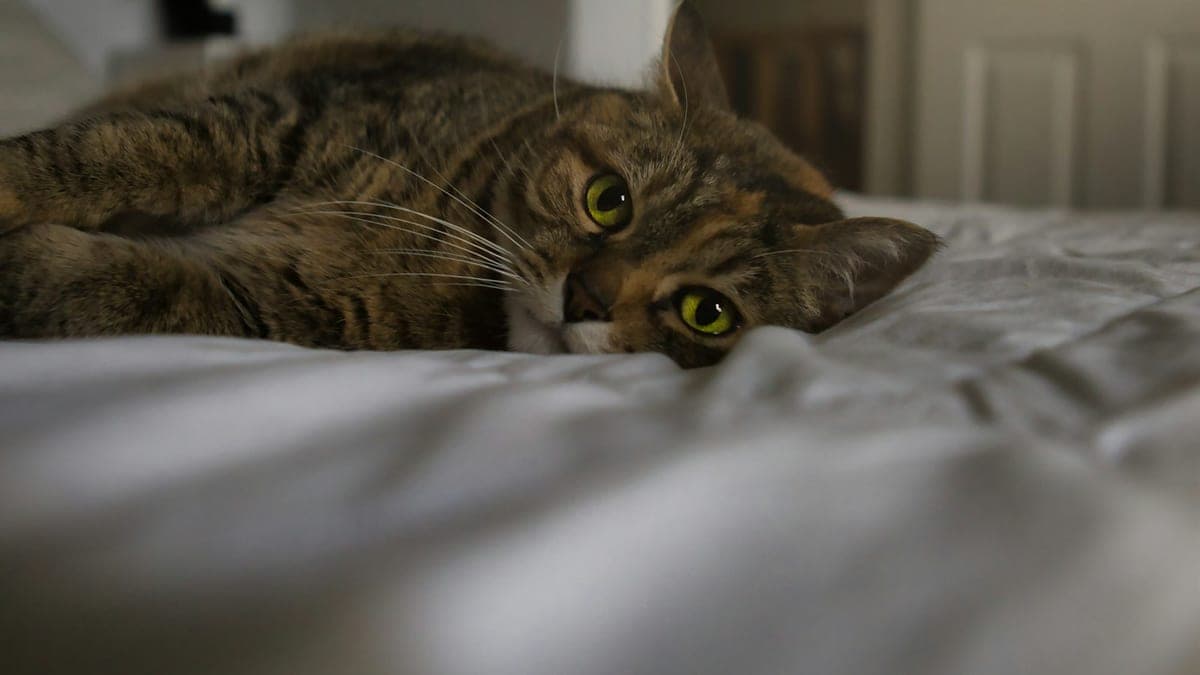
There are few things more demoralizing than pulling back the covers to find a wet patch where you sleep. You wash the sheets, you start to wonder what you did wrong, and you eye your cat, who looks innocent. The good news is that your cat is almost certainly not doing it to punish you. The less good news is that this behavior rarely fixes itself, and sometimes it is the first sign of a medical problem.
This guide explains why cats pee on beds, how to work out which reason applies to your cat, how to clean the bed so it stops happening, and what to do about the litter box. Start with your vet, then work through the checklist below.
The short answer
A cat that pees on your bed is usually telling you one of three things: something hurts or is wrong with its body, something about the litter box is putting it off, or it is stressed. Cornell's Feline Health Center says house soiling is the most common behavior problem reported by cat owners, and that the cause can be medical problems, an aversion to the litter box, or a preference for urinating somewhere else. Because pain and illness are such common causes, the first step is a vet visit, not a new cleaning product.
First: is it pee, spray, or something else?
Before you can fix it, check what you are looking at. Cats do two different things with urine.
Urinating: the cat squats and empties its bladder. You find a puddle, often on soft surfaces like a bed, carpet or laundry.
Spraying: the cat stands, lifts its tail, quivers it and sprays small amounts on a vertical surface like a wall or the back of a chair. Cornell explains that cats do not squat to spray.
A puddle on a flat bed is usually urination, not spraying, though not always. Spraying is a way of marking territory. Cornell reports that cats that spray are usually unneutered males and, less often, unspayed females, but about 10 percent of neutered males and 5 percent of neutered females also spray. Cats may spray when they feel their territory is threatened, for example when a new cat arrives or outside cats are nearby, or out of frustration. If you think you are dealing with spraying, our guide on spaying and neutering covers one of the main factors.
Medical reasons: rule these out first
Cornell is blunt about this: cats with medical conditions may not always act sick. That is why a vet exam and basic tests are the first step, not the last. These are the main medical causes.
Urinary tract problems
Inflammation in the urinary tract makes urinating painful and increases how often and how urgently a cat needs to go. Cornell says cats may then urinate outside the litter box, especially if they associate the box with the pain. The umbrella term is feline lower urinary tract disease, or FLUTD. The American Veterinary Medical Association says signs include straining in the litter box, urinating small amounts often, crying out while urinating, licking the genital area, urinating outside the litter box and blood in the urine.
The most common diagnosis in cats under 10 is feline idiopathic cystitis, a painful bladder condition with no identified cause. The AVMA notes that stress, such as conflict with another cat, plays a large role. Cornell adds that LUTD is most often seen in middle-aged, overweight cats that get little exercise, use an indoor litter box and drink less water, and that living in a multi-cat household and changes in routine like a move can raise the risk.
A urinary blockage is an emergency
The AVMA calls urethral obstruction, a blockage that stops urine from passing, the most serious cause of FLUTD, and it can be life-threatening. It is most common in male cats between one and ten years old, because their urethra is longer and narrower. A blocked cat strains to urinate and produces little or no urine. It can look like constipation, and it is not. The AVMA says that without treatment the kidneys fail and the cat can die, often in less than 24 to 48 hours. If your male cat is straining in the box, crying, or producing nothing, go to an emergency vet immediately.
Kidney disease, diabetes and thyroid problems
Cornell lists kidney and thyroid diseases and diabetes mellitus as possible causes, because they often make cats drink more and urinate more often. A cat that is making large volumes of urine and drinking a lot may not make it to the box in time. This is more common in middle-aged and older cats.
Arthritis and age
Cornell also notes that age-related diseases that affect mobility or thinking can influence a cat's ability to get to the litter box in time. A senior cat with sore joints may find a box with high sides, or one up or down a flight of stairs, hard to reach. Our guide on how long cats live covers what to expect as cats age.
Digestive problems
If the mess on your bed is poop, not pee, Cornell says digestive problems can also make defecating painful or urgent and reduce a cat's control.
Litter box problems
If the vet gives your cat a clean bill of health, the litter box is the next suspect. According to Cornell, an aversion can be to the box, the litter, the location, or all three. Cats with an aversion tend to eliminate on a variety of surfaces, and Cornell specifically lists beds, carpets and clothing as common soft targets, along with hard surfaces like tile and bathtubs. Your cat may continue to use the box, but only inconsistently.
The box is not clean enough
Cats are fussy about cleanliness. International Cat Care says cats generally do not like using a tray that is soiled, and recommends removing solids and clumps at least twice a day and topping up with fresh litter daily. Cornell adds that some cats refuse to use a box containing any urine or feces at all. The AAHA and AAFP feline guidelines recommend scooping daily, cleaning the box regularly with hot water, and avoiding soap or strong chemicals, because some cats are sensitive to them.
There are not enough boxes
The AAHA and AAFP rule of thumb is one litter box for each cat plus one extra, placed in different, easy-to-reach locations around the house. Cats Protection adds that boxes placed in a row count as one from the cat's point of view, so spread them out, upstairs and downstairs.
The box is too small
The same guidelines say the box should be at least one and a half times the length of the cat, nose to tail tip, which means most store-bought boxes are too small. A big plastic storage tub with a cut-down entrance often works better. Edges should be low enough for kittens and seniors to climb in and out. International Cat Care also notes that large cats may find small hooded boxes hard to use.
The litter is wrong
International Cat Care says cats tend to prefer fine-grain, unscented litter with the consistency of sand, and recommends at least 3 cm of litter. Hardwood pellets can be uncomfortable on sore paws. If you changed brands recently, that could be the trigger. The AAHA guidelines suggest testing preferences by offering different litters in separate boxes, and say unscented clumping litter may be preferred for cats with a history of urinary problems. Change litter gradually, mixing the new one in over about a week.
The location feels unsafe
Cats feel vulnerable when they toilet. Cats Protection advises placing boxes somewhere quiet, away from noisy appliances like washing machines, away from doorways, cat flaps and busy corridors, and away from food, water and bedding. Cornell suggests that if another pet ambushes your cat in the box, a covered box can make things worse, and recommends a box with a 360-degree view and more than one way out. International Cat Care says that some cats feel trapped in a covered box with only one exit, and that if you use a covered box with a flap, you should remove the flap.
The surface feels better
Cornell notes that some cats simply prefer a particular surface, like soft fabrics. A cat that likes carpet or bedding will not suddenly switch to tile. If your cat favors soft surfaces, you can try a finer, softer litter. This is one reason beds, towels and piles of laundry are such common targets.
Stress and anxiety
Stress is a big player. Changes that can unsettle a cat include a new pet or baby, a house move, renovations, a change in your schedule, an outdoor cat visiting the garden, or conflict between cats in the house. The AVMA says chronic anxiety from perceived threats, such as conflict with another cat, is believed to play a major role in idiopathic cystitis, which is itself a cause of peeing outside the box. In multi-cat households, one cat may be blocking another from the box without you noticing.
A bed is a common stress target for a reason that is easy to understand. It is soft and absorbent, and it smells strongly of you. Many behaviorists think cats choose it because your scent is comforting, or because they want to mix their scent with yours when they feel insecure. That is a theory rather than a proven fact, but it fits what vets and behaviorists see. If your cat peed on your bed after a big change, stress is a strong suspect. Our guide to reading a happy cat's body language can help you spot stress before it comes out as a puddle.
If the stress comes from another cat, slow, careful introductions matter. We cover this in how to introduce two cats.
Step by step: what to do
See your vet promptly. Cornell says to address the problem quickly, because the longer it continues, the more likely it is to become a habit. Ask for a urine test and a physical exam. Mention how often, where, and whether your cat is straining or crying.
Treat any medical cause. Many cats go back to the litter box once the pain or illness is treated, though if the habit has set in, you may still need the steps below.
Work out which cat is doing it. In a multi-cat home, Cornell suggests separating the cats, or asking your vet about a non-toxic dye that shows up in the urine. A camera can help too.
Fix the litter box setup. One box per cat plus one, large enough, scooped daily, in quiet places, with a litter your cat prefers.
Make the bed unavailable for now. Close the bedroom door, or cover the bed with a waterproof protector or plastic sheet while you work on the cause. This is a short-term step, not a cure.
Clean thoroughly. If the smell stays, your cat is likely to go back. Use an enzymatic cleaner made for pet urine, which breaks down the odor, rather than ammonia-based products, which can smell like urine to a cat. Soak mattresses and bedding as the label says, and wash soft items.
Reduce stress. Keep routines steady, give your cat safe hideaways and vertical space, play daily, and give cats in a multi-cat home separate food, water and resting areas.
Make the litter box the best option. If your cat prefers a spot you have cleaned, Cornell suggests placing a box in the preferred location. Once your cat uses it reliably, move it a few inches a day to where you want it, and stop moving it if your cat stops using it.
Do not punish. Yelling, rubbing the nose in it, or chasing your cat does not teach it anything useful. It adds stress, which is part of the problem.
If it keeps happening
If you have ruled out medical causes and fixed the box and your cat still pees on the bed, ask your vet for a referral to a veterinary behaviorist, or a certified cat behavior consultant. Some cats need medication for anxiety or a more tailored plan. For cats whose problem is linked to stress-related bladder disease, vets often recommend increasing water intake, adding enrichment and adjusting diet, so ask about that too.
Common questions
Why does my cat pee on my bed and not on the floor?
Beds are soft, absorbent and smell like you. Cornell says some cats prefer soft surfaces for urinating. A cat that is stressed or in pain may also seek out a place that smells comforting.
Is my cat peeing on my bed out of spite?
No. Cats do not act out of revenge. Cornell notes that behaviors owners see as revenge, such as spraying out of frustration with restrictive diets or too little playtime, are usually responses to circumstances rather than spite.
Why does my cat keep peeing on my bed after I washed it?
The smell may not be fully gone, or the original cause has not been solved. An enzymatic cleaner and a vet visit are the usual next steps.
Why did my cat start peeing on my bed suddenly?
A sudden change often points to a medical cause or a change at home. See your vet and think about what changed in the last few weeks.
Why does my male cat pee on my bed?
A male cat can do it for the same reasons as a female cat, and an unneutered male may spray. But males are also at higher risk for urinary blockages. A male cat that strains, cries or passes little or no urine needs emergency care.
Why does my cat poop on my bed?
Cornell says the same three groups of causes apply: medical problems like digestive or pain issues, an aversion to the litter box, or a preference for the spot. See your vet, then check the box setup.
Will my cat grow out of it?
Rarely. Cornell warns that the longer the behavior persists the more likely it is to become a habit. Act early.
The bottom line
A cat that pees on your bed is communicating, not misbehaving. Start with your vet, because pain and illness are common and some, like a urinary blockage, are emergencies. Then go through the litter box basics: enough boxes, big enough, clean, quiet and filled with a litter your cat likes. Reduce stress, clean the bed with an enzymatic cleaner, and be patient. Most cats can be helped once the cause is found.
Keep reading
Spay or Neuter Your Cat: Benefits, Risks, and Best Timing. How to Introduce Two Cats Without a Fight: A Step-by-Step Guide. Is My Cat Happy? The Body Language Signs That Actually Matter.
Comments (0)
Join the conversation
Sign up to share your thoughts.
Loading comments...