Is My Cat Happy? The Body Language Signs That Actually Matter
How to read a cat's body language, what the slow blink really means, and the signs that actually matter

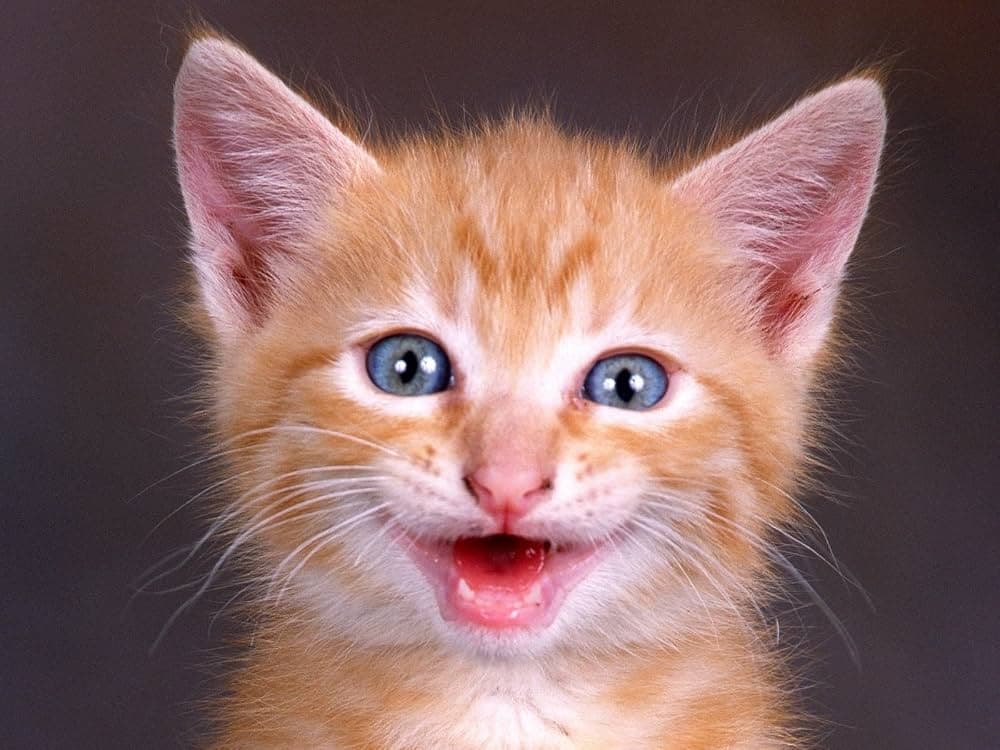
One of the strange things about living with a cat is that you can spend years together and still occasionally wonder whether they are actually happy. Dogs make it easy. They wag, they bounce, they bring you toys. Cats are subtler. A cat who is content might be purring on your lap, or might be sitting in the next room staring at a wall. Both could be completely fine. Neither is a guarantee.
The good news is that cats do communicate their emotional state constantly. They just do it through body language, vocalizations, and behavior rather than through anything that looks like a human smile. Once you know what to look for, the signals are not subtle at all. You just have to learn the language.
I have dug through the research on cat behavior and welfare, and there is more science here than you might expect. Let us walk through the signs that actually matter, what the studies say about purring, the slow blink, kneading, bunting, and how to tell the difference between a happy cat and one who is just tolerating you.
The tail: the most honest part of the cat
If you want a quick read on how your cat is feeling, look at the tail first. It is the most expressive part of their body, and the signals are well-documented in feline behavior research.
A tail held straight up, especially with a little curl or hook at the tip, is one of the most reliable signs of a happy, confident cat. Cats who approach you with their tail straight up are greeting you warmly. Think of it as the cat equivalent of walking up to someone with a smile. A tail that is relaxed and low, swishing gently, usually means the cat is calm and comfortable in their environment.
On the other end, a tail that is puffed up and bristled means the cat is frightened or threatened. A tail thrashing back and forth hard is a sign of agitation, not playfulness, and it usually means you should back off. A slow, gentle swish is different from a hard thwap. The speed and force tell you everything. A 2021 study published in the journal Animals analyzed visual signals in cats and found that a tail-up approach combined with erect ears is a friendly greeting, while a tail-up approach with ears flattened has a different meaning entirely.
The ears and the eyes
Ears are the second most reliable signal. Happy, relaxed cats hold their ears upright and facing forward. When a cat rotates their ears to the side or flattens them back against their head, that is what behaviorists sometimes call 'airplane ears,' and it usually means the cat is anxious, irritated, or preparing to defend themselves. Ears that are slightly to the side but not flattened can mean the cat is relaxed but drowsy, so context matters.
Eyes are a little more nuanced. A cat who is relaxed around you will often have half-closed eyes, giving them that sleepy, contented look. Wide open eyes with dilated pupils can mean excitement or playfulness, but they can also mean fear, especially if combined with a tense body. You have to read the eyes together with the rest of the cat. The eyes alone do not tell the whole story.
The slow blink: what the science actually says
If you have spent any time reading about cat behavior online, you have probably heard of the slow blink. It is the thing where a cat looks at you and slowly closes and opens their eyes, and people call it a 'cat kiss.' It sounds like internet folklore, but it is actually backed by real research.
In 2020, a team of psychologists at the Universities of Sussex and Portsmouth, led by Tasmin Humphrey and Dr. Leanne Proops, published a study in the journal Scientific Reports on cat eye-narrowing movements in cat-human communication. They ran two experiments. In the first, they found that cats were more likely to slow-blink at their owners after the owner slow-blinked at them. In the second, they found that cats were more likely to approach an experimenter's outstretched hand after the experimenter had slow-blinked at them, compared to a neutral face. Both effects were statistically significant.
So the slow blink is real, and it appears to be a genuine positive signal. The researchers suggested a few possible explanations. Cats may have learned that humans reward slow blinking, so they do it more. Or it may have started as a way to break an unbroken stare, which is threatening in animal social interaction, and evolved into a friendly signal. Either way, if your cat slow-blinks at you, it is a good sign. And if you slow-blink back, the research says they are more likely to approach you. It is one of the few cat communication tricks that is actually evidence-based.
Purring: not always what you think
Purring is the signal most people associate with a happy cat, and it is true that cats often purr when they are content. But it is not as simple as purr equals happy, and the research on this is genuinely surprising.
Cats purr at frequencies between 25 and 150 hertz. A study by Dr. Elizabeth von Muggenthaler, presented at a conference and published in a research collection, recorded purrs from 44 species of cats and found that every one produced strong vibrations in that range. Those frequencies happen to match the ranges used in clinical vibration therapy to promote bone growth, reduce pain and swelling, and accelerate fracture healing. This led to the hypothesis, still debated, that purring may serve a self-healing function, which would explain why cats purr when they are injured or stressed as well as when they are content.
And here is where it gets really interesting. In 2009, Dr. Karen McComb of the University of Sussex published a study in Current Biology on what she called 'solicitation purring.' She found that when cats want food, they produce a purr that has a high-frequency component embedded inside the normal low-pitched purr, at around 220 to 520 hertz. That range overlaps with the frequency of a human baby's cry, which is 300 to 600 hertz. When McComb played these solicitation purrs for human volunteers, even people who had never owned a cat rated them as more urgent and harder to ignore than regular purrs. Cats, it turns out, have figured out how to push a specific nurturing button in human brains.
So if your cat purrs when you pet them, that is probably contentment. If they purr while staring at you next to their empty food bowl at 6 AM, that is something else entirely. And if a cat purrs at the vet or while injured, it may be a self-soothing or healing mechanism. Context is everything with purring.
Kneading and bunting
Two of the most endearing cat behaviors are kneading, where a cat rhythmically pushes their paws into a soft surface, and bunting, where a cat headbutts you or rubs their cheek against you. Both are strong signs of a comfortable, bonded cat, and both have roots in scent communication.
Kneading, sometimes called 'making biscuits,' originates in kittenhood. Kittens knead their mother's belly to stimulate milk flow during nursing. Adult cats continue to do it on soft surfaces, blankets, and their owners' laps when they feel safe and content. It is a behavior that carries over from a time when they felt completely secure, and they do it when they feel that way again. Cats also have scent glands in their paw pads, so kneading deposits pheromones and marks the surface as theirs. It is comfort and territory in one motion.
Bunting is the headbutt or cheek-rub behavior, and it is directly tied to scent marking. Cats have scent glands on their cheeks, forehead, and chin that release pheromones. The American Veterinary Society of Animal Behavior explains that these pheromones have a calming, reassuring effect on the cat. When your cat headbutts you, they are depositing their scent on you, which to them means you are marked as familiar and safe. It is a sign of trust and affiliation. Not all cats do it, and that is normal too. But if your cat bunts you, you are in their inner circle.
One important distinction from the veterinary literature: head bunting is not the same as head pressing. Head pressing is when a cat presses their head into a wall or corner and holds it there, which can be a sign of a neurological problem. If you see that, call your vet. Bunting is a quick, affectionate bump. They are completely different things that happen to involve the same body part.
The belly display, and why it is not an invitation
Here is one that trips up a lot of people. Your cat rolls onto their back and exposes their belly. You reach down to pet it. You get bitten. What happened?
When a cat rolls onto their back, it usually means they feel relaxed and safe in your presence. It is a vulnerable position, so showing you their belly is a sign of trust. But it is not an invitation to touch the belly. For most cats, the belly is a sensitive area, and reaching for it triggers a defensive response. The trust is in showing you the belly, not in letting you touch it. If you want to test it, pet their head or chest instead. Some cats do genuinely like belly rubs, but they are the exception. Read your cat's reaction and respect it.
What a happy cat's daily life looks like
Individual signals are useful, but the bigger picture of a cat's happiness comes from their daily behavior and routine. A happy cat is one who has their needs met consistently, and the research on cat welfare points to a few specific things.
A 2024 study published in the journal Animal Welfare, based on a survey of 1,591 cat guardians from 55 countries, found that higher cat playfulness scores and a greater number of games played were significantly associated with higher cat quality-of-life scores. Longer daily play, more variety in games, and both the cat and the human initiating play were all associated with better cat-guardian relationship quality. Play is not just a bonus. It is a measurable factor in cat welfare.
The International Society of Feline Medicine and the American Association of Feline Practitioners published joint guidelines on cat environmental needs, organized around five pillars: a safe space, access to key environmental resources like food, water, and litter, opportunity for play and predatory behavior, positive and consistent human interaction, and an environment that respects the cat's sense of smell. A cat who has all five is in a fundamentally different emotional state than one who does not.
The practical signs of a happy daily life are straightforward. Your cat eats regularly and maintains a stable weight. They groom themselves consistently, because a cat who stops grooming is often stressed or unwell. They use the litter box normally. They seek you out for interaction, whether that is sitting on your lap, sleeping near you, or just being in the same room. They play, even if briefly. They have a predictable routine and do not spend their days hiding under the bed. If most of these are true, your cat is probably doing well.
Signs your cat might not be happy
It is worth knowing the flip side, because cats often hide distress until it becomes a real problem. The signs of an unhappy or stressed cat are often the absence of happy behaviors, plus a few specific tells.
Hiding more than usual, especially if they used to be social and have started retreating.
Overgrooming, where they lick a specific area until the fur thins or comes out, often a stress response.
Changes in eating or drinking, either eating much less or much more than usual.
Litter box problems, urinating or defecating outside the box is one of the most common signs of stress or medical issues.
Aggression that is new or escalating, including swatting, biting, or unprovoked attacks.
Vocalization changes, a normally quiet cat who starts yowling, or a talkative cat who goes silent.
A tense, crouched body posture with the tail wrapped tightly around the body.
Any of these can have medical causes, so the first step is always a vet visit. Cats are masters at hiding pain, and a behavior change is often the only sign that something physical is wrong. If the vet clears them, then the question is environmental: what changed, what is missing, what is stressing them out.
How to actually make your cat happier
Based on the welfare research, here are the things that genuinely move the needle on a cat's quality of life:
Play with them daily. The 2024 study found that longer and more varied play was associated with higher quality-of-life scores. Even 10 to 15 minutes a day of interactive play with a wand toy or laser pointer makes a measurable difference.
Give them vertical space. Cats feel safer when they can get up high. A cat tree, a shelf, or access to the top of a bookcase gives them a vantage point and a retreat.
Provide hiding spots. A covered bed, a cardboard box, or a quiet corner gives them a place to decompress. The research on indoor cat welfare consistently finds that hiding spaces reduce stress.
Keep their environment predictable. Cats are sensitive to change. Sudden moves, new pets, or disrupted routines can cause real stress. Make changes gradually when you can.
Let them initiate contact. The play study found that when both the cat and the human initiated play, the relationship quality was higher. Forcing interaction on a cat who is not in the mood erodes trust.
Slow-blink at them. It sounds silly, but the 2020 study showed it works. Try it when your cat is relaxed and looking at you.
Feed them well and keep their water fresh. A water fountain can help, since cats prefer moving water. We covered diet in depth in the cat food safety article.
The bottom line
A happy cat is not a mystery. They are telling you how they feel all the time through their tail, their ears, their eyes, their vocalizations, and their daily routine. The slow blink is real and backed by science. Purring is usually good but not always, and the solicitation purr is one of the cleverest manipulation tactics in the animal kingdom. Kneading and bunting are genuine signs of trust. And the biggest factor in a cat's happiness is whether their environment meets their needs, which is something you control.
If your cat greets you with their tail up, slow-blinks at you from across the room, kneads your lap when you sit down, and seeks you out for the occasional play session, you are doing it right. They are happy. They are just showing it in cat, not in dog.
Keep reading
If you found this helpful, you might also like our guides on what purring tells you, whether your cat feels love and how play keeps cats happy.
Further reading
Love learning about cats? Adopt a virtual cat pet and level it up by joining our community.
Comments (0)
Join the conversation
Sign up to share your thoughts.
Loading comments...