Why Do Cats Purr? It Is Not Just Happiness
It is not just happiness. Purring is a healing mechanism, a survival signal, a manipulation tactic, and a mystery we only partly understand

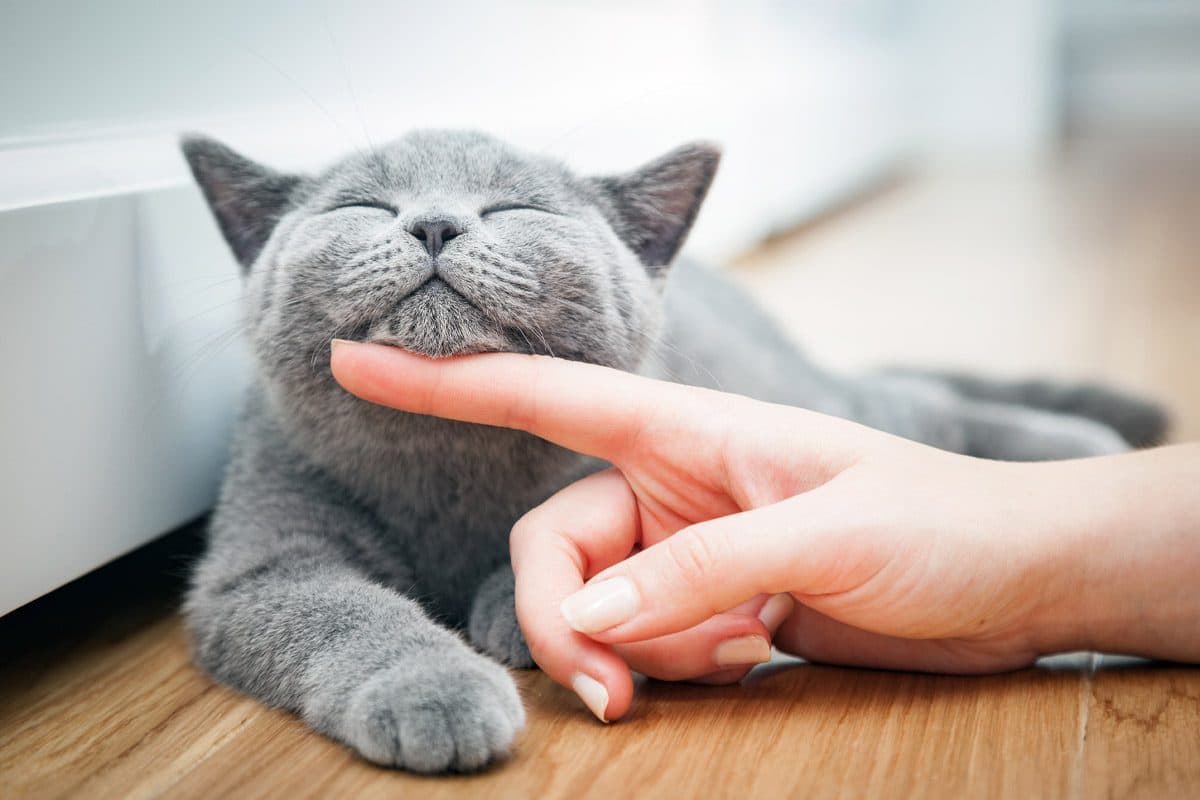
If you have a cat, you have probably heard them purr a thousand times and never thought much of it. It is just what cats do. They sit on your lap, you scratch their chin, they purr. Simple. Except it is not simple at all, and the more you dig into the research, the weirder it gets.
Cats purr when they are happy, sure. But they also purr when they are stressed, injured, giving birth, nursing kittens, scared at the vet, and close to death. They purr at frequencies that happen to match the ranges used in clinical bone-healing therapy. They have a special kind of purr, with a hidden cry embedded inside it, that is specifically designed to manipulate humans into feeding them. And until 2023, we were not even completely sure how the sound was produced.
So let us get into it. How purring works, why cats do it, what the healing hypothesis is, the solicitation purr that hacks your brain, and why a purring cat is not always a happy cat.
How cats actually produce the purr
For decades, the standard explanation was that cats purr through a mechanism called active muscle contraction. The idea, dating back to the 1970s, was that a neural oscillator in the cat's brain sends signals to the laryngeal muscles about 20 to 30 times per second, causing them to contract and relax rapidly. Each contraction closes the vocal folds, and each relaxation opens them, modulating the airflow and producing the characteristic low-frequency sound. A 1972 study by Dr. J. H. Remmers and colleagues, published in the journal Respiration Physiology, found exactly this pattern of electrical bursts in the laryngeal muscles of purring cats, and identified a central neural oscillator driving them.
That explanation held for over 50 years. Then, in 2023, a team led by voice scientist Christian T. Herbst at the University of Vienna published a study in Current Biology that challenged it. They removed the larynges from eight domestic cats, all humanely euthanized due to terminal illness with their owners' consent, and placed them in an excised larynx setup. They pinched the vocal cords together and pumped warm, humidified air through them, with no brain input and no muscle contraction. To everyone's surprise, all eight larynges produced self-sustained oscillations at typical purring frequencies of 25 to 30 hertz, with no neural input at all.
The reason, they discovered, is that domestic cats have connective tissue masses, essentially little pads of fatty tissue, embedded in their vocal folds. These pads add mass to the vocal cords, allowing them to vibrate at much lower frequencies than you would expect from an animal the size of a cat. Most mammals produce vocal sounds through the myoelastic-aerodynamic, or MEAD, principle, where airflow causes the vocal tissues to oscillate passively. The 2023 study suggests that purring uses the same MEAD mechanism, potentially augmented by active muscle contraction, rather than being a completely different system as previously thought.
The study did not fully reject the active muscle contraction hypothesis. The researchers noted that both mechanisms probably work together in a living cat, with the neural input helping to entrain and stabilize the vibration. But the key finding was that the larynx itself, with its built-in pads, is physically capable of producing purring sounds without any instruction from the brain. That was a genuine surprise, and it rewrote a half-century of textbooks.
The frequency range and the healing hypothesis
Here is where the story takes a turn into something that sounds almost too good to be true. Cats purr at frequencies between 25 and 150 hertz. That is a specific, consistent range, and it happens to overlap with frequencies that have documented therapeutic effects in human medicine.
Dr. Elizabeth von Muggenthaler, a bioacoustics researcher, recorded purrs from 44 felid species, including domestic cats, servals, ocelots, pumas, and cheetahs. Every single one produced strong frequencies between 25 and 150 hertz. Domestic cats, servals, ocelots, and pumas all produced dominant frequencies at exactly 25 and 50 hertz, which are the two low frequencies that have been shown in clinical studies to best promote bone growth and fracture healing. Several species also had a strong harmonic at or near 100 hertz, a frequency used therapeutically for pain, swelling, wounds, and breathing difficulties.
This led von Muggenthaler to propose what is sometimes called the healing hypothesis. The idea is that purring is not just a communication signal but also a self-healing mechanism. Cats spend a huge amount of their lives sleeping and resting, sometimes 12 to 16 hours a day. During all that inactivity, their muscles and bones are not bearing load, which normally leads to atrophy and bone density loss. But if purring produces low-frequency vibrations that stimulate bone and muscle tissue, it could serve as a low-energy way to keep those tissues healthy without actually moving. It would be like a built-in vibration therapy session that runs every time the cat dozes off.
This hypothesis is still debated. The evidence is largely correlational, meaning the frequencies match up but nobody has definitively proven that a cat's purr heals its own bones. But it is a compelling explanation for something that has puzzled researchers for years, which is why cats purr when they are injured or recovering. If purring were purely a contentment signal, you would not expect a cat with a broken leg to do it. But if it is also a healing mechanism, that behavior suddenly makes sense.
Why cats purr when they are not happy
This is the part that surprises a lot of people. Purring is not a happiness meter. It is more like a Swiss army knife of communication and self-regulation, and cats deploy it in a wide range of situations.
Cats purr when they are stressed or anxious. If you have ever taken a cat to the vet and heard them purring loudly in the carrier, that is not because they are enjoying the visit. It is a self-soothing mechanism, similar to the way a person might hum or rock when nervous. Research suggests that the vibrations may release endorphins, the body's natural painkillers, which would explain why cats purr when they are in pain or recovering from injury.
Dr. Lauren Finka, a cat behavior researcher, and other veterinarians have documented what some call the 'terminal purr.' These are cats who are severely ill or close to death and purr vigorously. It is not a sign of recovery or contentment. It is likely a self-soothing or pain-management response. The BBC reported on this phenomenon, quoting veterinarian Gary Weitzman, CEO of the San Diego Humane Society, who said that while the purr generally represents contentment, it can also express nervousness, fear, and stress. He noted that he had witnessed many cats purring when they were dying or being euthanized, and that people often assumed they were happy, which is not always the case.
Mother cats purr during labor, which is likely a combination of pain management and self-soothing. They also purr while nursing, which brings us to the next reason.
Purring and kittens: the original purpose
Kittens are born blind and deaf. They cannot see or hear anything for the first week to ten days of their lives. But they can feel vibrations, and that is where purring comes in.
Kittens start purring when they are just a few days old. The mother cat purrs while nursing, and the kittens use those vibrations to locate her and find their way to the milk. It is a homing signal for creatures who cannot yet see or hear. The mother's purr also serves as a constant 'I am here' signal that keeps the kittens calm and oriented. This is likely the original evolutionary purpose of purring, a communication tool between mother and kittens that predates all the other uses.
Adult cats retain this behavior in a modified form. When your cat purrs while eating, or purrs while curled up against you, they are echoing that early kittenhood association between purring, food, and safety. The purr started as a survival signal for helpless newborns, and it never fully lost that meaning.
The solicitation purr: how cats hack your brain
This is my favorite part of the purring research, because it is the one where cats are most clearly messing with us.
In 2009, Dr. Karen McComb of the University of Sussex published a study in Current Biology on what she called 'solicitation purring.' She noticed that her own cat, Pepo, had a specific kind of purr he used in the mornings when he wanted to be fed, and that it was oddly difficult to ignore. She talked to other cat owners and found that many of them recognized the same sound. As a scientist who studied vocal communication in mammals, she decided to investigate.
McComb and her team trained cat owners to record their cats' purrs in two situations: when the cat was actively seeking food, and when the cat was not. They then played these recordings for 50 human volunteers at equal volume. Even people who had never owned a cat rated the solicitation purrs as more urgent and harder to ignore than the non-solicitation purrs. Cat owners were especially good at telling the difference.
When they analyzed the acoustic structure of the purrs, they found the secret. The solicitation purr had a high-frequency component embedded inside the normal low-pitched purr, at around 220 to 520 hertz. That range overlaps with the frequency of a human baby's cry, which falls between 300 and 600 hertz. When the researchers removed that high-frequency component from the recordings, volunteers rated the purrs as significantly less urgent. The embedded cry was the active ingredient.
McComb concluded that cats have essentially learned to exploit an innate human sensitivity to cry-like sounds in the context of nurturing offspring. The solicitation purr is not a meow, which would be obvious and might get a cat ejected from the bedroom. It is a subliminal signal buried inside a sound humans already find pleasant. It is one of the most sophisticated manipulation tactics in the animal kingdom, and your cat is probably using it on you every morning.
Which cats purr and which do not
Not all cats purr, and not all cats purr at the same volume or frequency. Individual variation is huge. Some cats are near-silent purrers, where you can only tell they are purring by touching their throat and feeling the vibration. Others purr so loudly you can hear them across the room. A cat named Smokey, from England, was reported to purr at 67.7 decibels, which is roughly the volume of a washing machine, though Guinness World Records noted that purring is difficult to measure consistently.
Breed can play a role. Some breeds, like Siamese and Oriental cats, are known for being particularly vocal and may purr more readily. Others are quieter. But a lot of it is just individual personality. If your cat rarely purrs, that does not necessarily mean they are unhappy. They may just be a quiet purrer, or they may express contentment through other signals like slow blinking, kneading, or simply choosing to be near you.
It is also worth noting that most felid species purr, not just domestic cats. The dividing line in the cat family is between the 'purring cats' and the 'roaring cats.' Lions, tigers, jaguars, and leopards belong to the subfamily Pantherinae and cannot purr properly, because their larynx is structured differently to allow roaring. The smaller cats, including domestic cats, cougars, cheetahs, and ocelots, can purr but cannot roar. It is an either-or situation, determined by the anatomy of the hyoid bone in the throat. You can have a roar or a purr, but not both.
What your cat's purr probably means
Given all of this, how do you interpret your own cat's purring? The answer is that you have to read it in context, the same way you read any other body language signal.
If your cat is on your lap, relaxed, with half-closed eyes, and purring softly, that is almost certainly contentment. This is the classic happy purr.
If your cat is purring at the food bowl, staring at you, and it is morning, that is a solicitation purr. They want food, and they are using the embedded cry to get it.
If your cat is at the vet, in a carrier, tense and purring loudly, that is a stress purr. They are self-soothing, not enjoying themselves.
If your cat is injured or recovering from surgery and purring, that may be a healing or pain-management purr. The vibrations could be helping them cope.
If your cat is a mother nursing kittens and purring, that is a communication purr. She is guiding her kittens.
If a normally quiet cat suddenly starts purring constantly and seems unwell, that could be a sign of distress or illness. Pay attention and call your vet if something seems off.
The bottom line
Purring is not one thing. It is a multi-purpose tool that cats use for communication, self-soothing, healing, and manipulation. It starts as a survival signal between mother and kitten, evolves into a contentment expression, doubles as a stress and pain management system, and gets weaponized as a food-solicitation tactic that exploits human nurturing instincts. And the physical mechanism behind it, those little fatty pads in the vocal folds, was only discovered in 2023.
The next time your cat purrs on your lap, enjoy it. It probably means what you think it means. But if you ever catch yourself assuming a purring cat is always a happy cat, remember that the same sound can mean 'I am content,' 'I am hurt,' 'I am scared,' or 'feed me right now.' Cats are complicated, and their most famous sound is the most complicated thing about them.
Keep reading
If you found this helpful, you might also like our guides on how to tell if your cat is happy, whether cats feel love and the complete guide to cat communication.
Further reading
Love learning about cats? Adopt a virtual cat pet and level it up by joining our community.
Comments (0)
Join the conversation
Sign up to share your thoughts.
Loading comments...