Why Does My Cat Meow? What Each Sound Means (and When to Worry)
Everything science actually knows about why cats meow, what each sound means, and when you should worry

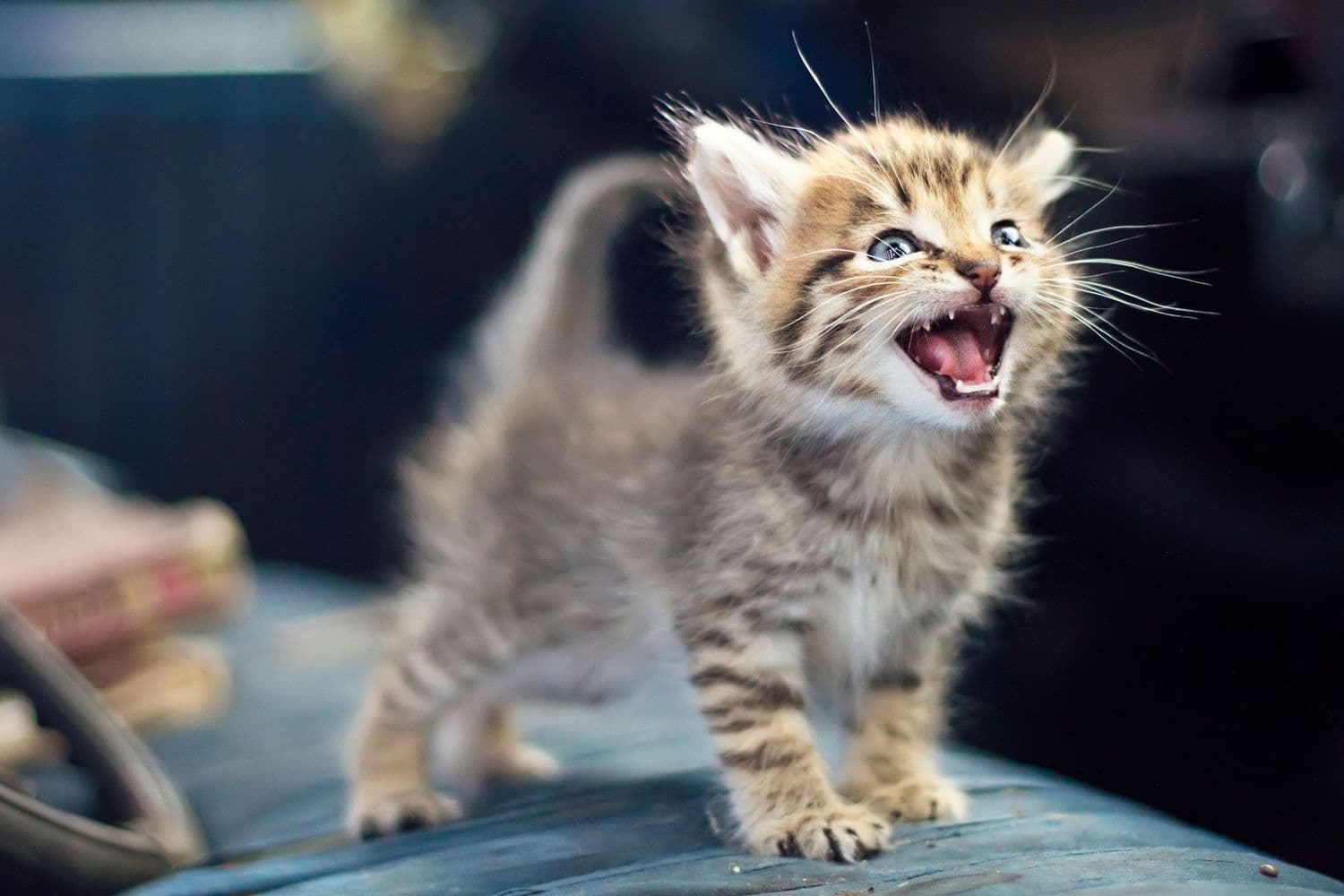
It is 3 in the morning. You are asleep, deeply asleep, the kind of asleep that feels like a small miracle on a weeknight. And then you hear it. A meow. Not a polite, passing meow. A long, drawn-out, operatic meow that seems to come from the hallway and echo through the entire apartment. You open one eye. Your cat is sitting in the dark, staring at nothing in particular, singing the song of her people.
If you have lived with a cat for any length of time, you have probably wondered what on earth is going on in that little head. Why does she meow like that? What does she want? Is she happy, hungry, bored, sick, or just messing with you? The honest answer is that cat people have been asking some version of that question for about ten thousand years, and science has only recently started to catch up.
This article is everything we actually know about why cats meow, what the different sounds mean, and when a change in vocalization is worth a phone call to your vet. I have dug through the research, talked to what behaviorists have published, and tried to separate the solid science from the folksy myths. There is a lot more going on than you might think.
The big surprise: adult cats do not really meow at each other
Here is the fact that stops most cat owners in their tracks. Adult cats almost never meow at other adult cats. In the wild, meowing is a kitten sound. It is what a kitten uses to call its mother, to say I am cold, I am hungry, I am lost, come find me. Once a cat grows up and leaves its mother, the meow mostly retires. Feral cats, the ones living without humans, barely use it at all. They rely on scent marking, body language, and a few other vocalizations to get their point across to other cats.
So when your cat walks up to you and lets out a meow, she is doing something she would basically never do with another adult cat. She is directing a kitten sound at a human. Researchers who study this stuff think cats essentially learned to treat us as a stand-in for their mother. We are big, slow, mostly hairless cats who control the food supply, and the meow is the lever they pull to get us to do things. In a very real sense, your cat meows at you because it works.
Now, this does not mean cats never vocalize to each other. They do. But the sounds they use between themselves are usually growls, hisses, yowls, and the occasional trill. The classic meow, the one we all recognize, is almost exclusively a cat-to-human channel. That is a pretty remarkable thing when you think about it. Your cat developed, or kept, an entire sound just for talking to you.
How the meow evolved: ten thousand years of self-domestication
To understand why cats meow, it helps to know how they came to live with us in the first place. Cats did not get domesticated the way dogs did. Nobody sat down and said, I am going to breed this wolf into a golden retriever. Cats more or less domesticated themselves, and the process started around the dawn of agriculture, roughly ten thousand years ago, in the Near East.
When humans started farming and storing grain, the grain attracted mice. The mice attracted wildcats, specifically the African wildcat, Felis silvestris lybica. The boldest, least fearful wildcats had a survival advantage because they could get close to human settlements and hunt the rodents living there. Over many generations, the cats that tolerated humans did better than the ones that ran away. We did not choose them. They chose us, or at least they chose our grain stores.
Something fascinating happened to the meow during those thousands of years. A graduate student named Nicholas Nicastro, working at Cornell, recorded the meows of ordinary house cats and compared them with the calls of wild cats at a zoo in South Africa. The difference was striking. Domestic cat meows are shorter, higher in pitch, and far more pleasant to the human ear. Wild cat meows sound urgent, harsh, and demanding. The domestic meow, over thousands of years, evolved to be appealing to us. Cats were, in a sense, selected for a meow that humans want to respond to.
A recent study published in Scientific Reports in 2025 backed this up in a new way. Researchers compared the meows of domestic cats with those of five wild relatives, including the African wildcat, the European wildcat, the jungle cat, the cheetah, and the cougar. Domestic cat meows showed much greater acoustic dispersion, meaning more variety and flexibility, than the meows of any of the wild species. Domestication gave cats a more plastic, more adaptable meow. They did not just make it prettier. They made it more flexible, which is exactly what you need if you are trying to communicate with a species as complicated as humans.
There is a famous experiment in Russia with silver foxes that helps make this clearer. Researchers at a fur farm bred foxes only for tameness, nothing else, and within a few generations the foxes started acting and even looking more dog-like. Their vocalizations changed too, shifting from aggressive sounds to friendlier ones. Cats went through a slower, less directed version of the same process. The cats that could communicate with humans survived better, and over thousands of years their meows became what they are now: a sound shaped, in part, by what humans find pleasant and hard to ignore.
Kitten meows: where it all starts
Kittens start making noise almost immediately. Newborn kittens are deaf and blind, but if you pick one up it will mew. At that age the sound is more of a high-pitched squeak or whine than a real meow. It is the kitten's only way to call its mother, and the mother cat responds to it instinctively, coming back to the nest, nudging the kitten close, lying down to nurse.
As the kitten grows, the meow gets more distinct. Around two to four weeks of age, the kitten's eyes and ears open, and it starts to hear its own voice and the voices around it. This is when the meow begins to take on more shape and variety. By the time the kitten is walking and playing with its littermates, it has a small repertoire of different sounds for different situations.
A study published in Animal Behaviour tracked kitten separation calls over the first two months of life and found something interesting. As kittens approached weaning age, around four to eight weeks, the number, intensity, and pitch of their calls dropped off. At the same time, the mother cat became less willing to respond to those calls. This was not just because the kittens had changed. When researchers played back recordings of the kittens' own earlier, younger cries, the mothers still did not respond as much. The mother's motivation had shifted. Weaning, in cats, is a synchronized process. Both sides wind down the kitten-meow system together.
After about two to three months, kittens stop meowing at their mother much at all. The meow, which started as a survival tool, goes quiet. In a feral cat with no human contact, it mostly stays quiet. But in a kitten that grows up around humans, the meow comes back. It gets redirected. The kitten learns that the same sound that once called its mother can call a human, and the human will come. That is the beginning of the meow you hear for the rest of your cat's life.
How many sounds can a cat actually make?
People often say cats can make about a hundred different sounds and dogs can only make about ten. That number gets thrown around a lot in listicles and it is, to put it gently, not supported by any real research. The actual number, based on the scientific literature, is more like twenty-one distinct vocalization types, and even that depends on how you count.
A comprehensive review published in the Journal of Veterinary Science in 2020 tried to pull together everything known about cat vocal communication. The researchers built an ethogram, basically a catalog, of all the known cat sounds. They grouped them into three categories based on how the sound is made: sounds produced with the mouth closed, sounds produced with the mouth opening and closing, and sounds produced with the mouth held tensely open.
The meow family alone has several subtypes. There is the standard meow, the mew, which is a quieter, higher version, the squeak, the moan, and the trill-meow. Then there are purrs, trills, chirrups, grunts, howls, growls, hisses, spits, snarls, chirps, and chatters. Each of those has its own context and meaning. The meow is just one branch of a much bigger tree.
What makes the domestic cat unusual is how vocal it is compared to its wild relatives. The domestic cat has a more developed and complex vocal repertoire than almost any other member of the carnivore order. This is surprising when you think about it, because cats are small prey animals and you would expect them to stay quiet to avoid being noticed by predators. Something about living with humans, or perhaps the long period of dependence on the mother as a kitten, gave cats an unusually rich vocal life.
Decoding the meows: what each one probably means
Here is where I have to be honest with you. There is no universal cat-to-English dictionary. Two cats can use slightly different meows for the same thing, and the same cat can use the same meow for different things depending on context. What you can do is learn to read the situation, the body language, and the prosody, meaning the pitch, duration, and intonation of the meow. With practice, you get surprisingly good at it.
Still, there are some patterns that show up again and again. Here are the main categories of meow you are likely to hear and what they usually mean.
The greeting meow
This is the short, bright meow you get when you walk in the door or when your cat strolls into the room and spots you. It is usually a single sound, sometimes two, fairly high-pitched, and it often comes with a raised tail and a relaxed body. Think of it as the cat equivalent of hey, you are here, good. It is not an emergency. It is an acknowledgment.
The food meow
This is the one most cat owners know best. It tends to be louder, longer, and more insistent than the greeting meow. A hungry cat will often combine the meow with other behaviors, like walking to the food bowl, pawing at the cupboard, or circling your legs. The prosody study I mentioned earlier found that food-related meows are among the most common and have a relatively high rate of production, meaning cats fire them off rapidly when food is on the line.
One thing to watch for: a cat that has learned that meowing gets food will meow more. Cats are excellent operant learners. If you respond to a meow by feeding, you have just taught the cat that meowing works. This is how a lot of cats end up overweight and a lot of owners end up frustrated. The behavior is not random. It is trained, usually by the owner, one treat at a time.
The open-this-door meow
Cats hate closed doors. Not because they want to be on the other side, necessarily, but because they want the option. A cat that has been shut out of a room will often stand at the door and meow in a way that sounds almost conversational, sometimes pausing as if waiting for a reply. This meow tends to be medium in pitch and fairly repetitive. It is one of the most context-dependent meows because the only way to know it is a door meow is to notice that the cat is standing at a door.
The attention meow
This one is harder to pin down because attention can mean a lot of things. The cat might want to be petted, might want to play, or might just want you to acknowledge her existence. The attention meow is often accompanied by physical contact, like head-butting your hand or rubbing against your shin. If you are on the couch watching TV and your cat walks up and meows once, then head-butts your phone, that is an attention meow. She is not hungry. She wants you.
The distress meow
This is the one to take seriously. A distress meow is usually lower in pitch, longer in duration, and sounds different from the cat's normal meows. It can be a sign of pain, fear, or illness. If your cat suddenly starts meowing in a way you have never heard before, especially if it is low and prolonged, that is not a training issue. That is a signal that something might be wrong. We will get into the medical causes later, but for now, just know that a new, strange meow is worth paying attention to.
Beyond the meow: trills, chirps, chattering, yowls, and purrs
The meow gets all the press, but cats have a whole orchestra of other sounds, and some of them carry just as much information. Here is a quick tour.
Trills and chirrups
A trill is a short, soft sound that is almost like a rolled meow. The cat keeps its mouth closed and pushes air across the vocal cords, and the result is a musical, warbling little chirp. Behaviorists usually read trills as friendly, affiliative sounds. A mother cat trills at her kittens to get them to follow her. An adult cat will often trill when greeting a familiar human or another cat she likes. If your cat walks up to you and trills, that is a good sign. She is happy to see you and she is inviting interaction.
Chirping and chattering at prey
This is one of the strangest sounds a cat makes. You will hear it when your cat is sitting at a window watching a bird or a squirrel. It starts with a fixed stare, the eyes widen, the ears tilt forward, the tail flicks, and then the jaw starts to vibrate. Out comes a rapid, clicking, high-pitched chatter, sometimes mixed with short chirps.
Nobody is entirely sure why cats do this. There are a few theories. One is that the chattering is an involuntary predatory motor pattern, meaning the cat's jaw is rehearsing the killing bite it would deliver to the prey's neck. Another is that it is an expression of frustration, the cat is excited and wants to hunt but cannot get through the glass. A third, more speculative theory is that some wild cats mimic the calls of their prey to lure them closer, and that domestic cats retain a watered-down version of this instinct.
That mimicry theory is not as crazy as it sounds. Researchers in the Brazilian Amazon observed a wild cat called a margay imitating the calls of tamarin monkeys to lure them into range. Jaguars and pumas have been reported doing something similar. Whether your housecat at the window is trying to lure a sparrow or just losing her mind with excitement is still an open question, but the behavior is real, widespread, and deeply rooted in feline hunting instinct.
Yowling and howling
A yowl is a long, low, drawn-out sound that is much more intense than a meow. It can go on for several seconds and it sounds, to most people, genuinely distressed. Yowling is common in unspayed or unneutered cats looking for a mate. It is also common in senior cats with cognitive problems, which we will cover in detail later. And it can be a warning, a sound a cat makes when it feels threatened by another cat or a person and wants to say, back off, I am serious.
If you have a yowling cat, the first question is always whether the cat is fixed. Intact cats, especially females in heat, can yowl for hours, often at night, and it is one of the most common reasons people give up cats to shelters. Spaying or neutering usually resolves it. If the cat is already fixed and the yowling is new, that is a different conversation and you should be thinking about medical causes.
Purring
Purring deserves its own section because it is one of the most misunderstood cat sounds. Most people think a purr means the cat is happy, and that is often true. Cats purr when they are relaxed, when they are being petted, when they are settling in to sleep. But cats also purr when they are stressed, injured, or even dying. The purr is not just a contentment signal. It is more like a self-soothing mechanism and, possibly, a healing one.
Here is where it gets genuinely wild. Cats purr at a frequency between 25 and 150 Hertz. Research on vibration and tissue repair has shown that frequencies in the 25 to 50 Hertz range can promote bone growth, reduce pain, and help with swelling and wound healing. A study presented at a conference on low-frequency sound looked at the purrs of various felids and found that every one of them, from housecats to larger species, produced strong frequencies in that healing range. There is a real, if still debated, theory that cats purr partly to help their own bones, joints, and tissues recover from stress and injury. It is not proven, but the physics lines up.
A 2025 study in Scientific Reports also found that purrs carry more individual identity than meows. Researchers analyzed 557 purrs from 21 cats and found that purrs had a classification accuracy of about 85 percent for identifying which cat was purring. Meows, by contrast, only managed about 63 percent. The takeaway is that purrs are stable, identity-carrying sounds, while meows are flexible, context-carrying sounds. They do different jobs. Your cat's purr is more like her signature, and her meow is more like her vocabulary.
The prosody study: cats change their tune by situation
One of the most detailed studies on cat meows was published in Applied Animal Behaviour Science in 2023. Researchers recorded 969 meows from cats in seven different situations: cuddle, door, food, greeting, lifting, play, and being put in a cat carrier. Then they analyzed the duration, the fundamental frequency, and the intonation of each meow.
The results were clear. Meows are not all the same. They vary systematically by context. Food meows and carrier meows were among the longest and most intense. Greeting meows were shorter and lighter. Meows produced in the cat carrier had a falling intonation pattern, which the researchers interpreted as a sign of negative emotional state. Meows in cuddle and door contexts were relatively level. Play and food meows had a mix of rising and falling patterns.
The study also found two things that cat owners had probably already noticed but that are nice to see confirmed. First, older cats produce meows with a lower mean fundamental frequency than younger cats. As a cat ages, her meow deepens, just like a person's voice can. Second, female cats produce meows with a higher mean fundamental frequency than male cats. So if you have a young female cat and an old male cat, you can probably tell them apart by ear, and the science says you are not imagining it.
What this means in practice is that your cat is not just making noise at you. She is encoding information in the pitch, the length, and the shape of the meow. You may not be able to articulate what you are hearing, but your brain is picking up on those prosodic cues. This is why experienced cat owners can often tell, without really thinking about it, whether a meow means feed me, let me out, or something is wrong. You have learned, by exposure, to read the prosody.
When meowing changes: the medical causes you should not ignore
This is the part of the article that matters most if your cat has suddenly started meowing more, or differently, than usual. A change in vocalization is one of the most common early signs of a medical problem in cats, and it is also one of the most easily dismissed. People assume the cat is just being needy or weird. Sometimes that is true. Sometimes it is not. Here are the main medical causes of increased or changed vocalization in cats.
Hyperthyroidism
This is the big one in older cats. Hyperthyroidism is a disease in which the thyroid gland, usually because of a benign tumor, produces too much thyroid hormone. This kicks the cat's metabolic rate into overdrive. The cat loses weight despite eating more, drinks more water, may vomit, may have a racing heart, and very often becomes more vocal, especially at night.
Hyperthyroidism is one of the most common endocrine diseases in older cats, and the increased meowing or yowling is a classic sign. The cat is not meowing for attention in the normal sense. Her body is running too hot and she is restless and uncomfortable. If you have a senior cat, over about ten years old, who has started meowing a lot at night and has also lost weight or seems more anxious, get her thyroid checked. A simple blood test can diagnose it, and it is very treatable.
Kidney disease
Chronic kidney disease is extremely common in older cats, and it can cause increased vocalization, though usually less dramatically than hyperthyroidism. The cat may meow more because she is thirsty, or nauseous, or simply feeling unwell in a way she cannot articulate. Kidney disease often comes on slowly, and the early signs, increased drinking and urination, weight loss, and a dull coat, are easy to miss. If your cat is meowing more and also spending more time at the water bowl, that is a combination worth investigating.
High blood pressure
High blood pressure, or hypertension, is often secondary to either kidney disease or hyperthyroidism in cats. It can cause a range of symptoms, including disorientation, blindness, and behavioral changes. A cat with high blood pressure may meow more, especially in low light, because her vision is affected and she feels disoriented. Blood pressure measurement is becoming more common in feline veterinary care, and it is worth asking about if your older cat has unexplained behavioral changes.
Pain
Cats are famous for hiding pain. In the wild, showing weakness makes you a target, and domestic cats have kept that instinct. A cat in pain will rarely limp or cry out the way a dog might. Instead, she may become quieter than usual, hide more, or, conversely, meow more in a low, strained way. Dental pain is a particularly common and easily missed cause. A cat with a bad tooth may meow when she eats, or may stop eating and meow at the food bowl instead. If your cat's meow has changed and you cannot figure out why, a thorough physical exam, including the mouth, is a good idea.
Deafness
Deaf cats often meow much more than hearing cats, and much louder, because they cannot hear their own voice. This is especially common in white cats with blue eyes, who have a higher rate of congenital deafness, and in very old cats whose hearing is fading. A deaf cat is not meowing to annoy you. She literally does not know how loud she is. If your older cat has started meowing more and does not seem to react to sounds she used to respond to, hearing loss is a strong possibility. It is not curable, but it is manageable, and there are ways to communicate with a deaf cat using visual signals and vibration.
Cognitive dysfunction syndrome (feline dementia)
This is the one that catches people off guard. Cats can get a condition very similar to Alzheimer's disease in humans. It is called feline cognitive dysfunction syndrome, sometimes shortened to CDS or FCDS. As cats live longer, thanks to better food and veterinary care, it is becoming more common, and it is one of the most common causes of nighttime yowling in senior cats.
The signs of cognitive dysfunction include disorientation, like getting stuck in corners or staring at walls, changes in social behavior, like becoming clingy or withdrawn, changes in sleep patterns, like sleeping all day and yowling all night, and forgetting previously learned routines, like where the litter box is. The yowling at night happens because the cat wakes up disoriented and does not know where she is or what time it is. It is a genuinely distressing experience for the cat, not just for the owner.
There is no cure for cognitive dysfunction, but there are things that can help. Keeping the cat's environment consistent, leaving night lights on so she can orient herself, providing easy access to food, water, and litter, and talking to your vet about supplements or medications can all make a real difference. The condition is progressive, but it can be managed, and the cat can still have good quality of life for some time.
Excessive meowing: what is normal and what is not
Some cats are just talkative. Breeds like the Siamese, the Oriental Shorthair, and the Bengal are famous for being vocal, and an individual cat of any breed can simply be a chatterbox. If your cat has always meowed a lot and she is healthy, that is just who she is. The time to worry is when the amount or character of the meowing changes.
Here is a rough checklist for figuring out whether increased meowing is a problem.
Is the meowing new? If your cat has suddenly started meowing much more than usual, that is more concerning than a cat who has always been vocal.
Is the meow different in pitch, duration, or tone? A lower, longer, or more strained meow can be a sign of pain or illness.
Is the meowing worse at night? Nighttime yowling in an older cat is a classic sign of hyperthyroidism or cognitive dysfunction.
Are there other symptoms? Weight loss, increased drinking, changes in appetite, hiding, or changes in litter box habits, combined with increased meowing, make a medical cause much more likely.
Has anything in the environment changed? A new pet, a move, a change in routine, or the loss of a companion, human or animal, can cause stress-related vocalization. This is behavioral, not medical, but it is still real and worth addressing.
How to respond to your cat's meows
If your cat is healthy and the meowing is behavioral, the way you respond matters a lot. The single most important thing to understand is that cats learn from consequences. If a meow gets a result, the meow will happen again. If it never gets a result, it will eventually fade. This is not cruelty. It is how all animals, including humans, learn what works.
If you want to reduce meowing for attention or food, the strategy is to reward quiet and ignore the meowing. This means not feeding, petting, or engaging when the cat is meowing, and then giving attention or food when she is quiet. It sounds simple, but it is hard to do consistently, and it can get worse before it gets better. Cats will often increase the behavior, called an extinction burst, before they give up on it. If you cave during the burst, you have just taught the cat that louder and longer works. Consistency is everything.
For food meowing specifically, one of the best things you can do is switch to scheduled meals rather than free-feeding or feeding on demand. If the cat knows food comes at specific times, she learns to expect it then rather than meowing at random. Puzzle feeders and food toys can also help, because they give the cat something to do with her hunting energy that does not involve yelling at you.
For attention meowing, the best response is to make sure the cat is getting enough structured play and interaction before she starts asking. A cat that is bored and under-stimulated will meow for something to do. A daily play session with a wand toy, ten or fifteen minutes, can make a surprising difference. Cats are hunters. They need to use that energy somewhere, and if you do not give them an outlet, they will find their own, and you may not like it.
When to call the vet
If you take away one thing from this article, take this: a sudden change in your cat's vocalization is worth a vet visit. It is always easier and cheaper to catch a problem early than to deal with it after it has progressed. Cats are subtle about their health, and the meow is one of the few channels they have to tell you something is off.
Specifically, call your vet if you notice any of the following.
A sudden increase in meowing or yowling, especially at night, in a cat over ten years old.
A meow that sounds different, lower, longer, or more strained than usual.
Meowing combined with weight loss, increased drinking, changes in appetite, or changes in litter box habits.
A cat that has started meowing and seems disoriented, staring at walls, or getting stuck in corners.
A cat that has stopped responding to sounds she used to react to, which could indicate hearing loss.
Any meowing that comes with signs of pain, like hiding, flinching when touched, or reluctance to jump.
None of these mean your cat is in serious trouble, but they all mean a vet should take a look. The most common causes of increased vocalization in older cats, hyperthyroidism, kidney disease, and cognitive dysfunction, are all manageable. The earlier you catch them, the more options you have and the better the outcome is likely to be.
A few last thoughts
The meow is a strange and wonderful thing. It is a sound that evolved, over thousands of years, to talk to us. Your cat does not meow at other cats, not really. She meows at you. She has spent her whole life, and her species has spent millennia, learning how to push your buttons with a sound that is pitched and shaped to be hard for a human to ignore.
When you understand that, a lot of cat behavior starts to make more sense. The 3am meow is not random. It is the output of a system that has been refined by evolution to get a response from a large, mostly hairless primate who controls the food supply. Whether that response is feeding, opening a door, or a trip to the vet, is up to you. The cat is just doing what cats do. She is talking to you, in the only language she has that you are likely to listen to.
So the next time your cat meows at you, take a second before you respond. Listen to the pitch. Listen to the length. Look at her body language and the situation. You will probably find that you already know what she wants, because you have been learning her language for years without realizing it. The meow is not just noise. It is a conversation, and your cat has been doing most of the talking. It might be time to listen a little more carefully.
Keep reading
If you found this helpful, you might also like our guides on the other sound cats make, whether a happy cat meows more and why cats follow you everywhere.
Further reading
Love learning about cats? Adopt a virtual cat pet and level it up by joining our community.
Related reading: Why Does My Cat Meow So Much?.
Comments (0)
Join the conversation
Sign up to share your thoughts.
Loading comments...