Why Does My Cat Bite Me? 5 Types of Cat Bites Explained

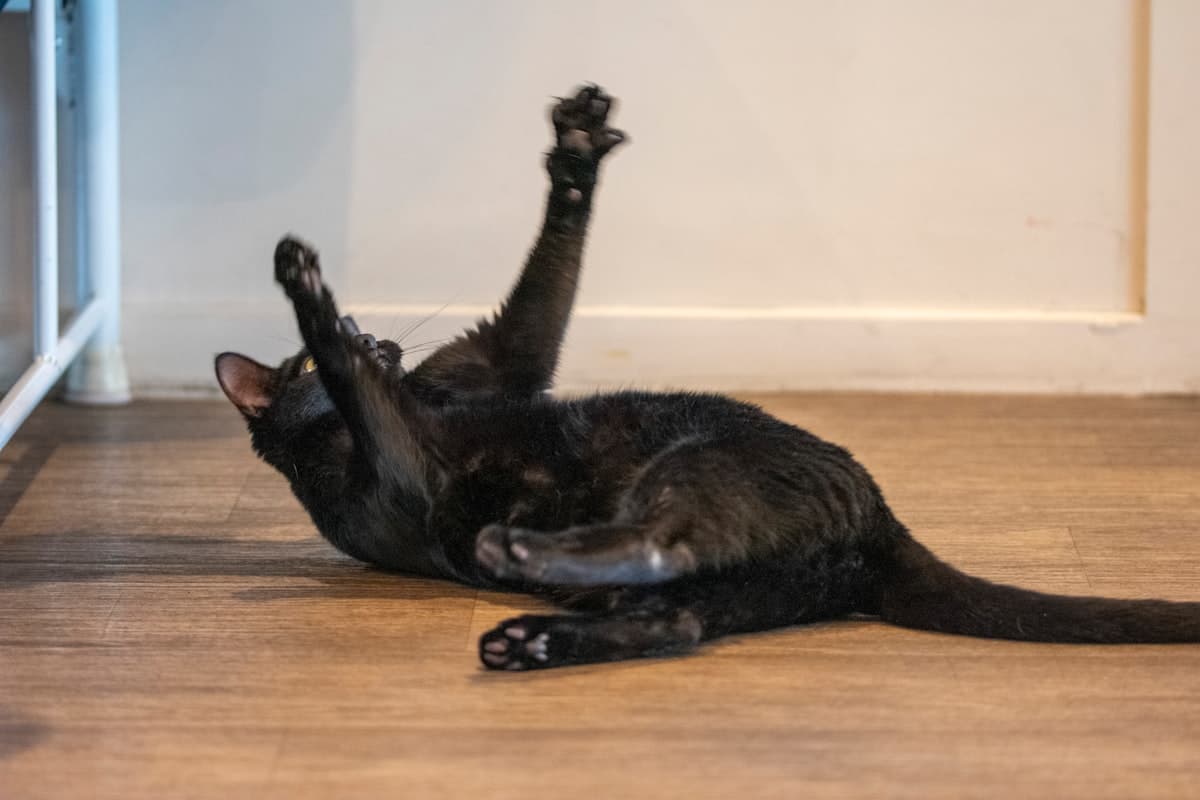
I have dug through decades of feline behavior research, veterinary guidance, and the collective wisdom of cat rescue volunteers to answer one of the most common questions every cat guardian eventually asks: why does my cat bite me? If you are reading this with a fresh set of tooth marks on your hand, take a breath. You are not alone, and in the vast majority of cases, your cat is not plotting against you. Let us walk through the real reasons cats bite, how to tell the different kinds apart, and what you can actually do about it.
The Different Types of Cat Bites
Not all bites are created equal. A nibble during a cuddle session is a completely different conversation than a hard chomp that sends you running for the soap and bandages. The Cornell Feline Health Center groups the causes of feline aggression into several distinct categories, and understanding which one you are dealing with is the first step toward fixing it. Broadly, cat bites fall into a handful of types: play bites, love bites, overstimulation or petting-induced bites, fear and defensive bites, and redirected aggression bites. Each one has its own triggers, its own body language, and its own solution. Misreading the situation is how most people end up getting bitten again.
Play Biting
Play biting is the most common culprit, especially in kittens and young cats. Cats are obligate carnivores, which means their brains are wired from birth to stalk, pounce, and bite. When a kitten does not have a littermate or a mother to practice on, that predatory energy gets pointed at whatever is handy - usually your ankles or your hands.
How Kittens Learn Bite Inhibition
Kittens learn something called bite inhibition during the first few months of life, and it is one of the most important lessons a cat ever learns. When kittens wrestle with their littermates, they bite and scratch each other constantly. If one kitten bites too hard, the victim yelps and the game stops. The biter learns that hard bites end the fun. The mother cat also corrects rough play with a swat or a warning growl. This feedback loop teaches kittens to keep their teeth gentle during social interactions.
The problem arises when a kitten is separated from its litter too early. The American Society for the Prevention of Cruelty to Animals (ASPCA) and most feline behaviorists recommend that kittens stay with their mothers and littermates until at least eight to twelve weeks of age. Kittens pulled away earlier often never develop proper bite inhibition, and they grow into adult cats who do not understand that human skin is fragile. If you adopted a young singleton kitten, you essentially became their littermate, and it is now your job to teach them what their family would have.
Why Your Cat Treats Your Hand Like a Toy
The single biggest mistake people make with kittens is using their hands as toys. Wiggling your fingers under a blanket or letting a tiny kitten gnaw on your hand is adorable when they weigh two pounds. It is significantly less adorable when they are twelve pounds and still think your forearm is a prey animal. Cats do not generalize well, so if they learn that hands are for biting, they will keep biting hands. The fix is simple in theory and takes consistency in practice: never let your hands be the toy.
Love Bites
Not all biting is aggressive. Many cats give what behaviorists call love bites - gentle, rhythmic nibbling that usually happens while you are petting them and they are relaxed. These light little nips are thought to be leftover behavior from kittenhood, when mother cats groom and nibble their kittens, and kittens groom and nibble each other as a sign of bonding and affection.
The Merck Veterinary Manual notes that cats use grooming as a social bonding activity among familiar individuals. A love bite is essentially an extension of that grooming behavior. The cat is not trying to hurt you. The pressure is light, there is no shaking or holding on, and the cat's body stays loose and relaxed. You might notice your cat kneading, purring, or half-closing their eyes at the same time. Love bites are a compliment, even if they are a slightly pinchy one.
Overstimulation and Petting-Induced Aggression
This is the one that catches people off guard. Your cat is in your lap, purring, clearly enjoying the petting session, and then with no warning they sink their teeth into your arm and bolt. What happened?
This is called petting-induced aggression, and it is one of the most well-documented forms of feline aggression. The leading theory, supported by feline behavior researchers and summarized by the ASPCA, is sensory overload. Cats have extremely sensitive nerve endings in their skin, particularly along the back and the base of the tail. As you keep petting, the sensation builds and builds until it crosses a threshold from pleasurable to overwhelming. The bite is the cat's way of saying "that is enough, I need you to stop right now."
Reading the Early Warning Signs
The bite is not actually as sudden as it feels. Cats almost always give warning signals before they bite, but most people miss them because they are subtle. Before an overstimulation bite, watch for:
- Tail twitching or thumping - a flicking tail is a sign of growing irritation - Skin rippling along the back - Ears turning sideways or flattening - Dilated pupils - A sudden shift in body tension - the cat goes from soft to stiff - Looking back at your hand or turning their head toward it
If you see any of these, stop petting immediately. The goal is to end the session before the cat feels the need to escalate to a bite. Most cats have a personal threshold for how much touching they can tolerate, and it varies by individual and by day. Learning your own cat's limit is one of the most useful skills you can develop as a cat guardian.
Fear and Defensive Biting
Fear biting is exactly what it sounds like - a bite delivered by a cat who feels cornered, threatened, and has no escape. This is the most dangerous type of bite because it is driven by genuine fear and survival instinct, and it tends to be hard and fast.
The Cornell Feline Health Center points out that fearful or defensive aggression is common in cats who have not been properly socialized, cats who have had traumatic experiences, and cats who are suddenly confronted with something new and frightening - a loud noise, an unfamiliar person, a trip to the vet. A frightened cat does not want to fight. They want to flee. Biting happens when fleeing is not an option.
Body Language That Says Back Off
A fearful cat telegraphs their distress long before teeth come into play. Learn to recognize the full defensive posture:
- Ears flattened back against the head - Dilated pupils and wide-open eyes - Tail tucked or lashing hard from side to side - Body crouched low or arched with fur standing on end - Hissing, growling, or spitting - Backing away or pressing themselves into a corner
If you see this, do not reach for the cat. Do not try to comfort them by touching them - to a terrified cat, a hand coming toward them is a threat, not a reassurance. Give them space, remove the trigger if you can, and let them calm down on their own terms. Time and a quiet room do more for a frightened cat than any intervention.
Redirected Aggression
Redirected aggression is one of the most confusing and alarming types of biting for cat guardians, because it seems to come completely out of nowhere. Here is the scenario: your cat is sitting in the window, staring outside. Another cat walks through the yard, or a squirrel taunts them, or a dog barks. Your cat gets intensely aroused and agitated - they want to get at the intruder but they cannot, because the window is in the way. Then you walk up and touch them, and they explode, biting and scratching the nearest available target, which is you.
The ASPCA describes redirected aggression as occurring when a cat is aroused by one stimulus but cannot reach it, so they redirect that aggressive energy onto whatever is closest. The cat is not angry at you. They are in a state of high physiological arousal and you simply happened to be in the wrong place at the wrong time.
The tricky part is that a cat in this state can stay agitated for hours. Their nervous system is flooded, and it takes a long time for them to return to baseline. If your cat has had a redirected aggression episode, the best thing to do is leave them alone in a dark, quiet room until they fully calm down. Do not try to handle them. Trying to soothe a cat in this state usually results in more bites.
How to Tell the Bites Apart
So how do you figure out which type of bite you just received? Context is everything, but here is a quick framework:
- Was the cat playing and energetic? Likely a play bite, especially if they were stalking or pouncing. - Were you petting a relaxed cat who suddenly nipped gently? Probably a love bite. - Were you petting a cat for a long time before they bit? Overstimulation. - Was the cat frightened, cornered, or confronted by something scary? Fear or defensive bite. - Was the cat staring out a window or reacting to something they could not reach? Redirected aggression.
Also pay attention to the bite itself. A love bite is a gentle, brief nibble. A play bite may be harder but is usually quick and released immediately. Overstimulation and fear bites tend to be harder and may involve holding on. Redirected aggression bites are often the most severe - multiple bites, claws involved, and the cat seems to be in a frenzy. The harder the bite and the more tense the cat's body, the more seriously you should take the underlying cause.
How to Stop Play Biting
If your cat's biting is play-motivated, the solution comes down to redirecting that predatory energy into appropriate outlets. Here is what feline behavior experts consistently recommend:
Never use your hands or feet as toys. This is rule number one. If you roughhouse with your cat using your bare hands, you are teaching them that hands are fair game. Use wand toys, kicker toys, and puzzle feeders instead. Let the toys be the prey, not your body.
Redirect to a toy every time. When your cat starts biting during play, immediately substitute a toy. A wand toy with a feather or a mouse on the end lets them satisfy the bite-and-kick sequence on something designed for it.
Stop playing when they bite. If your cat bites you, the play session ends instantly. Stand up, walk away, and ignore them for a few minutes. This teaches the same lesson a littermate would: biting ends the fun. Consistency is critical here. If you sometimes let them bite and sometimes walk away, the lesson gets muddled.
Provide enough play time. Many cats bite simply because they are bored and under-stimulated. Two structured play sessions of ten to fifteen minutes each day, using a wand toy that lets them stalk, chase, pounce, and catch, can dramatically reduce unwanted biting. Jackson Galaxy and other cat behavior advocates often frame this as "hunting" - let the cat complete a full predatory sequence and they will be far less likely to hunt your hands.
Bite Inhibition Training for Kittens
If you have a kitten, you are in the ideal window to teach good bite manners. The process mirrors what their littermates would do:
When the kitten bites you hard, say "ouch" in a high-pitched voice and immediately withdraw your hand and stop interacting. The yelp mimics the sound a littermate would make, and the withdrawal mimics the game ending. After a few seconds, you can resume gentle play with a toy, not your hand. If the kitten keeps biting hard, end the session entirely and walk away.
Over time, the kitten learns to inhibit the force of their bite. Once they are consistently biting softly, you can start discouraging even soft bites on skin by redirecting to a toy every time. The goal is a cat who keeps their teeth off humans entirely during play. Kittens are fast learners when the rules are consistent, so everyone in the household needs to follow the same approach.
When Biting Is a Medical Issue
Sometimes a sudden change in biting behavior is not behavioral at all - it is medical. Any cat who suddenly becomes aggressive, especially an older cat who has never had biting problems, should be evaluated by a veterinarian. Pain is one of the most common hidden causes of aggression in cats, and cats are masters at hiding pain until they cannot anymore.
Dental disease is a frequent culprit. A cat with a painful tooth, gingivitis, or a condition called feline tooth resorption may bite or swat when their mouth or face is touched. The Cornell Feline Health Center notes that dental disease is one of the most common health problems in cats, and many guardians never realize their cat is in oral pain until a vet examines them.
Other medical causes of sudden aggression include arthritis, which makes being touched or picked up painful; hyperthyroidism, which can cause restlessness and irritability in older cats; neurological issues; and even skin conditions that make petting uncomfortable. If your cat's biting came on suddenly, is accompanied by other changes in behavior or appetite, or happens only when a specific area is touched, book a vet visit before trying behavioral solutions. You cannot train away pain.
When a Bite Breaks the Skin
Cat bites are not something to brush off. A cat's mouth is full of bacteria, and their sharp teeth can drive that bacteria deep into tissue, creating a perfect environment for infection. The Centers for Disease Control and Prevention (CDC) and medical guidelines consistently warn that cat bites, especially on the hand, have a high rate of infection.
If a cat bite breaks your skin, take these steps:
Wash the wound immediately with soap and warm running water for several minutes. Do not scrub aggressively, but do flush it thoroughly.
Control the bleeding with a clean cloth and apply an antiseptic if you have one.
Watch for signs of infection over the next several days: increasing redness, swelling, warmth, pain, pus, red streaks spreading from the wound, swollen lymph nodes, or fever. Cat bite infections can develop quickly, often within twelve to twenty-four hours.
See a doctor if the bite is deep, on the hand or face, if you have a weakened immune system, or if you notice any signs of infection. You may need antibiotics. A doctor will also check whether you need a tetanus booster.
One specific concern with cat bites and scratches is cat scratch disease, caused by the bacterium Bartonella henselae. The CDC explains that this infection is transmitted when an infected cat bites or scratches a person, or licks an open wound. Symptoms include a bump or blister at the site, swollen and tender lymph nodes, fatigue, fever, and headache. Most cases are mild and resolve on their own, but people with weakened immune systems can develop serious complications. If you develop these symptoms after a cat bite or scratch, see a healthcare provider.
It is also worth knowing that cats who go outdoors, hunt, or have fleas are more likely to carry Bartonella. Keeping your cat indoors and on flea prevention reduces the risk for everyone in the household.
A Final Word on Living With a Biting Cat
Living with a cat who bites can be frustrating, even a little scary, but it helps to remember that biting is communication. Your cat is telling you something - they are overstimulated, they are frightened, they are in pain, or they simply never learned that teeth do not belong on people. When you learn to read their body language and respond to the message instead of just reacting to the bite, the relationship almost always improves.
Most biting cats are not bad cats. They are cats whose natural instincts have met an environment that has not yet given them the right outlets. With patience, consistent rules, the right toys, and a vet check when something seems off, the vast majority of biting problems get better. Your cat wants to understand you and be understood. The more fluently you speak their language, the less often they will need to use their teeth to make a point.
Keep reading
If you found this helpful, you might also like our guides on how to tell if your cat is happy, what purring tells you and how play keeps cats happy.
Further reading
Why Does My Cat Meow? What Each Sound Means (and When to Worry)
How to Introduce Two Cats Without a Fight: A Step-by-Step Guide
Love learning about cats? Adopt a virtual cat pet and level it up by joining our community.
Related reading: Why Does My Kitten Bite Me? What Is Normal and How to Stop It and Why Does My Cat Lick Me (and Then Bite Me)?.
Comments (0)
Join the conversation
Sign up to share your thoughts.
Loading comments...