Why Does My Cat Lick Me (and Then Bite Me)?
Affection, scent, salt and the strange lick-then-nip pattern, explained

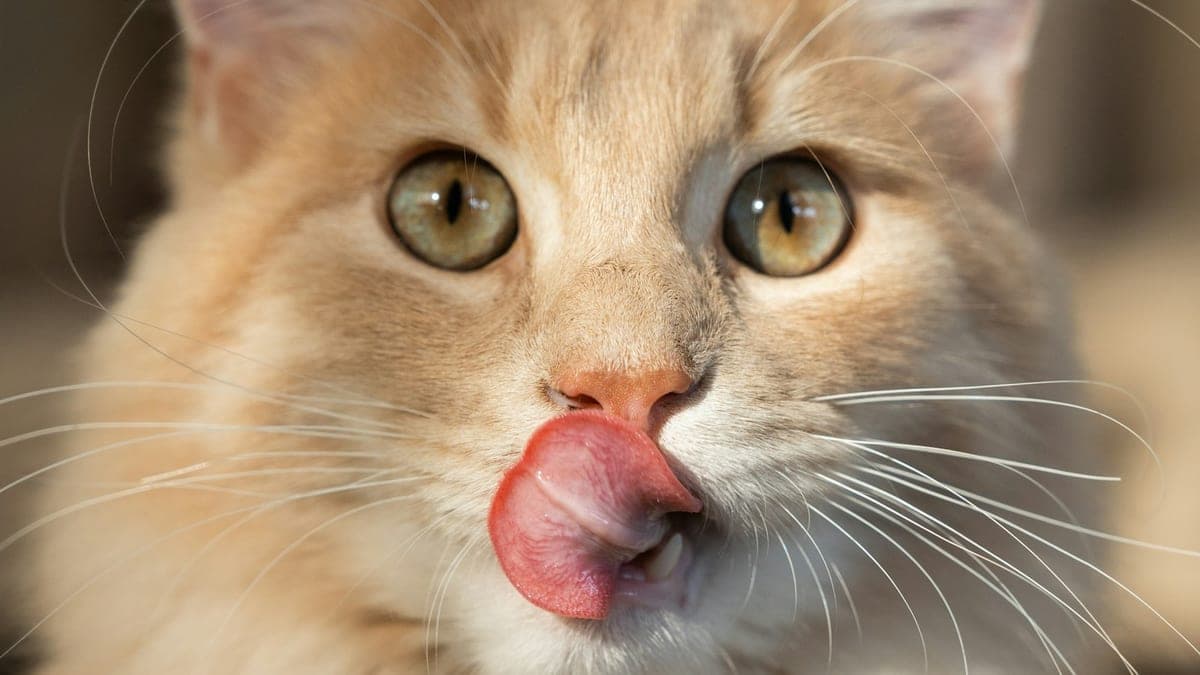
It usually starts when you are sitting still. Your cat hops up, settles in, and then, out of nowhere, a rough little tongue starts working over your hand, your wrist, your chin. It feels like being sanded by someone who loves you. A minute later the licking stops, you reach down to pet that sweet face, and there are teeth. Not a hard bite, just a pinch, but enough to make you wonder what exactly you did wrong.
Nothing, probably. Cats lick people for a handful of different reasons, and the lick-then-bite combination has its own set of explanations that are mostly harmless once you know how to read them. This guide covers why cats lick you in the first place, what is going on with the bite that sometimes follows, how to tell a love nibble from a warning, and the few cases where all that licking is worth a call to the vet.
The short answer
In most cases your cat licks you because you are part of the family. Licking is how cats groom each other, and a cat that grooms you is treating you like one of its own. Other reasons stack on top of that: you taste interesting, your scent is worth spreading around, it gets your attention, and it feels good. When a bite follows, it is usually one of three things: a gentle grooming nibble, a sign your cat has had enough petting, or an invitation to play.
Why cats lick people
It is grooming, and grooming is love
Cats learn to groom before they learn almost anything else. A mother cat licks her kittens to keep them clean, and it is also one of the first social interactions a kitten ever has. Behaviorist Kristyn Vitale, speaking to Popular Science, describes it as the mother's way of saying she cares for her kittens. Kittens start grooming themselves at around four weeks old, and some go on to groom their siblings, other cats, and the people they are closest to.
Mutual grooming between cats has a name: allogrooming. Cats that live together and feel bonded do it with each other, and they generally do not do it with cats they see as rivals. Animal psychologist Dr. David Sands, quoted by BBC Science Focus, puts it this way: adult cats mostly lick cats they trust and are not competing with, and that trusting behavior can transfer to a human. In other words, a cat licking your hand is not announcing that it thinks you are a giant cat. It is saying you are not a threat and you belong.
It is also a lot of licking in general. Research cited by BBC Science Focus suggests an adult cat can spend up to 8 percent of its waking hours grooming. Licking is a huge part of a cat's day, so it is no surprise some of it lands on you.
You carry interesting information
Cats read the world with their noses and mouths. Scientists and behaviorists are not fully sure why cats lick humans, and the BBC Science Focus piece lays out three main theories: trust, collecting chemical information from your skin, and marking you as part of their territory. Those are not mutually exclusive. Your skin carries salt, traces of food, lotion, soap, and the smell of everywhere you have been, and a cat that licks you learns a lot about your day.
The flip side is that licking leaves your cat's scent on you, and cats blend their group scent by rubbing and licking the animals and people they consider family. That is the same logic behind the head bumps and cheek rubs in our guide to why cats headbutt you. You are being marked as theirs, in the nicest possible way.
You taste like something
Salt from sweat is a common draw, and so are food residue and the scent of lotions or soaps. If your cat suddenly develops a passion for licking your hands right after you cook, you can probably guess why. This is the simplest explanation and often the right one.
It works
Cats are good at learning what gets a reaction. If your cat licks you and you pet it, talk to it, or give it a treat, the licking pays off and it will happen more. Some cats lick to say "feed me" or "look at me" in the same way another cat might meow. If the licking tends to show up near mealtime, that is likely what is going on.
It calms them down
Licking is self-soothing for cats. Some cats lick people when they are relaxed and kneading in your lap, and some lick when they are a bit anxious and need something to do. A leftover bit of kitten behavior is part of this too. Many cats that lick blankets, wool, or your arm are reaching back to something that felt safe when they were tiny. If your cat is licking and kneading and purring, it is almost certainly just content. We cover the kneading side of that in why cats knead.
Why a cat's tongue feels like sandpaper
If you have ever been licked by a cat, you know it does not feel like a dog's lick. The surface of a cat's tongue is covered in tiny backward-facing spines called papillae, made of the same material as the claws. A 2018 study in the journal PNAS looked at these structures in six species of cats, from domestic cats to lions, and found that each spine has a hollow tip that soaks up saliva and then releases it deep into the fur. So the tongue works like a comb and a wash cloth at the same time.
On fur, that is brilliant. On bare skin, it feels a lot like a cheese grater, which is why a few enthusiastic licks on a forearm can leave a red patch. It also explains why a cat that spends a lot of time grooming ends up swallowing so much hair, which is the origin of hairballs. If your cat is a heavy groomer, our guide to why cats get hairballs explains what is normal and what is a warning sign.
Why does my cat lick me and then bite me?
This is the part that confuses people the most, and there is not just one answer. The same sequence, lick then bite, can mean quite different things depending on the cat, the moment, and the kind of bite.
A love nibble
Cats sometimes use their teeth when they groom each other, to work out a tangle or get a spot the tongue cannot reach. When your cat grooms you, a gentle nip can be part of the same routine. These bites tend not to break the skin, your cat usually looks relaxed, and sometimes it will tense a moment before the nip and loosen up right after, then go back to licking. Veterinary behavior writers call these love bites or grooming nips, and they are generally a sign of affection.
What it feels like: a light pinch, no pain to speak of, often right in the middle of a licking session. What it looks like: soft eyes, slow blinks, purring, loose body.
Too much petting
Some cats enjoy being petted right up to the moment they do not. The American Association of Feline Practitioners describes a pattern where cats solicit attention from people but bite if they are petted for more than a few seconds, and notes that some cats become less tolerant of petting as they mature. It is often called petting-induced aggression, though overstimulation is a more accurate word, because the cat is not trying to hurt you. The sensation just tips from pleasant to too much, and the bite is a quick way of saying stop.
The lick can be part of this. A cat might lick you gently while you pet it, get overwhelmed, and nip. The giveaway is what the rest of its body is doing. Watch for a tail that flicks or lashes, ears that turn back or flatten out sideways, skin that ripples along the back, pupils that widen, and a sudden stillness. If you see any of those, stop petting and take your hand away before the bite lands.
A play invitation
Cats, especially young ones, sometimes lick and bite as part of play. A lick followed by a pounce on your hand is usually your cat saying it is ready to wrestle. The body language is different from the overstimulated bite: crouched, wide pupils, focused on your moving fingers, often with kicking back feet. If that sounds like your cat, a wand toy will channel it far better than your hand will.
A grooming habit that drifted onto you
Cats nibble their own skin and fur while they groom. If your cat treats you like part of the grooming routine, you might get the whole package: licks, then nibbles. For some cats it is just how they groom. For others, constant nibbling on their own coat can point to fleas or a skin allergy, so notice whether your cat is also nibbling or scratching itself a lot.
Testing boundaries
Cats are not usually scheming, but they do work out what they can get away with. If your cat bites after licking and you laugh, yank your hand away dramatically, or give it a toy, that can accidentally teach it that biting gets a lively response. This is one more reason to stay calm and consistent. Never punish a bite. Cats do not connect punishment with the earlier behavior, and it tends to make them wary of your hands.
How to tell which one it is
Soft, relaxed, no skin broken: probably a love nibble or grooming nip. Enjoy it, or gently move your hand if you do not like it.
Comes after a long petting session, with a flicking tail or flattened ears: overstimulation. Stop sooner next time.
Crouched, intense, wide eyes, back feet kicking: play. Switch to a toy.
Hard, fast, with hissing or a cornered body: fear or pain, not affection. Back off and see the section on when to call the vet.
A good rule of thumb is that the bite is almost never random. It makes sense once you check what the tail, ears, eyes and timing were doing. If you are curious about the broader set of reasons cats bite people, we break down five types of cat bites in detail.
What to do about it
Let licking happen if you like it. There is nothing wrong with a cat grooming you. Cats that lick people are generally bonded and relaxed.
Pet the safe zones. Cheeks, chin and the base of the ears are the most popular. The belly and the base of the tail are the most likely to cause trouble.
Keep sessions short and end them early. If your cat usually bites after about a minute, stop at 40 seconds. Over time, stopping before the limit can help some cats tolerate more, though some stay low-threshold for life.
Let your cat control the contact. Offer your hand, let it come to you, and let it leave when it wants.
Redirect nips to a toy. Keep a wand toy or a soft kicker nearby, and swap it in the moment you feel teeth.
Do not yank your hand away. Moving fast can turn a nip into a game. Go still, then move away calmly.
Never scold, flick, or spray water. It does not teach what you hope it does.
What if the licking is too much?
If your cat licks you and you do not like it, the fix is not complicated. Do not reward it: calmly move your arm away or put a pillow in the way. Offer something else to do: a lickable treat mat, a puzzle feeder, or a play session. And keep it consistent. Cats pick up routines fast.
One practical note: skin products. Your cat may be attracted to lotions, creams and sunscreens, but some topical products are not safe for cats to swallow. If you use any medicated cream or ointment, keep your cat away until it is fully absorbed or washed off, and call your vet right away if your cat licked a medicated product.
When licking is a problem
Occasional licking is normal, even enthusiastic licking. Pay attention to these changes:
A sudden spike in licking you or objects. Cats that lick more than usual, or begin licking fabrics, plastic or walls, may be stressed or bored. A change in routine, a new pet, or a move are common triggers.
Licking that seems compulsive. If your cat cannot be redirected and keeps going, mention it to your vet.
Licking paired with hiding, a change in appetite, or over-grooming of its own fur. Over-grooming that leaves bald patches or sore skin is a medical and behavioral issue, not a quirk.
Sudden biting when touched, or biting no matter where you pet. This can mean pain somewhere, so a vet check is a good idea.
A vet can rule out pain, skin problems and parasites, and, if stress is the cause, suggest ways to make your cat's environment feel calmer and more predictable.
Common questions
Why does my cat lick my face?
Your face carries your scent and your breath, and it is closer to your cat's own height when you are lying down. A lick on the face is usually affection or a little attention-seeking, and it often happens first thing in the morning when your cat would like breakfast.
Why does my cat lick my hair?
Hair holds a lot of scent, and shampoo and conditioner can smell and taste interesting. It may also be grooming. Cats that are bonded often groom each other's heads, because that is a spot they cannot easily reach themselves.
Why does my cat lick me at night?
Cats are most active around dawn and dusk. A cat that licks you at night or in the early morning may simply be awake and wanting company, or wanting food. If it happens every night, feeding a little later and playing before bed can help.
Is it safe to let my cat lick me?
For most healthy people, a bit of licking on intact skin is not a problem. Keep your cat away from open wounds, wash your hands after, and avoid letting a cat lick your face if you are immunocompromised. If you have any health concerns, ask your doctor.
Why does my cat lick me and then walk away?
Cats do things on their own schedule. A quick lick followed by a departure is usually a casual greeting or a moment of grooming, not a rejection. You do not need to read anything into it.
Does licking mean my cat loves me?
Often, yes. Licking is one of the ways cats show trust and belonging, and it fits in with what we know about cats and attachment. A cat that licks you is comfortable with you. Not every cat does it, though, and a cat that never licks people can love you just as much.
The bottom line
Your cat licks you because you are part of its social circle. Add salt, scent, habit and a bit of self-soothing, and you get the sandpaper treatment. The nip that sometimes follows is usually a love bite, an overstimulation warning, or a play invitation, and the tail, ears and timing will tell you which. Learn those signals, stop petting a beat before your cat runs out of patience, and a lot of the lick-then-bite drama goes away.
Keep reading
Why Does My Cat Bite Me? 5 Types of Cat Bites Explained. Is My Cat Happy? The Body Language Signs That Actually Matter. Do Cats Feel Love? Yes - Here Is What the Science Proves.
Comments (0)
Join the conversation
Sign up to share your thoughts.
Loading comments...