Why Does My Cat Stare at Me?
Feline eye contact, the slow blink discovery, and when a stare means something else

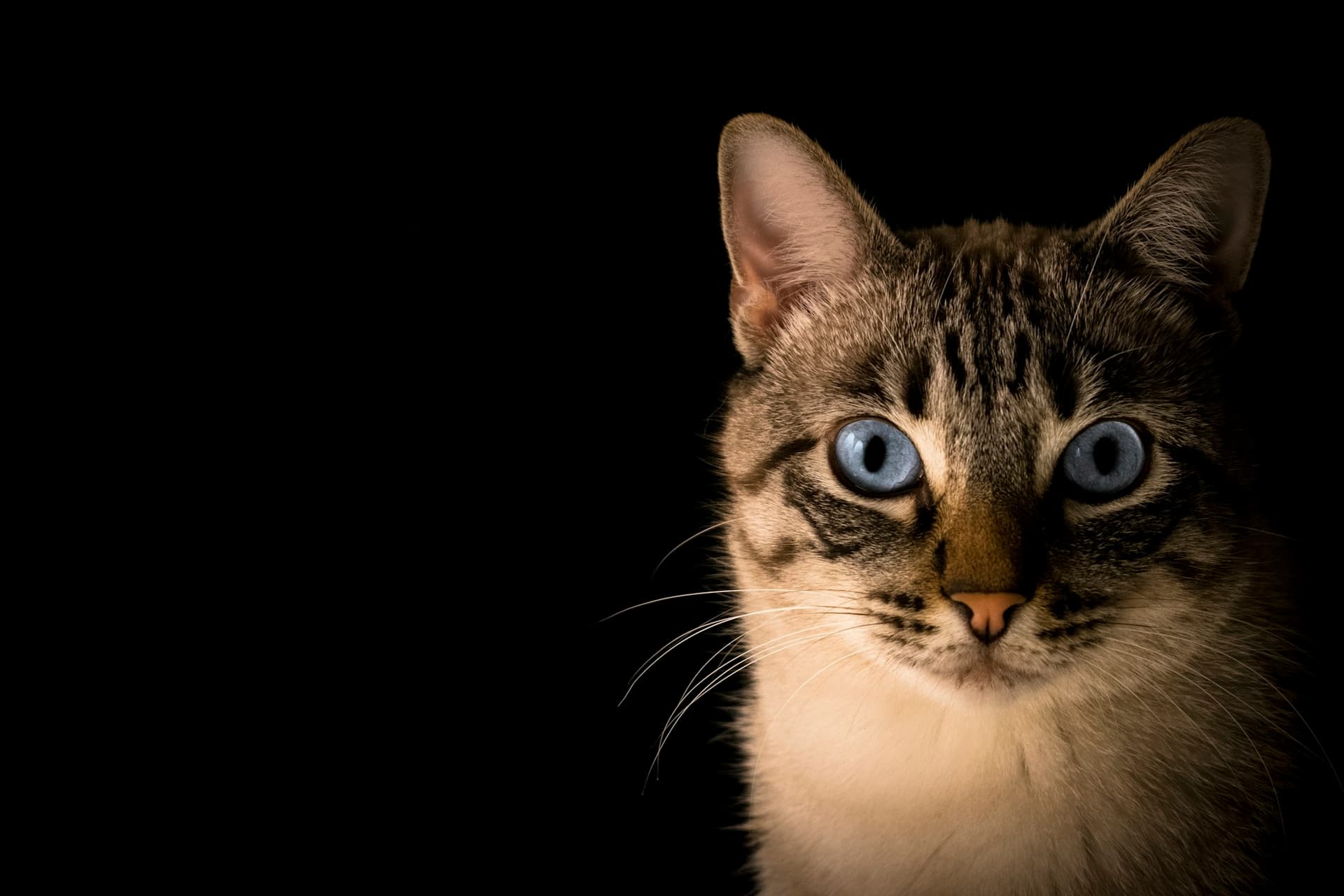
You look up from your laptop and there it is: your cat, across the room, staring at you. Unblinking. Judging, you suspect. It is one of the strangest parts of living with a cat, that fixed, patient gaze that seems to go on long past the point where any social creature would look away.
It is tempting to file this under cats being weird, but the stare is actually legible. Cats use their eyes deliberately, and the research on cat eye contact has produced one genuinely delightful finding in the last few years. Here is what your cat's stare probably means, and what to do with it.
First, why the stare feels so intense
In most social mammals, a long, direct, unblinking stare is a threat. Among dogs and primates, holding eye contact is how confrontations start, which is why your dog looks away first and why staring back at a strange dog is bad advice. Cats are similar with each other: a hard stare between two unfamiliar cats is a challenge, and the polite resolution is for one of them to look away.
So when your cat stares at you without breaking eye contact, they are doing something they would not casually do to a rival. That does not mean the stare is a threat. It means your cat has decided you are not one, and the meaning of the stare comes from everything around it: the relaxed body, the tail, the ears, and most importantly, the eyes themselves.
The slow blink: the finding that changed the game
In 2020, a team led by Tasmin Humphrey and Karen McComb at the University of Sussex published the first experimental study of a behavior cat owners had reported for decades: the slow blink. The study, published in Scientific Reports, ran two experiments. In the first, owners slow blinked at their cats, and the cats were significantly more likely to slow blink back than when the owner was present but not blinking. In the second, an unfamiliar experimenter slow blinked at cats, and the cats were more likely to approach the experimenter's outstretched hand after the slow blink than after a neutral expression.
The researchers compared the slow blink to the human Duchenne smile, the genuine kind: eye narrowing that signals positive emotion, and that appears in similar form in other species, including dogs, horses, and cows during pleasant contact. The slow blink sequence, a series of half blinks followed by a prolonged narrowing or full closure of the eyes, is, as far as anyone has been able to establish experimentally, a cat smile.
So when your cat stares at you and then slowly, deliberately narrows their eyes and blinks, they are not falling asleep. They are sending you the friendliest signal in their vocabulary.
A follow-up study on shelter cats found that cats who responded to human slow blinks with eye closures of their own were rehomed faster than cats who did not, which suggests the slow blink is doing real social work even between strangers. The same research found a trend worth knowing: nervous cats actually gave longer slow blink responses, hinting the behavior may serve a submissive, appeasing function as well as an affiliative one.
How to stare back correctly
This is the rare piece of cat advice you can test tonight. Catch your cat's gaze, soften your own eyes, and blink slowly, the way you might do when drowsy. Then look slightly away. Do not lean in and do not hold unbroken eye contact afterward. Many cats will slow blink back, and some will walk over. The Sussex team explicitly framed the technique as something owners can use to build rapport with their own cats and with unfamiliar ones. It works best in a calm moment, and it works poorly if you are looming over the cat while doing it.
The other stares, decoded
Not every stare is affection. Context and body language separate the meanings.
The soft stare with slow blinking: contentment and trust. This is the good one.
The stare with a tail pointed at you and a chirp or meow: a request. Food, play, or the door to the balcony. Cats learn that staring at their human gets results, the same way a toddler learns that staring at a parent gets results.
The hunting stare: pupils wide, body low, fixed on something past you, possibly with the tail tip twitching. That is prey drive, and you happen to be between the cat and the bird on the windowsill.
The stare with a tense body, flattened ears, and a stiff tail: overstimulation or fear. This is the stare that precedes a swat during petting. Break eye contact and give the cat space.
The middle-of-the-night stare at nothing: cats see and hear far more than we do, and some of their vacant staring is just processing stimuli you have no access to. It is unsettling and normal.
When staring at you is a vet visit
One medical note. A stare that comes with a changed appearance in the eyes themselves is not behavioral. Dilated pupils that stay dilated, unequal pupil sizes, a cloudy eye, or a cat who stares past you and bumps into things can indicate hypertension, vision loss, or other conditions that are common in older cats. Sudden changes in how your cat looks at the world deserve an exam, especially in seniors.
Do cats know who they are staring at?
Yes, more than most people assume. A 2013 study by Atsuko Saito and colleagues, published in Animal Cognition, found that cats distinguish their owner's voice from a stranger's and respond specifically to their own name being called, even when a stranger's voice says it. Later work from Saito's lab, published in Scientific Reports in 2019, confirmed that cats recognize their own names and will often orient to them while ignoring similar-sounding words. So the stare across the room is not a cat looking at a generic human. It is a cat who knows your voice, knows your name, and is watching a specific person they have a running relationship with. What they are doing with that information depends on the rest of their body language.
Why cats stare at walls (and other invisible things)
The vacant stare at a blank wall is the stare that worries people, and it is almost always sensory rather than supernatural. Cats hear into the ultrasonic range, well above human hearing, which means a cat staring intently at a wall may be tracking rodents inside it or high-frequency sounds you have no access to. Their low-light vision also picks up movement in dim rooms that you simply cannot see. Most wall staring is a cat using senses you do not have. The exception that matters: if the staring comes with head pressing, where the cat pushes their head against a wall or corner and stays there, that is not curiosity, that is a neurological emergency, and it needs a vet immediately.
The stare during petting: read it as a countdown
A fixed stare during a petting session is one of the most useful warning signals in cat body language, and one of the most missed. When a cat who was purring moments ago goes still, stares at you with a tense face, and their tail starts to swish, the petting has crossed from pleasant to irritating, and the bite is the next line item on the agenda. The correct response is to stop petting and break eye contact calmly. Cats almost always flash this sequence before a petting-induced bite, which means the bites that seem to come out of nowhere almost never do. They came from a stare you were not taught to read.
Answering the stare questions
Why does my cat stare at me without blinking?
Because for a cat, unblinking is the relaxed default. Humans blink constantly and read eye contact through it, so an unblinking stare feels intense to us. To your cat it is just attentive rest. The blink itself is the signal: cats blink deliberately to communicate, which is why the slow blink carries meaning and the unblinking gaze carries none. Do not project dog rules onto cat eyes.
Why does my cat stare at me at night?
You have a crepuscular housemate with working night vision, and from their perspective you have been motionless and unresponsive for hours, which is either concerning or an opportunity. Sometimes the night stare is simple monitoring, a check that the large warm thing is still there. Sometimes it is the opening move of a campaign to get you vertical and near the food bowl. Both are normal. Only the second one should be rewarded.
Why does my cat stare at me and slowly blink?
That is the compliment. The slow blink sequence, half blinks followed by a prolonged narrowing of the eyes, is the positive emotional signal documented in the 2020 University of Sussex research, and responding to it is how the conversation continues. Blink slowly back, then look away politely. If your cat slow blinks at you regularly, you have a cat who is not just watching you but talking to you, in the only eye language cats have.
The bottom line
Your cat stares at you because you are the most important thing in their territory and they have the eye contact habits to prove it. The unblinking gaze means they do not consider you a threat, the slow blink means considerably more than that, and the 3 a.m. stare from the nightstand means you have a cat and this is the arrangement. Try the slow blink back. It is the only conversation in your house where blinking slowly at someone is a compliment, and the research says your cat will probably answer.
Related reading: Is My Cat Happy?, Do Cats Feel Love?.
Comments (0)
Join the conversation
Sign up to share your thoughts.
Loading comments...