Why Does My Cat Follow Me Everywhere?
Attachment, associative learning, and the bathroom door problem, explained

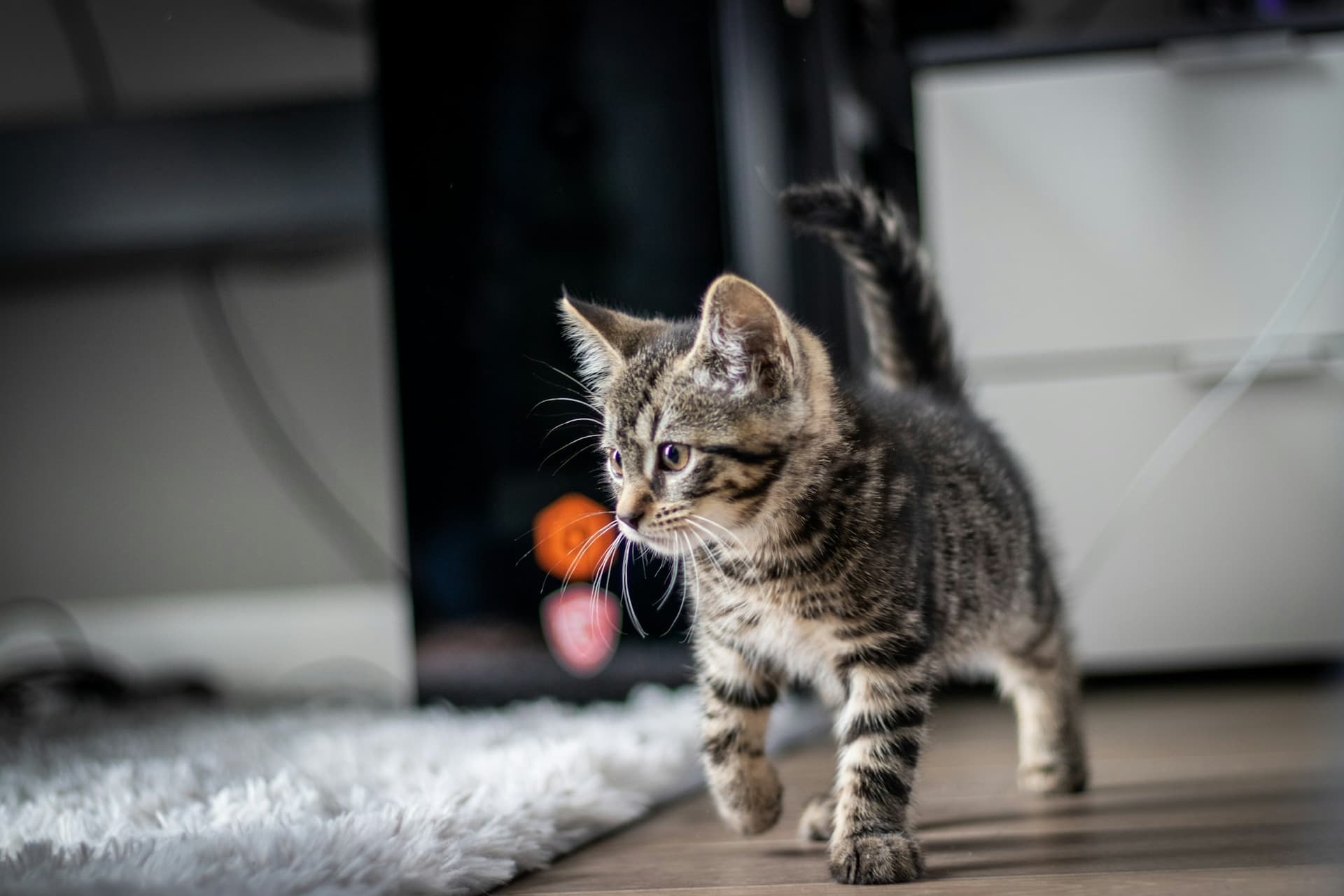
You have a shadow, and the shadow has whiskers. Kitchen, hallway, bathroom, back to the kitchen. Wherever you go, your cat goes, or at least arrives shortly after and sits there staring at you. Some cats even wait outside the bathroom door and cry. If you have wondered why your cat follows you everywhere, the short answer is that this is usually one of the healthiest behaviors your cat can show.
The longer answer involves attachment research, associative learning, and one genuine caution about when following stops being affection and starts being distress. Let us go through it.
First, cats are not the loners they are made out to be
The popular image of the cat as a solitary, self-sufficient roommate is outdated. Research on feline social behavior has consistently shown that domestic cats form genuine attachments to their owners and treat humans as part of their social group. The best-known study came from Oregon State University in 2019, when Kristyn Vitale's team ran a secure base test, adapted from the Strange Situation test used with human infants, on 79 cats and their owners. About 65 percent showed secure attachment to their people, a proportion almost identical to human infants.
A securely attached cat uses their person the way an infant uses a parent: as a base of operations, a familiar point in the room that makes everything else feel safe. Following you around is what that attachment looks like from the outside. As behaviorists put it, the cat who follows you is expressing preference. They are choosing to be near you the same way you might choose to sit in the same room as someone you like. It does not indicate need. It indicates company.
Your movement predicts good things
There is a second engine behind the following, and it is less romantic but very real: associative learning. Cats are excellent observers of cause and effect, and your movement through the house has historically predicted meals, treats, play sessions, and doors being opened. If you get up in the morning and walk toward the kitchen, and food appears, your cat has logged that sequence. Permanently.
This is why so many cats follow their person specifically at certain times of day. The 6 a.m. escort to the kitchen is not devotion, or at least not only devotion. It is a cat who has learned that your movement is the most reliable cue in their world that something good is about to happen. Behaviorists are quick to note this is not manipulation. It is the same basic learning process that makes you reach for your phone when it buzzes.
Curiosity and territory patrol
Cats investigate change. Open a door to a room they rarely access and they will slip in behind you to inspect it. Rearranged furniture, a new bag on the table, a box that was not there yesterday: all of it gets audited. When you move through the house, you generate novelty, and a curious cat trails along to keep tabs on it.
There is also a territorial component. Cats patrol and re-mark their space regularly, and you are part of what they patrol. Following you on your rounds can simply be your cat doing their rounds too, in company.
The bathroom door, specifically
Cat owners report that the bathroom is the room their cat most insists on entering. Several things converge there. Closed doors are, to a cat, an affront: your territory is supposed to be navigable, and a shut door is a problem to solve. The bathroom is also full of interesting water (the tub, the sink, the toilet), it is a small room where you are a captive audience, and many cats find that a person sitting still on a chair-like object is an excellent lap opportunity.
Add it up and the bathroom follow is less mysterious than it looks. Your cat is not studying your privacy. They are keeping the group together, checking the water situation, and objecting to the door policy.
When following is a problem
Most following is normal and healthy. The concern is when it changes or intensifies, and especially when it comes with distress. Behaviorists distinguish preference from anxiety by looking at what happens when you are out of sight. A cat who prefers your company settles down when you leave the room. A cat with separation-related distress cannot settle: they vocalize, scratch at doors, stop eating, or have litter box accidents when you are gone.
Zoetis's behavior team describes the overly clingy zone as the point where the behavior interferes with your day or the cat's: constant shadowing, loud meowing when blocked from a room, and distress behaviors when you leave. Two other situations deserve attention.
A sudden increase in clinginess in a previously independent cat can signal illness or pain. Cats often become more needy when something is wrong, and senior cats in particular should see a vet if the shadowing is new.
An under-stimulated indoor cat will follow you because you are the only entertainment available. The fix is not distance, it is enrichment: play sessions, window perches, puzzle feeders, and toys on rotation.
What to do with a velcro cat
If you enjoy the company, enjoy it. A following cat is a bonded cat, and there is no rule that says you need to train it away. If the behavior is getting intense, though, the goal is a cat who is confident when alone, not a cat who is banned from the room.
Add structure to the day: two or three play sessions with a wand toy, ending with a small meal, mimic the hunt-then-eat cycle and take the edge off.
Make the rest of the house interesting: window perches, cat trees, hidden treats, puzzle feeders.
Reward calm independence. When your cat settles somewhere on their own, that is the moment for quiet praise or a treat, not when they are glued to you.
Skip the punishment. It does not build independence, it builds insecurity, which produces more clinging, not less.
Which cats follow their people the most
Following behavior is not distributed evenly. It shows up most in a few predictable situations: single cats with no feline playmate, who route their social energy toward their person; cats who were well socialized with humans during the sensitive window between two and seven weeks of age; and cats bonded to one particular person in a multi-person household. Breed plays a role too. The people-oriented breeds, Siamese and Ragdolls among them, are notorious shadows, and mixed-breed individuals vary by temperament. If your cat follows you, there is a decent chance at least one of those boxes is ticked.
Following vs leading: when your cat is herding you
Watch closely and you will notice the following is not always behind you. Many cats walk slightly ahead of their person, glance back, and adjust pace, a pattern most owners recognize from the walk to the food bowl at breakfast. That is not following. That is delegation. Your cat has learned that you respond to being led, and the walk-ahead-and-look-back routine is a trained behavior with you on both ends of the leash, so to speak. It is also, behaviorists would note, a sign of a cat who has studied you carefully enough to know exactly which of your habits produce results.
How to tell preference from separation anxiety
The distinction that matters most is what happens when you leave. A cat who follows you out of preference may protest briefly and then settles: eats, plays, naps in your spot. A cat with separation-related distress cannot settle, and the signs show up in your absence, which is exactly when you cannot see them. The standard advice from behaviorists is to film your cat when you are out. Look for distress vocalization that does not stop, house soiling, overgrooming, pacing, or refusal to eat. If you see those, bring the video to your vet, because separation distress in cats is real, it is underdiagnosed, and it is treatable. The following itself is not the problem. The inability to be apart is.
Answering the following questions
Why does my cat follow me and meow?
The combination of following and meowing is usually a directed request with a destination attached. Cats learn to escort their person to the thing they want: the food bowl, the empty water dish, the door to a closed room, the litter box that could be cleaner. Play the game of following the escort to see where they stop. If the destination is nothing obvious, then the meow is attention-seeking, and the answer is a play session rather than a guessing contest.
Why does my cat follow me to the bathroom?
The short version: closed doors, interesting water, and a captive audience. We have a full breakdown of the bathroom phenomenon, including why cats find the room so magnetic, in the follow-you-to-the-bathroom piece.
Why does my cat suddenly follow me everywhere?
A sudden change in an otherwise independent cat deserves attention before it gets a cute explanation. New clinginess can follow a stressful event, a household change, or a disruption in routine, and in older cats especially it can be an early sign of illness or cognitive change, since cats often become more needy when something feels wrong. Give it a few days if there is an obvious trigger like a recent move. If there is no obvious trigger, or if the clinginess comes with appetite, litter box, or vocalization changes, call your vet.
The bottom line
A cat who follows you everywhere is telling you that you are their secure base, their best predictor of good things, and the most interesting object in the house. All three can be true at once. Enjoy the escort service, keep an eye out for sudden changes, and if the shadowing comes with distress when you leave, treat it as anxiety and build your cat's confidence rather than the distance. Otherwise, the bathroom door is a lost cause. Let them in.
Related reading: Why Does My Cat Follow Me to the Bathroom?.
Comments (0)
Join the conversation
Sign up to share your thoughts.
Loading comments...