Why Does My Cat Drool When I Pet Him? Normal or Not?
Contentment, nursing instincts and the drooling that needs a vet

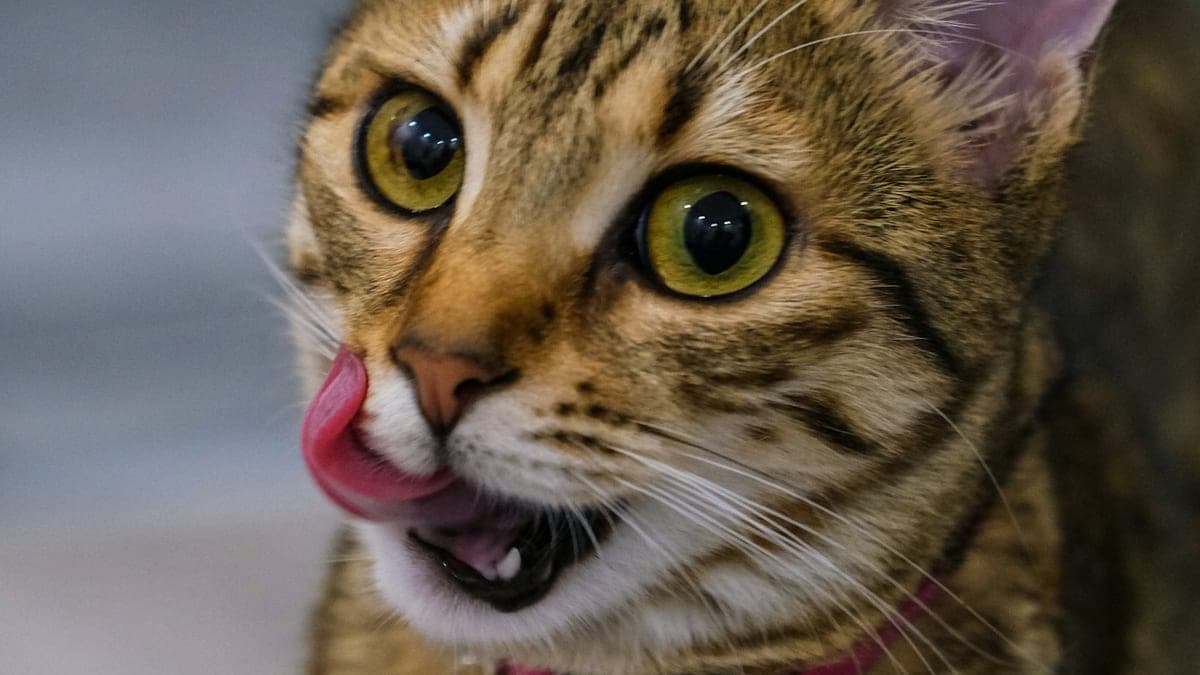
You are scratching your cat under the chin, it is purring like a tiny motorboat, and then you notice a wet spot on your jeans. Or a glistening thread hanging from the corner of its mouth. Your cat does not seem bothered. In fact, it looks like the happiest creature alive.
For a lot of cats, drooling while being petted really is a happy sign. But drool is also one of those symptoms that can mean very different things, from pure contentment to a painful tooth. This guide explains why some cats drool when you pet them, how to tell the harmless kind from the kind that needs a vet, and what to watch for.
The short answer
If your cat drools a little while it is purring, kneading, or being petted, and is otherwise eating, drinking and acting normally, it is most likely relaxed. The Spruce Pets describes it as a sign of relaxation and contentment that can be traced back to nursing as a kitten. But new, constant or heavy drooling is a different matter. It can point to mouth pain, nausea, a foreign object, poisoning or illness, and it deserves a vet call.
Why some cats drool when they are happy
Leftover kitten behavior
Kittens knead their mother's belly to stimulate milk flow. During nursing, they purr, knead and often drool a little. According to The Spruce Pets, in adulthood the feelings of contentment can trigger kneading, which then stimulates drooling because of the connection to nursing, and purring often goes along with it. In other words, your cat may be reliving the best meal of its life. If your cat is making biscuits on your lap while it drools, you are looking at a very comfortable animal. We cover the kneading in detail in why cats knead, and the purring in why cats purr.
Relaxed muscles
Veterinarians writing for Catster point out that when some cats feel calm and relaxed, the muscles around the mouth and neck relax too, and a trickle of saliva can escape. It is the same reason some people drool in their sleep. Catster also notes that stimulation of the parasympathetic nervous system, the "rest and digest" side, can increase saliva production. A scratch in just the right spot can flip that switch.
Not every cat does it
Some cats drool every time they are petted and some never do. The Petful pet health site says a familiar, brief dribble can be normal for an individual cat when eating, drinking and behavior are otherwise unchanged, and that other cats never do it. The key words are familiar and unchanged. What matters is whether it is your cat's usual pattern.
Other reasons a cat might drool
Not all drool comes from happiness. Here are other common triggers, from mild to serious.
Stress or fear
Cats may drool temporarily when they are stressed, such as in the car, at the vet, or during loud events. The Spruce Pets notes that if the drooling and stress are short-lived and stop on their own, there is probably little to worry about. If your cat seems regularly stressed, talk to your vet about ways to help.
Nausea
Catster explains that before vomiting, cats produce extra saliva to protect the esophagus from stomach acid. A cat that drools, licks its lips repeatedly, swallows a lot, and then throws up is probably nauseous. If vomiting is frequent, see our guide to why cats throw up.
A bad taste, medication or catnip
Some medications taste awful and make cats drool, especially pills and liquids given by mouth. Catnip can also cause drooling in some cats, along with the more familiar excitement or calm. Our guide to catnip safety covers what to expect. In all of these cases the drool is brief and goes away on its own.
Dental disease and mouth pain
This is the most important cause to know about, because it is common and often missed. The Emergency Veterinary Care Centers blog lists gingivitis, tooth abscesses and mouth ulcers as conditions that can make swallowing painful and lead to drooling. Cats with dental problems may also paw at their mouths, have bad breath, chew on one side, drop food, or show less interest in eating. Petful notes dental disease is common, and that drooling alone does not diagnose anything more serious. A vet can look in the mouth and tell you.
Something stuck in the mouth
Cats chew on strings, plants, and toys. An object stuck in the mouth or throat can irritate the gums and cause drooling, and Emergency Veterinary Care Centers say a vet should promptly evaluate any cat suspected of having a foreign object. Never pull on string you see coming out of your cat's mouth. Call your vet.
Toxins and poisoning
Some household plants, chemicals and human medications are toxic to cats and cause drooling as the body tries to deal with the irritant. Vomiting, lethargy and difficulty breathing may follow. If you think your cat has chewed a plant or licked a chemical, that is an emergency. Call your vet or a pet poison hotline right away, and do not wait to see if symptoms appear.
Respiratory infections
The Merck Veterinary Manual lists salivation among the signs of feline respiratory disease complex, along with sneezing, eye discharge and mouth ulcers. If your drooling cat is also sneezing or has a runny nose or eyes, see our guide to why cats sneeze.
Injury, tumors and other illness
Trauma to the gums or tongue, a misaligned bite, tumors in the mouth or throat, nerve problems and illnesses like kidney disease can all cause drooling. These are less common, but they are part of why a vet should check any drooling that is new and does not go away. Emergency Veterinary Care Centers point out that oral tumors may also bring weight loss, decreased appetite or swelling of the face or jaw.
Normal drool or a problem? A quick checklist
Probably fine
It happens when your cat is purring, kneading, or being petted
It has always happened this way, or it started in a relaxed moment
It stops within a minute or two once your cat is calm
Your cat is eating, drinking, grooming, and acting normally
There is no bad smell, and the mouth looks normal
See your vet
New drooling that your cat has never done before
Drooling that is constant, heavy, or continues after petting stops
Reduced appetite, dropping food, or chewing on one side
Bad breath, red or swollen gums, or visible tartar or sores
Pawing at the mouth or rubbing the face on the floor
Vomiting, lethargy, hiding, or weight loss
Sneezing, nasal discharge or eye discharge
Go to an emergency vet now
You think your cat ate a toxic plant, chemical or medication
Drooling with trouble breathing, collapse or seizures
A string, needle or object is stuck in or coming out of the mouth
The mouth is bleeding, swollen, or your cat cannot close it
Petful's guidance is clear: new continuous drooling, mouth pain or eating changes need veterinary advice, and suspected poisoning, breathing trouble, collapse or seizures need emergency care. It also says there is no reliable home remedy for an undiagnosed drooling problem, and that you should avoid medicines or dental products meant to dry up the saliva before the cause is known.
Checking your cat's mouth at home
You are not trying to diagnose anything, just to notice changes. If your cat tolerates it, gently lift the lip on each side and look at the gums and teeth in good light. Healthy gums are pink, not red, swollen or bleeding. Look for brown tartar along the gum line, broken teeth, or sores. Smell matters too: a strong, foul odor is not normal. If your cat resists, do not force it. A cat that is in mouth pain may bite, and you will not get a good look anyway. Book an exam instead.
Regular vet checks matter here. The Spruce Pets notes that cats should see the vet at least once a year for a routine wellness exam, even if they seem healthy, because vets can often catch problems early. For drooling, that includes a dental check.
Does my cat drool in its sleep?
Some cats do, and it follows the same logic as drooling during petting: a very relaxed cat has relaxed mouth muscles. If your cat sometimes leaves a wet spot on your chest or pillow while snoozing on you, and is otherwise fine, it is usually harmless. We talk about why cats pick that spot in why cats sleep on your chest. If your cat suddenly starts drooling heavily during sleep when it never did before, it is worth mentioning at the next visit.
Common questions
Why does my cat drool when I pet him?
The most common reason is relaxation. Your cat feels safe and content, and the same nursing-linked pathways that drive purring and kneading can trigger saliva. If it is your cat's regular habit and nothing else has changed, it is usually fine.
Why does my cat drool and knead?
Kneading and drooling go together for many cats because both come from nursing. Kneading is an instinct to stimulate milk flow, and some cats drool when they feel that deeply comforted.
Is drooling a sign of happiness in cats?
It can be, but it is not a reliable sign by itself. A happy cat may drool, but a cat that is stressed, nauseous or in pain can too. Look at the whole picture: the context, the rest of its body language, and whether this is typical for your cat. Our guide to reading your cat's mood helps with that.
Should I stop petting my cat if it drools?
There is no need to, if your cat is enjoying itself. Wipe the drool if you want, and watch for changes. If your cat suddenly drools when you touch its face or mouth, it might hurt. Stop, and have your vet check for dental problems.
Can kittens drool?
Yes. Petful says concerns apply to kittens and adults alike. A drooling kitten that is nursing and kneading is probably fine, but a kitten with new or constant drooling, poor appetite or sneezing should be checked.
What causes a cat to drool all of a sudden?
Sudden drooling can come from nausea, a bad-tasting medication, a foreign object in the mouth, mouth pain, toxin exposure or an infection. Because the list includes emergencies, treat sudden, heavy drooling as a reason to call your vet.
The bottom line
A little drool during a purring, kneading, petting session is usually a sign of a cat that feels very safe. Know your cat's normal. If the pattern changes, if the drooling is heavy or constant, or if it comes with bad breath, eating changes, pawing at the mouth, vomiting or lethargy, do not wait it out. Call your vet, and treat any suspected poisoning, breathing trouble or object stuck in the mouth as an emergency.
Keep reading
Why Do Cats Knead? The Real Reason Behind 'Making Biscuits'. Why Do Cats Purr? It Is Not Just Happiness. Is My Cat Happy? The Body Language Signs That Actually Matter.
Comments (0)
Join the conversation
Sign up to share your thoughts.
Loading comments...