Is Catnip Actually Safe for Your Cat?
The science behind what catnip does to your cat's brain, and whether you should worry about it

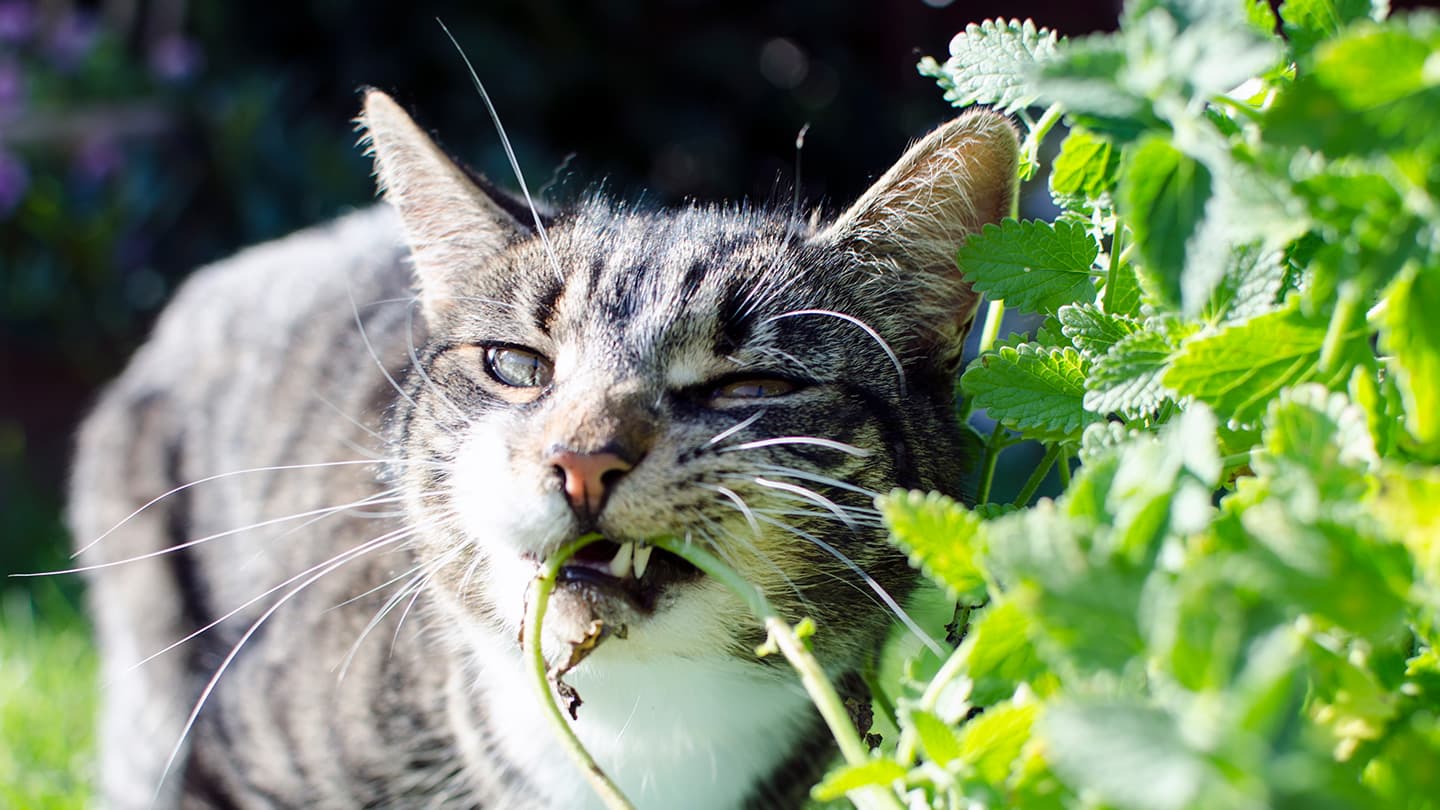
You sprinkle a little dried herb on the floor, and within seconds your cat is rolling on their back, eyes wide, drooling, rubbing their face into the carpet like they have just discovered the meaning of life. Ten minutes later, they are fast asleep. You are standing there holding the jar wondering what exactly you just gave your cat, and whether it is actually okay.
It is a fair question. Catnip looks like a drug. It acts like a drug. Your cat acts like they are on something when they encounter it. And the internet is full of videos of cats completely zonked out on the stuff, which is funny until you start wondering whether you are doing something harmful to an animal you love. So let us look at what catnip actually is, what it does to your cat's brain, and what the science says about whether it is safe.
The short answer is that catnip is safe for the vast majority of cats. It is non-toxic, non-addictive, and the effects wear off on their own. But there are some cats who should not have it, and there are some ways of using it that are safer than others. The long answer is a lot more interesting, and it involves the opioid system, mosquito repellent, and a question about why cats evolved to get high in the first place.
What catnip actually is
Catnip is a plant. Specifically, it is Nepeta cataria, a member of the mint family native to Europe, Asia, and the Middle East, and now growing wild across most of North America along roadsides and in fields. It has been around for a long time, and humans have used it for centuries as a tea, a mild sedative, and an insect repellent. The plant produces a chemical compound called nepetalactone in microscopic bulbs that coat its leaves, stems, and seedpods. When those bulbs rupture, which happens when a cat bites, rubs, or brushes against the plant, the nepetalactone is released into the air.
The chemical does not have to be ingested to work. It works through smell alone. When a cat inhales nepetalactone, it binds to receptors in their nasal tissue and stimulates sensory neurons that run into the brain. Specifically, it activates areas including the olfactory bulb, the amygdala, which is involved in emotion, and the hypothalamus, which regulates a whole range of behaviors. This is why the effect is so fast. Your cat does not need to eat the catnip. They just need to smell it, and within seconds the compound is already triggering changes in their brain.
Scientists used to think nepetalactone might work through the vomeronasal organ, a secondary olfactory system found in many mammals that detects pheromones. But experiments ruled that out. The current thinking is that nepetalactone may mimic the shape of pheromones when it binds to nasal receptors, which could explain why the response looks so instinctive and involuntary. The cat does not decide to roll around. Their brain just tells them to do it.
What happens in the brain: the opioid connection
Here is where the research gets genuinely surprising. In 2021, a study published in Science Advances by a team of researchers from Japan and the UK, led by Masao Miyazaki at Iwate University, uncovered the neurochemical mechanism behind the catnip response. They found that when cats interact with catnip and silver vine, the active compounds increase the release of beta-endorphins in the cat's blood. Beta-endorphins are the body's natural painkillers, the same feel-good chemicals that are released during exercise, eating, and other rewarding activities.
The researchers then took it a step further. They gave cats a drug that blocks the mu-opioid receptor, which is the same receptor that drugs like morphine and heroin act on in humans. When the opioid system was blocked, the cats stopped responding to the catnip. The rolling, rubbing, and euphoric behavior disappeared. This means catnip does not just stimulate the brain in a general way. It specifically activates the opioid reward system, the same system that makes pleasurable activities feel pleasurable.
This sounds alarming at first. If catnip activates the opioid system, is it like giving your cat heroin? The answer is no, and the difference matters. Drugs like heroin flood the opioid system from outside the body, overwhelming it and causing the system to downregulate, which is what leads to tolerance, dependence, and addiction. Catnip triggers the cat's own endogenous opioids, the ones their body produces naturally. The effect is much milder, it is short-lived, and the body's regulatory mechanisms are not bypassed in the way they are with external opioids. This is why cats do not become addicted to catnip and do not experience withdrawal when it is taken away.
Dr. Nita Vasudevan, a veterinarian at Embrace Pet Insurance, puts it directly. Catnip is not addictive in the clinical or behavioral sense. Cats' brains do not become dependent on it, and they do not experience withdrawal if it is taken away. Some cats may appear to seek it out frequently, especially if it is part of their routine, but this is a learned preference, not true addiction. The distinction between a preference and an addiction is important. Your cat likes catnip the way you like coffee. They do not need it the way an addict needs their drug.
The mosquito repellent theory: why cats evolved to get high
The opioid discovery raises an obvious question. Why would cats evolve a response to a plant that gets them high? Evolution does not usually select for recreational drug use. There has to be a survival benefit, and the 2021 Science Advances study found one. The same compounds that trigger the euphoric response also repel mosquitoes.
When a cat rolls in catnip or silver vine, the plant's oils transfer onto their fur. The researchers tested this directly by putting nepetalactol-treated cats into chambers full of mosquitoes and counting how many landed on them. The cats who had rolled in the plant compounds attracted significantly fewer mosquitoes than untreated cats. This matters because mosquitoes carry heartworm, which is deadly to cats, and because mosquitoes make it harder for a hunting cat to stay still and quiet while stalking prey.
So the theory is that the catnip response evolved as a form of chemical pest defense. Cats that rolled in these plants got a mosquito-repelling coating on their fur, which protected them from disease and made them better hunters. The euphoria was the carrot that got them to do it. The fact that it feels good is what makes the cat seek out the plant and rub themselves all over it. It is not recreational drug use. It is a survival behavior that happens to be enjoyable, which is exactly the kind of thing evolution loves.
This also explains why the response is so specific and so consistent across cat species. Lions, tigers, leopards, and jaguars all respond to catnip the same way domestic cats do. It is an ancient, hardwired behavior shared across the Felidae family, not something individual cats learn. And it is triggered by a specific class of compounds, iridoids, that these plants produce. The cat's brain is built to respond to this smell because responding to it helped their ancestors survive.
How long the effects last and the refractory period
One of the things that makes catnip safe is that the effects are self-limiting. A typical catnip response lasts about ten to fifteen minutes. After that, the cat enters what is called a refractory period, during which they are temporarily immune to the effects. This period usually lasts about thirty minutes to an hour, though some sources say up to two hours. During this time, you could put a pile of catnip right in front of the cat and they would not respond. Their brain has reset.
This natural reset mechanism is one of the reasons catnip is not addictive. The body does not let the stimulation continue indefinitely. It shuts off the response and enforces a cooldown. This is very different from how addictive drugs work, where the user can keep taking more to maintain the effect and the body does not have a built-in shutoff valve.
The duration and intensity of the response vary from cat to cat. Some cats get a brief burst of energy and then settle down. Others get a longer, more intense reaction with more rolling and vocalizing. A few cats get sleepy and sedate rather than stimulated. The variation is normal and does not indicate anything about the safety of the catnip. It is just individual difference, the same way some people get chatty after one beer and others get quiet.
Not every cat responds to catnip
Here is something that surprises a lot of people. Roughly thirty percent of domestic cats have no response to catnip at all. A 2017 study by Bol and colleagues, published in BMC Veterinary Research, confirmed this number across a large sample of cats. The sensitivity is genetic, inherited as a dominant trait. If your cat does not respond to catnip, it is not because the catnip is bad or because your cat is broken. They simply lack the gene that makes the nasal receptors respond to nepetalactone.
Kittens also do not respond to catnip. The response does not kick in until a cat reaches sexual maturity, which is typically around three to six months of age. Before that, kittens may show interest in the smell but they do not display the characteristic rolling and rubbing response. If you have a young kitten and you are wondering why they do not care about the catnip toy you bought, this is why. Wait a few months and try again.
If your cat is a non-responder, there are alternatives. The same 2017 BMC Veterinary Research study tested cats' responses to silver vine, Tatarian honeysuckle, and valerian root, and found that many cats who do not respond to catnip do respond to one of these. Silver vine in particular had the highest response rate across the cats tested. So if catnip does nothing for your cat, silver vine is worth a try. It works through a similar but not identical mechanism, and it activates a different set of compounds.
Can a cat overdose on catnip?
The short answer is no, not in the way you can overdose on a drug. Catnip is not toxic, and there is no lethal dose. Cats cannot overdose by smelling it or rubbing against it. The refractory period prevents the brain from staying stimulated indefinitely, and the body processes the compounds quickly.
However, eating large amounts of catnip can cause gastrointestinal upset. If a cat chews through a sachet and eats a large pile of dried catnip, they may vomit or have diarrhea. These effects are temporary and self-limiting, meaning they resolve on their own without treatment, but they are unpleasant for the cat and stressful for the owner. Dr. Wiesenfeld, a veterinarian quoted in Modern Cat magazine, notes that while cats do not technically overdose on catnip in a toxicological sense, eating large quantities can cause mild gastrointestinal upset. He recommends keeping catnip stored securely when not in use and observing your cat during and after play.
There is also a tolerance effect to be aware of. Cats get used to catnip quickly. If you give it every day, the response gets weaker over time. This is not the same as drug tolerance in the addictive sense. It is a simple habituation effect, the same mechanism that makes a cat bored of a toy they have seen too many times. The recommendation from most veterinarians is to limit catnip to once a week or so. This keeps the response strong and prevents the cat from becoming desensitized.
Which cats should not have catnip
While catnip is safe for most cats, there are a few specific situations where it should be avoided or used with caution. These are not common, but they are worth knowing about.
Pregnant cats. Some experts believe catnip can cause uterine contractions and trigger premature labor. It may also cross the placenta and affect the developing kittens. There is not a lot of research on this, but the precautionary principle applies. If your cat is pregnant, skip the catnip.
Cats with seizure disorders. Catnip has been shown to increase susceptibility to seizures in mice, and a related plant, Nepeta menthoides, has been linked to seizures. If your cat has epilepsy or a history of seizures, talk to your vet before offering catnip. The risk is not well-quantified in cats, but it is a reasonable caution.
Cats who get aggressive on catnip. Some cats become overstimulated rather than euphoric. They may get hyper, irritable, or even aggressive for the short duration of the effect. If you have a multi-cat household and one cat gets punchy on catnip, it is best to give it to them in a separate room and not around other cats or people. Joey Lusvardi, a cat behavior consultant at Class Act Cats in Minneapolis, notes that this does not necessarily mean you cannot ever give catnip to an aggressive cat. Depending on the underlying cause of the aggression, it may actually help in some cases. But you should check with your vet or a behavior professional first.
Cats with feline asthma. Inhaling catnip particles can irritate the airways and make coughing and wheezing worse. If your cat has asthma or any respiratory condition, talk to your vet. You may need to avoid loose catnip and stick to sealed toys where the scent can escape but the particles cannot.
Eating catnip versus smelling it
There is an interesting difference between how cats respond to smelling catnip and eating it. Smelling catnip is stimulating. It triggers the opioid response, the rolling, the rubbing, the bursts of energy. Eating catnip, on the other hand, tends to have a sedative effect. Cats who eat catnip often become calm, mellow, and sleepy rather than hyperactive.
This is useful to know if you want to use catnip for a specific purpose. If you want to get your cat moving and playing, let them smell it. If you want to help them calm down, maybe before a car ride or a vet visit, a small amount of catnip that they ingest might be more helpful. The key word is small. A quarter to half a teaspoon of dried catnip, once or twice a week, is a reasonable amount. More than that risks the gastrointestinal upset mentioned earlier.
It is also not recommended to routinely add catnip to your cat's food. Catnip should be an occasional enrichment, not a dietary supplement. Using it too frequently reduces its effectiveness through habituation, and there is no nutritional reason to add it to meals. Keep it as a special treat, not a daily ingredient.
Different forms of catnip
Catnip comes in several forms, and they are not all equal in terms of safety and effectiveness. Dried catnip is the most common. It is the loose herb you sprinkle on the floor or stuff into toys. It is safe, effective, and inexpensive, but it does lose potency over time. After about six months, dried catnip starts to lose its nepetalactone content, and after a year it may not do much at all. Keep it in an airtight container in a cool, dark place to preserve it longer.
Catnip spray is a liquid extract that you can spritz on toys, scratching posts, or bedding. It is convenient and less messy than dried catnip, but it tends to be less potent. If your cat is a marginal responder, the spray may not be strong enough to trigger a reaction. It also evaporates, so the effect does not last as long.
Fresh catnip plants are the most potent form. If you grow catnip in your home or garden, your cat can interact with the living plant, which produces more nepetalactone than dried product. This is also the form most likely to trigger a strong response in cats who are marginal responders to dried catnip. Just be prepared for the cat to potentially destroy the plant. If you grow it, put it somewhere the cat can access it on your terms, not whenever they want.
Catnip bubbles are a novelty product that combines catnip extract with bubble solution. They are generally safe, but some cats are more interested in the bubbles themselves than the catnip scent. They are more of a toy than a catnip delivery method. If your cat likes chasing bubbles, they are fun. If you are looking for a strong catnip response, stick to the dried herb or a fresh plant.
Is catnip a drug? The honest answer
People ask this all the time, and the honest answer is that it depends on what you mean by drug. Catnip is not a pharmaceutical. It is not regulated by the FDA. It does not require a prescription. It is a plant that produces a chemical compound which happens to interact with a specific receptor system in the cat's brain. In that narrow sense, it is a psychoactive substance. It changes brain chemistry and alters behavior, temporarily.
But it is not a drug in the way that most people use the word. It is not addictive. It does not cause harm in normal amounts. It does not have long-term side effects. The body has built-in mechanisms, the refractory period and habituation, that prevent the effects from becoming dangerous. And the behavior it triggers, the rolling and rubbing, appears to be an evolved response that serves a real biological purpose, mosquito defense, rather than a pointless intoxication.
The comparison people sometimes make to giving alcohol to a child is not accurate. Alcohol is a central nervous system depressant that is toxic to cats and children and has well-documented long-term harms. Catnip is a plant compound that activates a natural reward system in the cat's brain, has no known long-term harms, and may have evolved specifically because it provided a survival benefit. These are not the same thing.
How to use catnip safely
If you have read this far, you have a good picture of the risks and benefits. Here is the practical summary of how to use catnip in a way that is safe and enjoyable for your cat.
Start with a small amount. A pinch of dried catnip is plenty for a first session. Watch how your cat responds. If they get overstimulated or aggressive, you will know to use less next time or avoid it entirely.
Do not give it every day. Once a week is a good baseline. This keeps the response strong and prevents habituation. More frequent use does not harm the cat, but it does make the catnip less effective over time.
Store it securely. Cats will seek out catnip if they can get to it, and eating a large amount can cause vomiting and diarrhea. Keep the jar in a cabinet the cat cannot open.
Supervise the first few sessions. Most cats are fine, but a small minority get aggressive or overly stimulated. You want to know which kind of cat you have before you leave them alone with a catnip toy.
Put wand toys and catnip-filled toys away after use. This keeps them novel and prevents the cat from chewing through them and ingesting the filling when you are not watching.
Avoid loose catnip if your cat has asthma. Use sealed toys instead, where the scent can escape but the particles cannot.
Skip catnip entirely if your cat is pregnant, has a seizure disorder, or gets aggressive on it. Talk to your vet if you are unsure.
The bottom line
Catnip is safe for the vast majority of cats. It is non-toxic, non-addictive, and the effects are short-lived and self-limiting. The opioid system activation sounds scary but is actually a natural process that does not lead to dependence. The main risks are gastrointestinal upset from eating too much, overstimulation in a small number of cats, and a few specific medical situations where it should be avoided.
If your cat enjoys catnip, there is no reason to feel guilty about giving it to them. You are not getting your cat high for your own amusement. You are providing an enrichment activity that triggers a natural, evolved response in their brain, and that response may even have a residual benefit in the form of insect-repelling oils on their fur. It is one of the cheapest, easiest, and most effective forms of environmental enrichment available for indoor cats.
If your cat does not respond to catnip, try silver vine. If your cat gets aggressive on it, use it cautiously or not at all. If your cat is pregnant or has seizures, skip it. For every other cat, a pinch of catnip once a week is a safe, enjoyable, and scientifically fascinating way to give them a few minutes of pure feline joy. And honestly, watching your cat roll around in a state of bliss is pretty fun for you too.
Keep reading
If you found this helpful, you might also like our guides on how catnip and purring compare, catnip as a play tool and whether catnip is about pleasure.
Further reading
Love learning about cats? Adopt a virtual cat pet and level it up by joining our community.
Comments (0)
Join the conversation
Sign up to share your thoughts.
Loading comments...