Why Does My Kitten Bite Me? What Is Normal and How to Stop It
Play, teething and overstimulation, and how to teach a kitten that hands are not toys

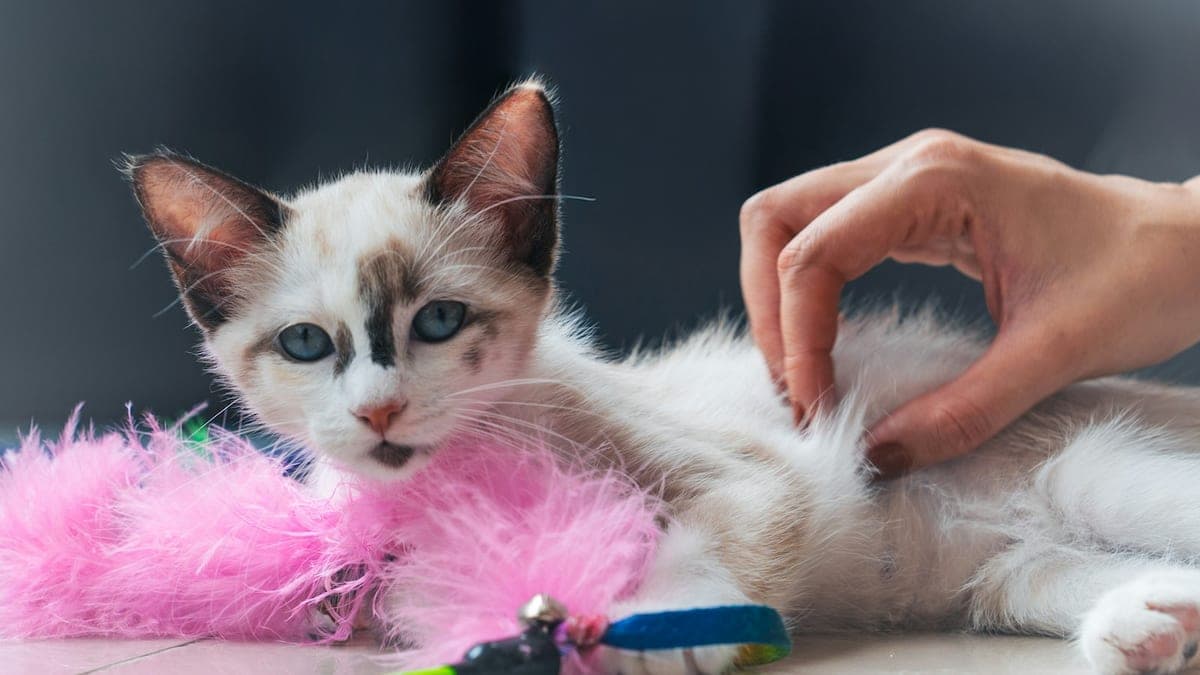
You bring home a kitten the size of a coffee mug. It purrs, it sleeps in your hands, it is the softest thing you have ever touched. Then a few days later you walk past the couch and a tiny gray ambush predator launches itself at your ankle, sinks in its needle teeth, and hangs on. Your hands look like you lost a fight with a rose bush. And your kitten is delighted with itself.
If this sounds familiar, take a breath. Kitten biting is one of the most common problems new owners run into, and it is almost always normal behavior that just needs redirecting. This guide explains why kittens bite so much, the difference between play biting, teething, and biting that signals a problem, and what actually works to teach a kitten that people are not chew toys.
The short answer
Kittens bite because that is how kittens play, learn, and explore. Biting and mouthing are normal in young cats, and they rarely mean aggression. The reasons stack up: play and hunting practice, teething, boredom or extra energy, never learning how hard is too hard, and, as they get older, the occasional overstimulated nip. Most of it is fixable by giving your kitten something better to bite and by never using your hands as toys.
Why kittens bite
Play is practice for hunting
Kittens are tiny predators in training. According to VCA Animal Hospitals, around the time of weaning kittens start acting out the sequences of hunting: stalking, pouncing, jumping, biting and clawing at anything that moves. This object play is important for developing eye-paw coordination and hunting skills. A moving hand or a wiggling foot under the blanket looks exactly like prey, and your kitten has no idea you are not a mouse.
The UC Davis veterinary school describes this as play aggression, seen most often in kittens and young cats. The cat typically swats, pounces, chases and leaps at a moving target, including a person's hand or foot, usually without any sound and with a neutral body posture. It is normal play, and it only becomes a problem when it is too rough, for example when the cat does not keep its claws in or bites uninhibitedly.
They never learned how hard is too hard
Littermates teach each other manners. When a kitten bites too hard, the victim squeals and stops playing, and the biter learns to dial it back. UC Davis points out that between about 3 and 7 weeks of age, the socialization period, kittens learn self-control, including bite inhibition and keeping their claws sheathed, from their mother and littermates. A kitten that was raised as an orphan, was the only kitten in the litter, or spent a lot of time alone may have missed some of those lessons.
The American Association of Feline Practitioners makes the same point in its behavior guidelines: the queen and the other kittens teach a young cat to temper its play, and cats that never learned to moderate their responses can play too aggressively with people. That does not mean your kitten is damaged. It means you get to be the teacher.
Teething
Kittens go through two rounds of teething. According to PetMD, they get 26 baby teeth by about 8 weeks old. Around 3 and a half to 4 months, those teeth start falling out and the 30 adult teeth come in, and by 5 to 7 months the full set is usually in. VCA notes that incisors can start appearing as early as 3 months, canines around 5 months, and the back teeth between 4 and 7 months, and that for some kittens the chewing urge lingers for months after the adult teeth arrive.
Teething hurts a little, and chewing helps. If your kitten is suddenly mouthing everything, including your fingers, your phone cable, and the corner of the couch, between roughly 3 and 7 months old, teething is likely part of the story. Cold, safe chew toys and kitten-sized chewables help. So does keeping cables out of reach.
Too much energy
Kittens have two speeds: full tilt and asleep. If your kitten does not get enough play, the energy has to go somewhere, and your ankles are right there. Short, frequent play sessions with a wand toy do wonders. Many people notice the worst biting happens in the evening or early morning, when kittens are naturally most active. If that sounds like your house, our guide to the zoomies explains why.
Overstimulation
A kitten that bites when you pet it is often overstimulated. Petting can feel good for a few seconds and then tip into too much, and a nip is the quickest way a young cat has of saying so. Watch for a twitching tail, ears that turn sideways or flatten, rippling skin, dilated pupils, or a sudden freeze, and stop before the bite. If your kitten bites while purring, that is usually the same thing: it is enjoying the contact and also over its limit.
Fear or pain
Less often, a bite is defensive. A frightened kitten tends to crouch low, hiss or spit, and bite hard rather than playfully. A kitten that bites when touched in one specific spot may be in pain. UC Davis recommends that any excessive rough play be raised with your vet, because what looks like play can sometimes be aggression, fear or a medical problem.
Is it normal? How to tell play from a problem
Normal play: a loose, wiggly body, quiet pouncing, bunny-kicking with the back feet, short bursts, and a kitten that backs off when you stop.
Rough but fixable: hard bites, claws out, ambushing ankles, a kitten that goes after you because it learned hands are toys.
Worth a vet visit: growling or hissing during the bite, a kitten that targets weaker or older cats in the house, bites that are getting harder instead of easier, biting when touched in a specific spot, or a sudden change in behavior.
Veterinary Partner (VIN) adds a reassuring point: biting and mouthing are normal in developing kittens and puppies and are rarely associated with aggression. Their warning is about adulthood. A kitten that keeps biting hard into adulthood can develop real problems, which is why it is worth fixing early.
What actually works
1. Stop using your hands as toys
This is the single biggest fix, and it is easy to break by accident. VCA's kitten behavior guide says to avoid using your hands as you play with your kitten, because it can lead to injury, and that a moving hand becomes an appealing play object. The AAFP recommends interactive toys, like a fishing pole toy with fabric or feathers on the end, instead of letting kittens play directly with hands or feet. Wiggling your fingers under a blanket is cute for about a week, and then you have a cat that thinks fingers are prey.
2. Offer a better target
Keep a wand toy and a few kicker toys within reach at all times. The moment your kitten turns toward your hand or ankle, give it something else to attack. Pick toys that are big enough that they cannot be swallowed. VCA warns against objects so small they could be ingested and cause a blockage, and says string and yarn should only be used under supervision, because swallowing them can cause serious intestinal damage.
3. Play on a schedule
Aim for several short play sessions a day, especially before meals and before bed. A good session mimics hunting: let the toy move away like prey, let your kitten stalk and pounce, and let it catch the toy at the end. Then feed. A kitten that has hunted, caught and eaten is a kitten that is ready to nap, and that rhythm cuts down a lot of ankle ambushes.
4. When it hurts, stop the game
VIN describes how kittens teach each other: when play gets too rough, the offended youngster yelps or walks away until things calm down. You can copy that. When teeth touch skin, say a short, quiet "ow" and go still or walk away for a minute. Do not shout, flick the nose, or hit. VCA warns that attempts at correction can aggravate the situation, and fear-based punishment can make a kitten nervous of your hands, which is the opposite of what you want.
5. Reward gentle behavior
When your kitten plays with a toy, licks gently, or settles on your lap without nipping, quietly praise or hand over a small treat. Kittens repeat what pays off, so make the good behavior the thing that works.
6. Handle with care
Pet kittens in the places they like best, the cheeks and chin, and keep sessions short. Stop before the tail starts flicking. Over time, you can lengthen the sessions a little. Children should be supervised, because small hands and a kitten in play mode make a messy combination. The AAFP specifically recommends adult supervision when children play with kittens and cats, to protect everyone involved.
7. Do not rely on one trick
Consistency beats cleverness. Everyone in the house needs to follow the same rules, or the kitten learns that biting is allowed with certain people. Some kittens are quick studies and some take weeks. If you are stuck, a short chat with your vet or a certified cat behavior consultant is worth it.
What not to do
Do not play rough with your hands. Wrestling a kitten with your fingers teaches it that biting people is fun.
Do not punish. Shouting, hitting, or spraying water makes a kitten fearful, not wiser.
Do not ignore it and hope. VIN is clear that biting that continues unchecked can carry into adulthood.
Do not pull your hand away fast. A sudden jerk looks like prey escaping and makes the kitten grab harder. Go still, then slowly remove your hand.
How long does the biting phase last?
There is no exact timeline, because it depends on the kitten, on teething, and on how you respond. As a rough guide, the most intense biting tends to ease as kittens mature, their adult teeth finish coming in around 6 to 7 months, and they develop better play skills. That said, play aggression can continue into adulthood if hands stay the main toys. The good news is that consistent redirection works for most kittens, and a kitten that gets enough play usually settles into a cat that bites far less.
Cat bites and your health
Kitten teeth are tiny and sharp, and even small puncture wounds can get infected. The AAFP notes that zoonotic diseases can pass from cats to people through aggressive acts. Wash any bite or deep scratch thoroughly with soap and water, and see a doctor if it becomes red, swollen, hot, or painful, or if you develop a fever. If you have a weakened immune system, call sooner.
Common questions
Why does my kitten bite me when I pet her?
Most likely overstimulation. Kittens can only take so much contact before it feels like too much, and the bite means "enough." Stop petting before the tail flicks or the ears flatten, and let the kitten decide when to come back.
Why does my kitten bite me while purring?
Purring does not always mean pure happiness. A kitten can purr because it is content and also nip because it is overstimulated or ready to play. Read the whole body, not just the purr. We cover the purr in why cats purr.
Why does my kitten attack my feet?
Feet moving under blankets, or ankles as you walk, look like prey. Toss a toy ahead of you when you walk, or carry one, so there is a more fun target than your ankles.
Should I get a second kitten to stop the biting?
A playmate can burn energy and teach manners, but adding a kitten is a big commitment and not a guaranteed cure. Think of it as a decision about your household, not a quick fix. If you do add one, follow the steps in our guide to introducing two cats.
When will my kitten stop biting?
Most settle as they mature and get enough play, but it depends on the kitten and on your approach. Redirecting early helps you avoid a cat that bites into adulthood.
Is my kitten aggressive?
Probably not. Aggression looks different from play: hissing, growling, flattened ears, a crouched body, and bites that are hard and defensive rather than playful. If you see those signs, or the biting is hard to redirect, ask your vet.
The bottom line
A biting kitten is not a bad kitten. It is a young predator practicing the only skills it has. Give it better targets, keep your hands out of the game, and play often with a wand toy, and the shark phase fades for most kittens. If the biting is hard, constant, or comes with hissing, growling or pain, bring it up with your vet. And if you are dealing with a grown cat, our guide to why cats bite covers the adult version of the story.
Keep reading
What Do Cats Like to Play With and Why?. Why Does My Cat Have the Zoomies?. Why Does My Cat Bite Me? 5 Types of Cat Bites Explained.
Comments (0)
Join the conversation
Sign up to share your thoughts.
Loading comments...