Why Do Cats Knead? The Real Reason Behind 'Making Biscuits'

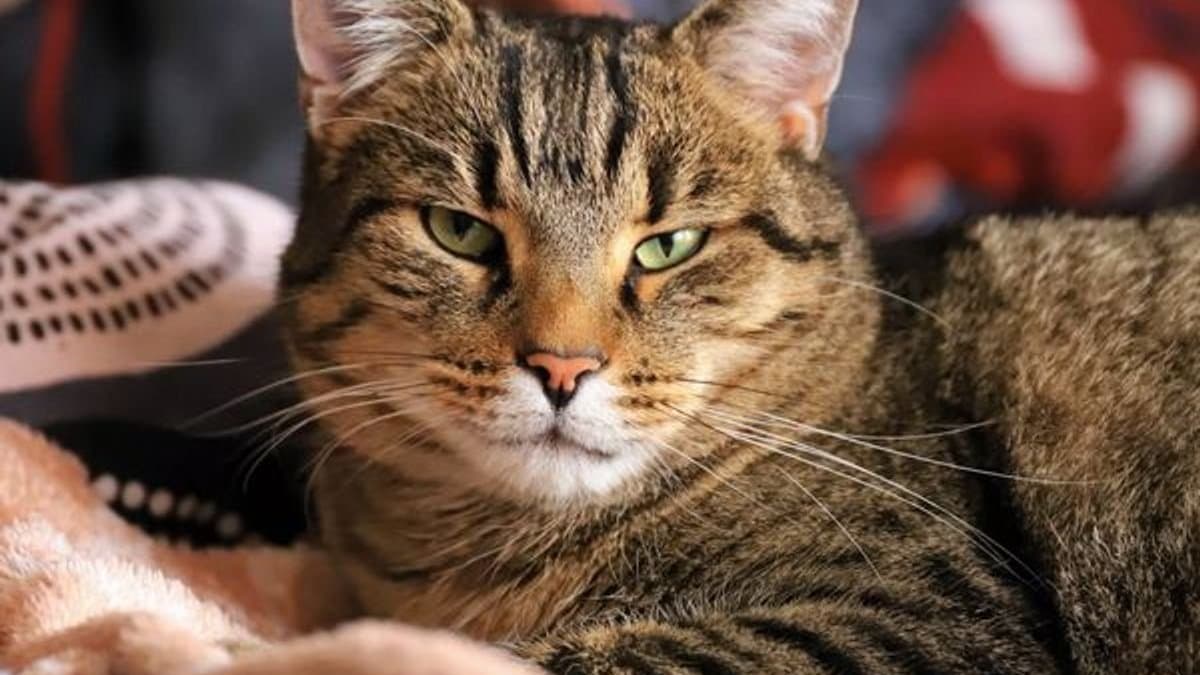
I have dug through decades of feline behavior research, veterinary literature, and the observations of animal behaviorists to answer one of the most endearing questions in the cat world: why do cats knead? If you have ever watched your cat rhythmically press her paws into a blanket, your lap, or even the dog's bed, you have witnessed one of the most deeply rooted behaviors in the feline repertoire. Let us walk through what kneading is, where it comes from, and what it really means when your cat makes biscuits on you.
What Is Kneading?
Kneading is the rhythmic, alternating pressing of a cat's front paws against a soft surface. The cat pushes one paw down, then the other, in a steady, almost hypnotic cadence. Many cats extend and retract their claws with each press. Some cats use only their front paws, while others get so absorbed that they drool, purr, and even suckle the fabric beneath them. Cat lovers have long called this "making biscuits" because the motion looks like a baker working dough.
Kneading is not random. It is a highly stereotyped, repeatable motor pattern, which tells behaviorists that it is hardwired into the feline nervous system rather than learned. The Cornell Feline Health Center includes kneading among the normal, instinctive behaviors of cats, alongside purring, grooming, and scratching. It appears in kittens within days of birth and persists, in many cats, for life.
The Kittenhood Origin: A Nursing Reflex
To understand kneading, you have to go back to the very beginning of a cat's life. When kittens nurse, they press their paws against their mother's belly in exactly the same alternating rhythm. This is not just cute - it serves a critical function. The pressing stimulates milk let-down, encouraging the queen to release milk through the mammary glands. Without this kneading, nursing would be far less efficient, and kittens, which are born tiny and fragile, would struggle to get enough calories.
The Merck Veterinary Manual describes this neonatal kneading as part of the normal suckling behavior of kittens. It is a reflex that kicks in almost immediately after birth and is reinforced every time the kitten feeds and is rewarded with milk. In behavioral terms, this is a positive feedback loop: the kitten kneads, milk flows, the kitten associates kneading with comfort and survival, and the behavior is deeply encoded.
This is why so many adult cats knead when they are relaxed, warm, and being petted. They are, in a very real neurological sense, revisiting the safest, most comforting moment of their lives - nestled against their mother, full of milk, and utterly secure. The adult cat is not confused or regressing in any pathological way; she is simply reactivating a motor pattern that her brain associates with deep contentment.
Why Adult Cats Keep Doing It
So if kneading begins as a nursing reflex, why do adult cats who were weaned years ago still make biscuits? The answer is that the behavior has been repurposed. In adult cats, kneading is primarily an expression of comfort and contentment. Cats knead when they feel safe, warm, and happy. You will often see it just before a cat settles down to sleep, or while she is being stroked by a favorite person.
Animal behavior researchers have noted that kneading in adult cats tends to occur in low-stress contexts. A cat that is frightened, in pain, or in an unfamiliar environment rarely kneads. The behavior requires a degree of relaxation that is simply not available to an anxious cat. This is one reason kneading is widely interpreted by veterinarians and behaviorists as a positive sign - it indicates the cat feels secure enough to let her guard down and engage in a behavior that, for her, is linked to the deepest safety she has ever known.
There is also a practical, self-soothing dimension. The repetitive motion itself may be calming. Just as humans might rock gently or stroke a worry stone when anxious, the rhythmic pressing gives the cat a predictable, controllable sensory experience that helps regulate her emotional state.
The Connection to Purring and Happiness
Kneading rarely happens in isolation. It is almost always accompanied by purring, and often by a glazed, half-lidded expression that cat behaviorists recognize as the feline equivalent of bliss. The connection between kneading and purring is not coincidental. Both behaviors originate in early kittenhood and both are tied to the nursing relationship.
Purring, like kneading, begins in kittens just a few days old. It serves as a signal to the mother that the kitten is present and nursing well, and it helps the queen locate her kittens even in the dark. As cats mature, purring broadens to communicate contentment, but it also appears when cats are stressed or in pain, which is why researchers have long debated its full meaning. The Journal of Feline Medicine and Surgery has published work on the complexity of feline vocalization and communication, and the consensus is that purring is context-dependent - but when paired with kneading in a relaxed cat, it is a reliable indicator of genuine contentment.
When your cat climbs into your lap, begins kneading, and purrs so loudly you can feel it in your chest, she is combining two of the most fundamental comfort behaviors in her repertoire. She is telling you, in the only language she has, that she feels safe and happy right here.
Kneading as a Sign of Trust
One of the most telling things about kneading is where cats choose to do it. They do not knead strangers or unfamiliar surfaces with the same enthusiasm. They knead their favorite people, their own beds, and blankets that carry familiar scents. This selectivity makes kneading a powerful indicator of trust and attachment.
Cats are often described as aloof, but feline behavior researchers have increasingly shown that domestic cats form strong, specific bonds with their human caregivers. A 2019 study published in Current Biology by Kristyn Vitale and colleagues at Oregon State University found that cats display attachment styles toward their owners that are remarkably similar to those seen in dogs and even human infants, with the majority showing secure attachment. Kneading a preferred person is one of the behavioral expressions of that bond.
When a cat kneads you, she is choosing you as her safe surface. She is treating you the way she treated the one being in her early life who meant warmth, food, and survival. That is not a small thing. It is, in feline terms, a profound compliment.
Wild Ancestor Behavior: Nesting and Bedding Down
Kneading also has roots that predate domestication entirely. To understand this, we have to look at the wild ancestors of the domestic cat - the African wildcat, Felis lybica, from which all domestic cats descend. Wildcats do not have soft blankets or laps, but they do have grass, leaves, and earth.
Before lying down to rest, wildcats and many other felids press down vegetation to create a comfortable, concealed resting spot. This nesting or bedding-down behavior involves exactly the same alternating paw motion as domestic cat kneading. The cat is, in effect, patting the ground flat, removing sticks or lumps that would be uncomfortable, and creating a shallow depression that also offers a bit of concealment from predators.
So when your housecat kneads the duvet before flopping down, she may be enacting an ancient instinct to prepare a safe sleeping place. The surface has changed from savanna grass to a memory-foam mattress, but the motor pattern is the same one her wild ancestors used thousands of years before the first cat was tamed.
Scent Marking via the Paw Pads
There is another layer to kneading that has nothing to do with comfort and everything to do with territory. Cats are territorial animals, and they have scent glands in several locations on their bodies - around the mouth, on the cheeks, at the base of the tail, and, importantly, on their paw pads.
These interdigital glands, located between the pads of the paws, deposit a subtle scent as the cat presses and kneads. This is the same reason cats scratch objects: the scratching leaves a visual mark and a chemical one. Kneading accomplishes something similar, albeit more gently. When a cat kneads a blanket, a cushion, or your leg, she is laying down her scent and, in her mind, claiming that surface as part of her territory.
This scent marking is invisible and odorless to us, but it is meaningful to the cat. It is one reason cats often return to knead the same spot repeatedly - they are refreshing their scent and reinforcing the message that this place, and this person, belongs to them. The Merck Veterinary Manual and standard feline behavior texts recognize scent marking through the paws as a normal component of feline territorial behavior.
Why Some Cats Drool When Kneading
If your cat kneads and starts to drool, you might find it a little unsettling - but it is entirely normal and, again, traces back to kittenhood. Drooling during kneading is thought to be a holdover from the nursing experience. When a kitten kneads and suckles, salivation increases in anticipation of milk. In some adult cats, the kneading motion alone is enough to trigger this Pavlovian response, even though there is no milk to be had.
Not every cat drools when kneading, and the ones that do are not necessarily the ones that were weaned too early, as is sometimes claimed. Drooling during kneading is simply a sign that the neural pathway connecting kneading, suckling, and salivation is still intact and easily activated. It is a quirk of individual neurology, not a problem.
If the drooling is excessive, accompanied by a bad odor, or happens outside of kneading and petting contexts, it is worth having a veterinarian check your cat's mouth, because dental disease and oral pain can also cause drooling. But in the classic context - a relaxed, kneading, purring cat with a little drip at the corner of the mouth - it is nothing to worry about.
Why Cats Knead Before Sleeping
You have probably noticed that kneading often happens right before a cat curls up and falls asleep. This makes perfect sense when you combine everything we have discussed. Kneading before sleep serves multiple overlapping purposes: it prepares the surface by flattening it, it deposits scent, it self-soothes the cat into a relaxed state, and it reactivates the kittenhood comfort pattern that signals safety.
Sleep is the most vulnerable state for a cat, and a cat that is about to sleep needs to feel secure. Kneading is part of the ritual that gets her there. By the time she circles a few times and settles, she has transformed an ordinary spot into a familiar, scented, comfortable nest - exactly what her wild ancestors and her kitten self both needed before closing their eyes.
Does Kneading Mean Love and Affection?
This is the question every cat person wants answered, and the honest answer is: yes, in the language of cat behavior, kneading is about as close to love as it gets - but we should be careful about how we use that word.
Cats do not experience love in the complex, abstract way humans do, but they absolutely experience strong positive emotions, attachment, and preference. Behavioral scientists generally avoid anthropomorphic labels, preferring terms like attachment, affiliative behavior, and contentment. Kneading fits squarely into all of these categories. It is an affiliative behavior directed at preferred individuals and familiar, comforting objects.
So if you want to say your cat kneads you because she loves you, you are not wrong. You are translating a feline behavior into a human concept, and the translation is a fair one. She feels safe with you, she prefers you, she associates you with the deepest comfort she knows, and she is moved to express that through an ancient, instinctive gesture. Whatever word you use for that, it is real.
When Kneading Might Be a Concern
Kneading is, in the vast majority of cases, completely normal and healthy. But there are a few situations in which it is worth paying closer attention.
Excessive or obsessive kneading can sometimes signal an underlying issue. If a cat kneads compulsively to the point of injuring herself - for example, sucking fabric until she swallows it, or kneading until her paws are raw - this may be a sign of a behavior problem. Fabric sucking and wool chewing, sometimes called pica, can occur in cats and may be related to early weaning, stress, or dietary deficiencies. The Journal of Feline Medicine and Surgery has addressed feline pica and compulsive behaviors, and the guidance is that persistent, injurious fabric-chewing or sucking warrants a veterinary evaluation.
Sudden changes in kneading behavior can also be meaningful. A cat that never kneaded and suddenly starts doing it constantly, or a cat that begins kneading in contexts where she seems anxious rather than relaxed, may be responding to a change in her environment or health. Cats sometimes increase self-soothing behaviors when they are stressed, and kneading can occasionally function that way. If the behavior is new, intense, or paired with other signs of stress - hiding, over-grooming, changes in appetite - it is worth consulting your veterinarian or a feline behaviorist.
For the overwhelming majority of cats, though, kneading is simply a sign that all is well. A kneading cat is, almost always, a happy cat.
How to Handle Painful Kneading Without Punishing Your Cat
Here is the practical problem every cat lover eventually faces: your cat is blissfully making biscuits on your bare thigh, and her claws are drawing blood. She is happy. You are not. What do you do?
The first and most important rule is never to punish a cat for kneading. Kneading is an instinctive, positive behavior, and punishing it - by yelling, pushing the cat away roughly, or striking her - will only damage her trust in you. She will not understand that the claws were the problem; she will simply learn that being close to you sometimes results in something frightening. That is not a lesson you want to teach.
Instead, manage the situation gently. If your cat is a dedicated lap-kneader, keep a thick blanket nearby and place it between her paws and your skin before she gets going. Redirecting her to the blanket lets her knead to her heart's content without hurting you. You can also simply and calmly lift her and reposition her on a more suitable surface if the claws become too much.
Regular nail trimming makes a huge difference. Keeping the tips of your cat's claws blunt does not stop her from kneading, but it makes the experience far less painful for you. If you are not comfortable trimming claws yourself, your veterinarian or a groomer can do it quickly. Nail caps, which are small vinyl covers glued over the claws, are another option for cats that knead aggressively and are not candidates for declawing - which, for the record, should never be done, and is considered inhumane by the American Veterinary Medical Association and virtually every major animal welfare organization.
Finally, if your cat gets overstimulated while kneading - purring intensely, then suddenly biting or scratching - she may be experiencing petting-induced overstimulation. This is common in cats and is not aggression in the malicious sense; it is a sensory overload. The solution is to watch her body language and stop petting, or gently disengage, before she reaches that threshold. Learning your individual cat's signals is the single best way to keep kneading a pleasant experience for both of you.
Keep reading
If you found this helpful, you might also like our guides on how to tell if your cat is happy, what purring really means and the complete guide to cat communication.
Further reading
Love learning about cats? Adopt a virtual cat pet and level it up by joining our community.
Related reading: Why Does My Cat Knead Blankets?.
Related reading: Why Does My Cat Drool When I Pet Him? Normal or Not?.
Comments (0)
Join the conversation
Sign up to share your thoughts.
Loading comments...