Why Does My Cat Knead Blankets?
The kittenhood instinct behind the biscuits, the scent gland factor, and why it is always the soft blanket

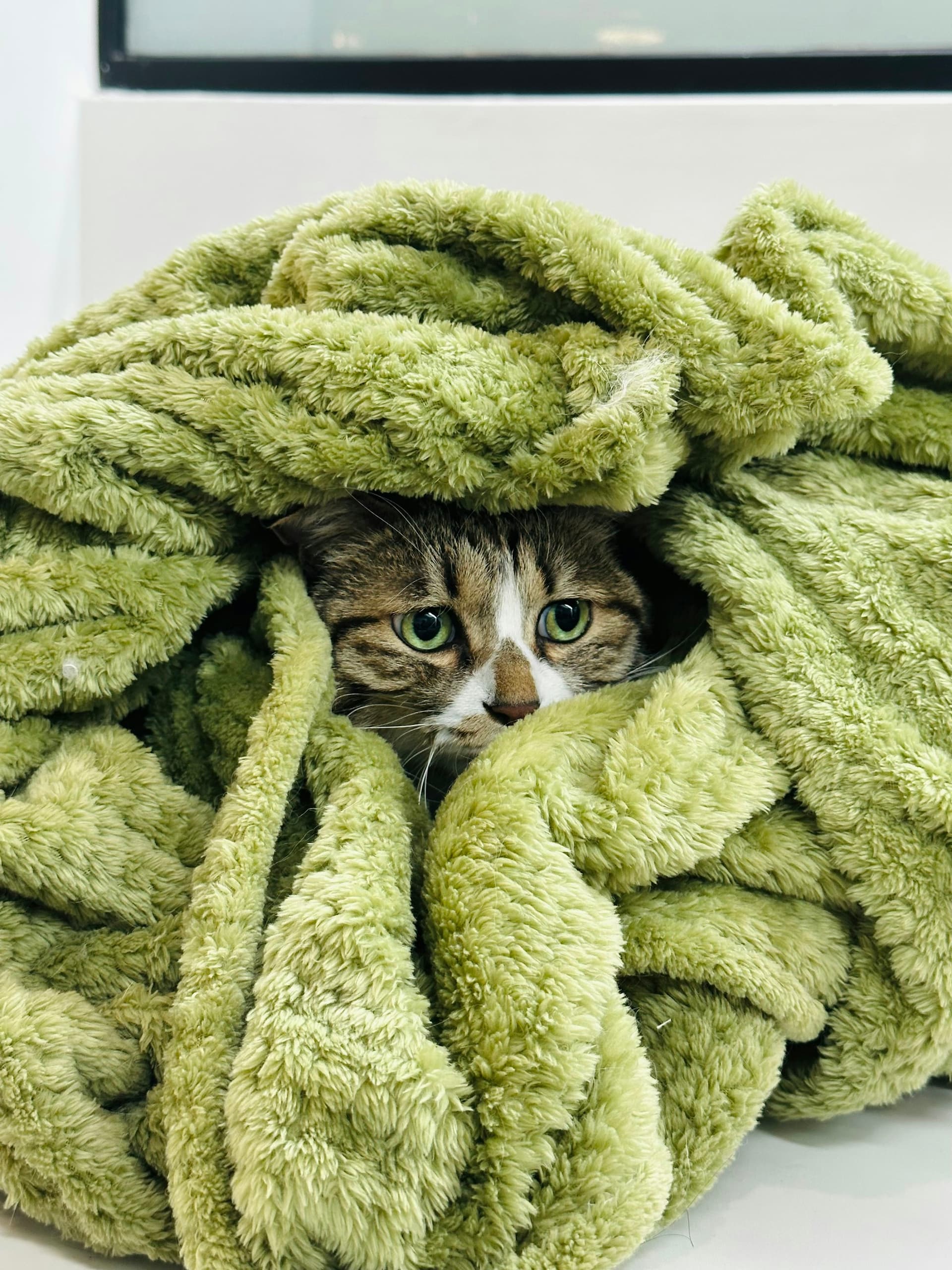
Every cat owner has seen it. Your cat climbs onto a blanket, gets a faraway look in their eyes, and starts pushing their paws in and out against the fabric, one paw at a time, like they are kneading bread dough. Sometimes they purr through the whole thing. Sometimes they drool on it. Occasionally they settle in and suckle the corner of the blanket like it is the most natural thing in the world.
This is kneading, and if you have spent any time around cat people you have probably heard it called making biscuits. It is one of the most recognizable cat behaviors, and also one of the least understood. Veterinarians will tell you honestly that nobody knows every reason cats do it. But the research and the expert consensus point to a few overlapping explanations, and they all trace back to the very first weeks of your cat's life.
It starts with milk
Kneading is not a learned behavior. Kittens do it instinctively from the first days of nursing, before their eyes are even open. As Leticia Fanucchi, an animal behavior scientist at Oklahoma State University, explained to Scientific American, kittens knead their mother's mammary glands to suckle, and the rhythmic pressing stimulates the flow of milk. The kneading also appears to trigger the release of oxytocin, the bonding hormone, in the mother.
So the very first association a kitten forms with kneading is warmth, food, and a feeling of complete safety. That association is powerful, and it is the key to everything that follows. When your adult cat kneads a blanket while purring, half-asleep, with their eyes half closed, they are recreating the physical sensation of the safest moment they have ever known.
Why the behavior survives into adulthood
Here is the interesting part. Adult cats have no practical reason to knead. They are not expecting the blanket to lactate. So why does the behavior stick around?
The leading explanation is a phenomenon called neoteny, which is when domesticated animals retain juvenile traits into adulthood. This is the same process that makes adult dogs look and act more like wolf puppies than like wolves. In cats, domestication appears to have selected for retaining kitten-like behaviors, and kneading is one of the most visible ones. Susan Hazel, an associate professor of animal behavior at the University of Adelaide, told Live Science that kneading is most likely a leftover behavior from kittenhood, and that the act of suckling, along with the pheromones released around the mammary glands, probably made it a very pleasurable activity that cats continue to associate with comfort.
Kristyn Vitale, a certified applied animal behaviorist at Unity Environmental University, adds a social dimension to this. In her view, some of the juvenile behaviors that used to be directed at the mother get redirected at the owner. Cats will knead on their favorite person in the household, which makes kneading an affiliative behavior, a way of building a bond. If your cat kneads you, you are not a milk dispenser. You are family.
Why blankets specifically
Cats almost always knead soft surfaces: blankets, plush beds, a folded hoodie, your lap. There are two reasons for the softness preference.
The first is the kittenhood association. A fluffy blanket resembles the texture of the mother's fur and the warm nest the kitten nursed in. Laura Watson, a registered veterinary nurse at International Cat Care, told Live Science that cats knead soft surfaces particularly when they feel safe, because they associate the treading motion with the comfort of nursing.
The second reason goes back further than kittenhood. Wild feline species have been observed kneading soft grasses and bedding materials as they prepare a resting spot. Your cat's ancestors flattened grass before sleeping, and your cat's kneading before a nap on the duvet is very likely the same behavior wearing a modern costume. PetMD notes this pre-sleep kneading is common in domestic cats too, which explains why so many cats knead a moment before curling up.
The scent gland factor
There is one more piece, and it is invisible to you. Cats have scent glands in their paw pads, between the toes. When a cat kneads a blanket, those glands deposit pheromones onto the fabric. Your cat is marking the blanket as familiar and safe, which is part of why their favorite blanket becomes their favorite. It smells like them, and being surrounded by their own scent is calming.
So the full picture looks like this: kneading is a nursing instinct retained through neoteny, performed on soft surfaces that recall the nest, that releases comforting scent, and that helps your cat feel safe enough to sleep.
What about the drooling and the suckling?
Some cats take the behavior further. They drool while kneading, or they suckle on the blanket itself, holding the fabric in their mouth. This can look alarming the first time you see it, but it is usually just the comfort association running at full volume. The suckling motion is part of the same nursing sequence as the kneading, and Hazel points to drooling and suckling during kneading as evidence of just how deep that early association goes.
One theory worth knowing: early weaning is sometimes suggested as a factor in adult suckling and intense kneading. Kittens who were separated from their mother very young may hold onto these nursing behaviors more strongly. The evidence here is thinner than the nursing-instinct explanation, so take it as a possibility rather than a diagnosis. And if your adult cat suddenly starts suckling on fabric when they never did before, mention it to your vet, because new compulsive behaviors can occasionally have a medical cause.
Is kneading ever a problem?
Usually, no. Kneading is a sign of a content, secure cat, and most behaviorists consider it a healthy behavior you should not try to eliminate. That said, there are two practical issues.
The claws. Kneading cats often extend their claws slightly with each push, which turns your lap into a pin cushion. Keep your cat's nails trimmed, and place a thick blanket over your lap before kneading sessions begin.
The target. If your cat is destroying a particular blanket, redirect rather than punish. Offer a dedicated thick blanket or a plush bed in their favorite spot. Punishing kneading does not teach the cat to stop feeling comforted, it just teaches them to fear you.
One genuine caution: if kneading on a specific spot is new, intense, and paired with other changes like restlessness or excessive vocalizing, it can occasionally relate to discomfort, and a vet visit is reasonable. But in the overwhelming majority of cases, a kneading cat is a happy cat.
Why some cats knead constantly and others barely at all
If your last cat made biscuits on everything and your current one has never kneaded once, you have wondered whether something is wrong. Nothing is. Kneading intensity varies enormously between individual cats, and behaviorists do not consider a non-kneading cat a problem. Early experiences, personality, and how strongly a particular cat holds onto the nursing association all play a role. Some cats knead gently and briefly. Some drool the entire time. Some deliver what owners call air biscuits, kneading enthusiastically at nothing in particular while half asleep.
The enthusiastic kneader
At the other end of the spectrum is the cat who kneads with real force, claws fully out, sometimes working up a rhythm on your thigh that borders on acupuncture. This is not aggression. It is the same behavior delivered with more enthusiasm than skill. The fixes are practical: keep the nails trimmed, keep a thick blanket on the couch where the kneading happens, and if the cat is latched onto your lap, gently slide a cushion between you rather than pushing the cat off, which only restarts the cycle.
Kneading and purring: why they show up together
Kneading rarely travels alone. It usually arrives with purring, half-closed eyes, and that loose, heavy-limbed relaxation cats get right before sleep. The pairing makes sense developmentally, because both behaviors begin in the same place. Kittens purr while nursing, and mother cats purr back, so a kitten's earliest experience of purring and kneading is the same moment: pressed against their mother, fed, warm, and safe. When your adult cat purrs and kneads on a blanket at the same time, you are watching two kittenhood comfort behaviors fire at once. It is about as close to a contentment announcement as cat body language gets.
Kneading vs scratching: not the same behavior
Owners sometimes confuse kneading with scratching, especially when both happen on the couch. They are different behaviors with different purposes, and they need different responses. Scratching is a claw-first behavior: the cat rakes their claws across a surface, leaving visual marks and scent from the paw pads, and it serves claw maintenance and communication. Kneading is a press-and-release rhythm on a soft surface, usually with the claws only slightly extended, and it serves comfort and sleep preparation.
This distinction matters when a blanket or couch is getting destroyed. If the damage involves claw rakes and shredded fabric, that is scratching, and the answer is an appealing scratching post placed near the crime scene, not punishment. If the damage is drool, pulled threads, and a cat rhythmically pressing the fabric, that is kneading, and the answer is a dedicated thick kneading blanket.
A word on the declawing question
Because kneading and scratching both involve claws, some owners look into declawing. It is worth knowing what the procedure actually is: not a nail trim, but the amputation of the last bone of each toe, the equivalent of cutting off a human finger at the last knuckle. It is banned or heavily restricted in many countries, and veterinary bodies that oppose it cite long-term pain and behavioral problems. For a kneading or scratching cat, the humane toolkit is regular nail trims, scratching posts, furniture-safe nail caps, and thick lap blankets. All of them work. None of them involve surgery.
Answering the blanket questions
Why does my cat knead my blanket and not yours?
Cats are creatures of habit, and kneading is partly self-reinforcing. Every time your cat kneads a surface, the paw pad pheromones deposited there make that surface smell more like them, which makes it more comforting, which makes them more likely to knead it again. The favorite blanket is usually the one with the deepest scent history, the softest texture, and the best location relative to where you sleep. Your cat has essentially picked a favorite for the same three reasons you have.
Why does my cat nurse on blankets?
Suckling on fabric is the nursing sequence running alongside the kneading, complete with the mouth part. It is common, it is usually harmless, and it tends to show up in the same contexts as kneading: soft fabric, sleepy cat, safe room. The early-weaning theory suggests cats separated from their mother very young may suckle more, though the evidence is not strong enough to treat that as a rule. What deserves a vet visit is a suckling habit that appears suddenly in an adult cat who never did it, especially if it is intense or paired with other new behaviors.
Why do cats make biscuits on me?
Because you are soft, warm, and safe, and because kneading on a preferred person is an affiliative behavior, the cat version of choosing to sit next to someone you love. When your cat kneads you, they are treating you the way a kitten treats its mother: as the source of comfort. It is slightly gooey when they drool on you. It is still the compliment of a lifetime.
The bottom line
Your cat kneads blankets because the motion is wired in from nursing, retained into adulthood because domestication keeps kittens kittens, and aimed at soft surfaces because soft means safe. The purring, the drooling, the slow sleepy eyes, all of it points the same direction: your cat has found a spot that feels like the first warm place they ever knew. It is one of the most honest compliments a cat can give a blanket, and when they do it on you, take it as what it is. You are the blanket.
Related reading: Why Do Cats Knead?.
Comments (0)
Join the conversation
Sign up to share your thoughts.
Loading comments...