Do Cats Dream? What Your Cat's Twitching Paws Mean

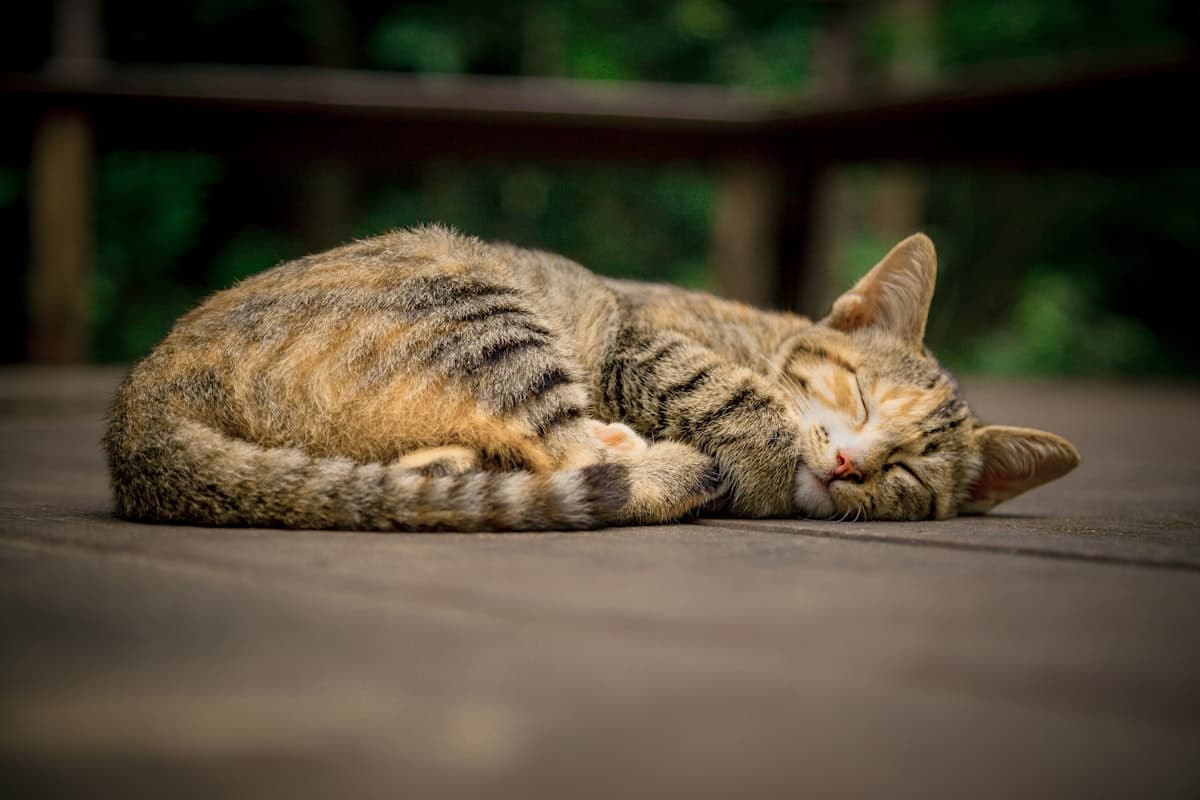
I have spent more late nights than I care to admit watching my cat sleep. One moment she is a soft, motionless loaf on the arm of the sofa, and the next her paws are twitching, her whiskers are fluttering, and she lets out a tiny chirp that sounds nothing like her waking voice. It is hard not to wonder what is happening behind those closed eyes. Is she chasing a moth across the living room? Reliving the time she cornered a laser dot? Or is all that twitching just random muscle noise?
Let us walk through what science actually says about cats and dreaming. The short answer is yes - cats do dream, and we have known this for over half a century. The longer answer is a fascinating story involving 1960s French neuroscientists, MIT researchers who peeked into the dreams of rats, and a whole lot of twitching paws.
Yes, Cats Dream - Here Is the Proof
All mammals studied so far experience REM sleep, the stage of sleep most closely associated with vivid dreaming. Humans do it. Dogs do it. Rats do it. And cats, as it turns out, were some of the very first animals to have their REM sleep studied in a laboratory setting.
REM stands for rapid eye movement, and it is the phase of sleep where the brain lights up with activity that looks strikingly similar to the waking brain. During REM, the eyes dart back and forth beneath the lids, breathing becomes irregular, and - in most mammals - the body is temporarily paralyzed by a mechanism called muscle atonia. That paralysis is thought to be nature's way of keeping us from acting out our dreams.
Cats hit REM sleep just like we do. Their brains show the same electrical patterns during REM that they show when they are awake and alert. If you have ever watched your cat's eyes moving rapidly under her eyelids while her paws paddle at the air, you were watching REM sleep in action.
The Science of REM Sleep in Cats
The story of cat dream research really begins with a French neuroscientist named Michel Jouvet. In the late 1950s and 1960s, Jouvet was working at the University of Lyon, studying sleep in cats. He and his colleagues made a series of discoveries that fundamentally shaped how we understand sleep today.
Jouvet found that during a particular stage of sleep, cats' brains showed electrical activity patterns that looked almost identical to their waking brain activity - even though the cats were deeply asleep. He identified this as a distinct sleep state, what we now call REM sleep or paradoxical sleep (the term Jouvet preferred, because the brain appears awake while the body appears deeply asleep).
This was a big deal. Before Jouvet's work, REM sleep had been identified in humans by researchers Eugene Aserinsky and Nathaniel Kleitman in the 1950s, but Jouvet's studies in cats showed that this was not a uniquely human phenomenon. It was a fundamental feature of the mammalian brain.
Jouvet's research also revealed something remarkable about how the body behaves during REM. He discovered that a small region in the brainstem - the pons - was responsible for the muscle paralysis that normally accompanies REM sleep. This finding would lead to some of the most striking dream experiments ever conducted, which we will get to shortly.
What Do Cats Dream About?
Here is where we have to be honest: we cannot ask a cat what she dreamed about last night. But we can make some very educated guesses based on research in other animals.
The most compelling work on animal dream content comes from Matthew Wilson and his colleagues at MIT. In the 1990s and 2000s, Wilson's lab recorded the activity of neurons in the hippocampus - a brain region central to memory - of rats while they ran through mazes and while they slept afterward.
What they found was astonishing. The same patterns of neural firing that occurred while a rat was running a maze would replay, in the same sequence, while the rat was asleep. It was as if the rat's brain was hitting rewind and playing back the day's experiences. Wilson and his team could even tell, based on the brain activity alone, which part of the maze the rat was "running" in its dream.
Later work extended these findings. Researchers observed that rats appeared to dream not just about spatial navigation but about social and emotional experiences too. The implication is powerful: if rats replay their daily experiences during sleep, it is a reasonable bet that cats - with their far more complex behaviors and rich daily lives - do something similar.
So what does your cat likely dream about? Based on what we know about how dreaming works across mammals, probably the things that fill her waking hours: hunting (stalking that toy mouse, pouncing on a feather wand), playing, exploring her territory, interactions with you and other animals in the home, and those intense window-watching sessions where she tracks birds and squirrels.
It is a pleasing thought - that somewhere in your cat's sleeping mind, she is reliving the afternoon she finally caught that red dot.
The Physical Signs Your Cat Is Dreaming
You do not need a laboratory to tell when your cat is dreaming. You just need to watch closely. During REM sleep, a cat's body may show several telltale signs:
- Paw twitching and paddling - This is the classic sign. One or more paws may flex, extend, or make small rhythmic movements as if running or batting at something. - Whisker movement - Whiskers may quiver, twitch, or sweep forward and back. - Ear flicking - Ears may rotate or flick as if tracking a sound. - Vocalizing - Some cats make soft chirps, trills, or even tiny meows during REM. These sleeping sounds often differ from their waking vocalizations. - Tail swishing - The tail may twitch or sweep slowly back and forth. - Rapid eye movement - Beneath closed or partially closed lids, the eyes dart around, giving REM its name. - Changes in breathing - Breathing may become faster, shallower, or irregular.
Not every twitch means your cat is in REM. Light sleep also brings small muscle jerks called hypnic jerks or myoclonic twitches. These are normal and happen as the body relaxes into sleep. But the full constellation of paw paddling, whisker quivering, and eye movement is a pretty reliable sign that your cat is in the dreaming stage.
When Cats Act Out Their Dreams: Jouvet's Lesion Experiments
This is where the story gets wild. Remember how Michel Jouvet identified the pons as the region responsible for paralyzing the body during REM? He and other researchers wondered what would happen if that paralysis mechanism were removed.
In a series of experiments, Jouvet made small lesions in a part of the cat brainstem that normally suppresses muscle activity during REM. The result: cats entered REM sleep without the usual paralysis. And then they acted out their dreams.
These cats, while still asleep, would stand up, walk around, arch their backs, pounce on invisible prey, and display hunting behaviors - all while their brain activity showed they were in REM sleep. They were, as far as anyone could tell, physically enacting whatever they were dreaming about.
These experiments are now classics in sleep research. They provided some of the strongest early evidence that REM sleep is genuinely associated with dreaming, and that the content of those dreams can drive physical behavior when the normal brake of muscle atonia is removed. The cats were not just twitching randomly - they appeared to be acting out coherent, hunting-related sequences.
No one is suggesting you do anything to your cat's brainstem, of course. But these studies tell us something profound: the dreaming cat brain is not idle. It is running the same programs it runs when awake, just with the body usually switched off.
How Much of a Cat's Sleep Is REM?
Cats are famous sleepers. An adult cat may sleep 12 to 16 hours a day, and seniors and kittens can sleep even more. But not all of that sleep is created equal.
Of all that sleeping time, only about 15 to 20 percent is spent in REM sleep. That might sound low, but it adds up - a cat sleeping 15 hours a day might spend roughly two to three hours in REM across that period.
REM sleep in cats does not happen in one long block the way it tends to in humans. Instead, it comes in short bursts scattered throughout the sleep cycle. A cat might enter REM for just a few minutes at a time, wake briefly, groom, shift position, and drift back off. This pattern fits with how cats sleep in the wild - in short, easily interrupted stretches so they can respond quickly to threats or opportunities.
The Feline Sleep Cycle
Cat sleep, like ours, moves through stages. But cats cycle through those stages faster than we do. A full cat sleep cycle - from light sleep through deep sleep and into REM - lasts roughly 30 minutes, compared to about 90 minutes for a human.
Here is how it generally unfolds:
Light Sleep
This is the entry point. Your cat is drowsy but alert enough to spring up if something interesting happens. Much of a cat's daytime resting is this kind of light, easily disrupted sleep. The body is relaxed, but the senses are still partly on guard.
Deep Sleep (Non-REM)
The body relaxes further, breathing slows and steadies, and the brain shifts into slower, more synchronized electrical patterns. This is restorative sleep - the stage thought to be important for tissue repair, immune function, and memory consolidation. Deep sleep makes up the largest portion of a cat's total sleep.
REM Sleep
After deep sleep, the cat enters REM. The brain lights up, the eyes move, and the body (usually) goes still and limp from atonia. This is where the vivid dreaming happens. After a few minutes of REM, the cat may wake briefly or slide back into light sleep, and the cycle begins again.
Because cats cycle so quickly, you might notice your cat moving through these stages within a single nap. A cat who has been still for ten minutes might suddenly start twitching her paws - she has just entered REM.
Do Kittens Dream More?
If you have ever watched a kitten sleep, you have probably noticed something: they twitch. A lot. Tiny paws paddle, ears flick, and whole bodies shudder. It can look almost alarming if you are not expecting it.
This is normal, and it points to something interesting: kittens likely dream more than adult cats. Newborn kittens spend a much higher proportion of their sleep in REM than adults do - in some studies of infant mammals, REM can make up half or more of total sleep time.
This mirrors what happens in humans. Human babies spend far more of their sleep in REM than adults, and researchers believe this has to do with brain development. REM sleep appears to play a crucial role in wiring up the growing brain, helping form and strengthen neural connections.
So when a tiny kitten is twitching in her sleep, her brain may be busy building the circuits she will use for the rest of her life - processing the flood of new sights, sounds, and experiences that come with being alive. The twitching tends to decrease as the animal matures and the proportion of REM sleep drops toward adult levels.
Do Cats Have Nightmares?
This is one of the harder questions to answer, because we cannot know what a cat subjectively experiences during sleep. But there are good reasons to think cats can have something like nightmares.
Across mammalian species, sleep - and REM sleep in particular - is involved in processing emotions and stressful experiences. The same mechanisms that let a rat replay a pleasant maze run may also replay a frightening one. If dreaming involves reactivating memories and emotional states from the day, then negative experiences should be fair game.
Veterinary behaviorists note that cats can show signs of distress during sleep - sudden vocalizing, frantic paw movements, or jerking awake in a startled state. Whether these are nightmares in the human sense or simply the brain processing arousing stimuli, they can look unsettling.
A cat who has had a stressful day - a trip to the vet, a run-in with another animal, a loud disruption in the home - may well process that stress during sleep, just as we do. The dreaming brain does not only replay the good stuff.
What to Do If Your Cat Seems to Be Having a Nightmare
If your cat seems to be having a rough dream - whimpering, thrashing, or looking distressed - your instinct may be to wake her immediately. Sleep researchers and veterinarians generally advise against startling a sleeping cat awake.
Here is why: waking suddenly from REM can be disorienting, and a cat who is jerked out of a deep dream may react defensively before she fully knows where she is. That can mean a swipe of the claws or a bite directed at whoever is closest, even a beloved owner. It is not malice - it is the fog of being yanked between worlds.
Instead, try this:
- Let the cycle pass. REM episodes in cats are short. A distressing-looking dream will usually resolve on its own within a minute or two, and your cat will either settle back into calmer sleep or wake naturally. - Speak softly. If you feel you must intervene, try calling your cat's name in a gentle, familiar voice. A calm sound from a trusted person can sometimes ease a sleeper toward waking without the shock of touch. - Avoid touching. A sudden touch during an intense dream is the most likely trigger for a startled, defensive reaction. If you do need to wake your cat for safety reasons, do it from a distance with voice first, and give her a moment to orient.
Most of the time, what looks like a nightmare is just an active dream, and your cat will come out of it on her own with no harm done.
Dreaming vs. Seizures: How to Tell the Difference
This is an important distinction for any cat owner. Most sleep twitching is completely normal. But seizures can sometimes occur during sleep, and they look different from dreaming in ways that matter.
Here is how to tell them apart:
What Normal Dreaming Looks Like
- Intermittent and variable - twitches come and go, with pauses in between. - Coordinated - paws paddle in a running-like pattern, whiskers and ears move in natural ways. - Responsive - if you call your cat's name or make a soft noise, a dreaming cat may rouse or shift. - Brief - REM episodes last a few minutes, then the cat settles or wakes normally. - The cat is clearly asleep but relaxed between twitches.
What a Seizure May Look Like
- Rigid or stiff body, rather than relaxed twitching. - Repetitive, rhythmic paddling that is the same on both sides and does not pause. - Loss of consciousness - the cat cannot be roused and does not respond to sound or touch. - Vocalizing that is continuous and abnormal, or drooling and uncoordinated movements. - Disorientation after - the cat may seem confused, wobbly, or unresponsive for a period after the episode ends (a phase called the post-ictal period). - The episode lasts longer than a typical REM burst, or happens repeatedly in a row.
If you see something that looks like a seizure - especially rigid limbs, paddling that does not stop, no response to your voice, or a confused aftermath - contact your veterinarian. Seizures during sleep can be a sign of an underlying neurological condition, and they are worth getting checked out. When in doubt, film the episode on your phone; a video is incredibly helpful for a vet to review.
A Final Thought on Your Dreaming Cat
The next time you catch your cat fast asleep with her paws paddling and her whiskers twitching, you can watch with a little more understanding. Her brain is not idle. It is busy replaying her day, consolidating her memories, and - in all likelihood - chasing imaginary mice through a dreamscape only she can see.
We share far more with our cats than we sometimes remember. The same ancient sleep architecture that lets us dream each night lets them dream too. The science, from Michel Jouvet's pioneering work in France to Matthew Wilson's maze-running rats at MIT, tells us that dreaming is not a human invention. It is a mammalian inheritance, and your cat is part of it.
So let her sleep. Let her dream. And maybe, just maybe, she is dreaming of you.
Keep reading
If you found this helpful, you might also like our guides on why cats get the zoomies, how play signals happiness and when play turns to meowing.
Further reading
Love learning about cats? Adopt a virtual cat pet and level it up by joining our community.
Comments (0)
Join the conversation
Sign up to share your thoughts.
Loading comments...