Why Does My Cat Follow Me to the Bathroom? (It Is Not What You Think)
The real reasons behind the weirdest thing your cat does every single day

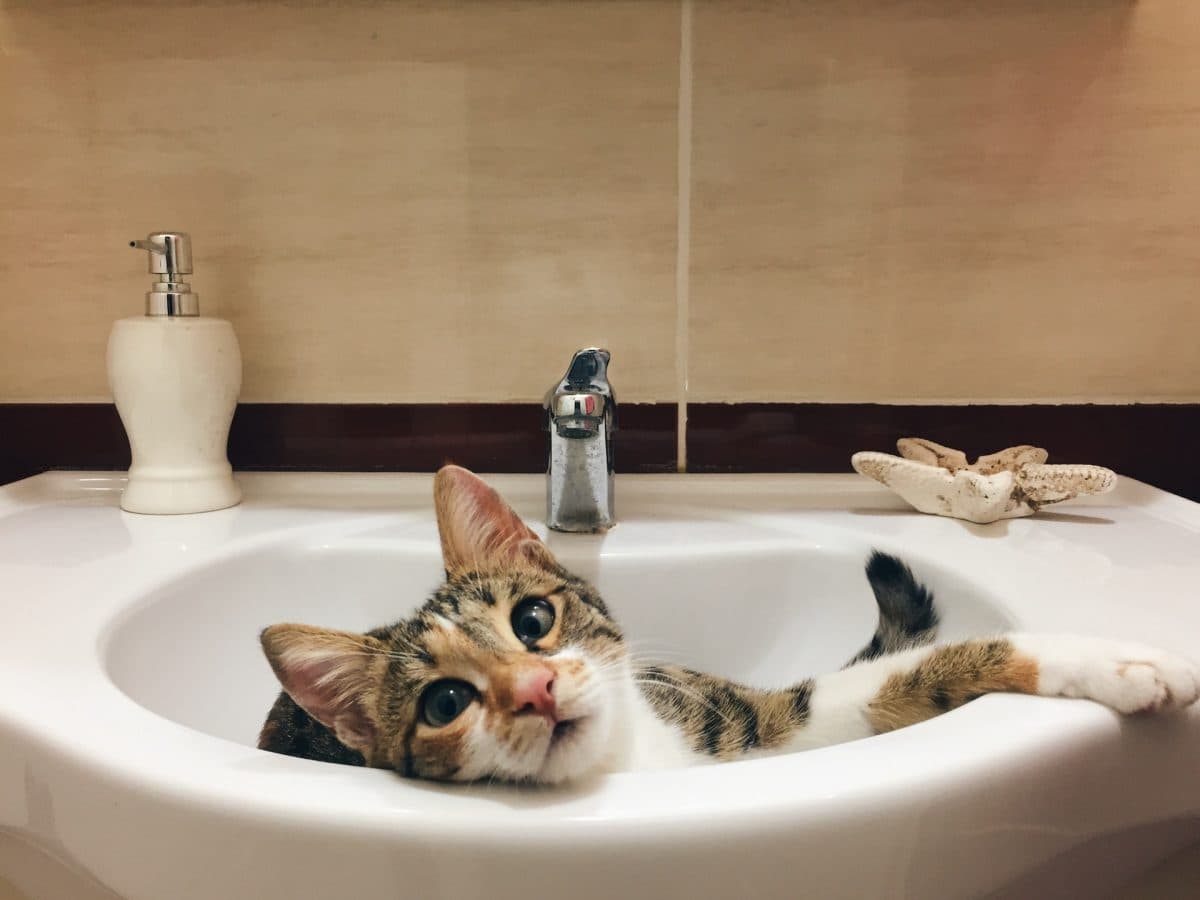
You stand up. You walk down the hall. You close the bathroom door behind you. And within about ten seconds, there it is. A paw slides under the door. Then maybe a meow. Then, if you have one of those particularly determined cats, the scratching starts. You have not been gone long enough to even sit down yet, and your cat is already staging a protest on the other side of the door.
If you have lived with a cat, you have lived with this. It is one of the most universal experiences in cat ownership, and it is also one of the most baffling. Why does your cat, an animal that spends most of the day pretending you do not exist, suddenly turn into a velcro dog the moment you step into the smallest room in the house? What is so special about the bathroom?
As it turns out, there is no single answer. There are several, and they stack on top of each other. The bathroom hits a cat's brain in a few different ways at once, and understanding what those are will not only explain the door-scratching but will also tell you a lot about how your cat sees you, your home, and the world you share.
Reason one: you are finally sitting still
Think about your day from your cat's perspective. You are moving around almost constantly. You get up, you make coffee, you sit at a desk but then you get up again, you walk to the kitchen, you go outside, you come back. From a cat's point of view, you are a large, unpredictable animal that is almost never in one place for very long.
The bathroom changes that. When you go in there, you sit down, and you stay put. For a cat, a stationary human is an opportunity. You are not going anywhere, which means you are available. Mieshelle Nagelschneider, a certified cat behaviorist, puts it this way: cats feel most comfortable approaching us when we are not moving, because from an evolutionary standpoint a sitting or lying-down posture signals that you are not a threat. You are calm, you are settled, and you are not about to leap up and do something alarming. That makes you approachable in a way you rarely are during the rest of the day.
This is also why some cats will jump onto your lap the moment you sit on the toilet. It is not that they have a bathroom fetish. They just see a person who is finally holding still, and they want to be near that person. You have effectively become a couch with a pulse, and your cat is taking advantage of the situation.
Dr. Maggie Placer, a veterinarian and veterinary science program manager at the EveryCat Health Foundation, points out that your cat also knows you are a captive audience in there. You are not going to get up and leave. You are not going to walk into another room. For the next few minutes, you are trapped, and your cat knows it. If your cat wants attention, the bathroom is the one place where you cannot really avoid giving it.
Reason two: closed doors are an insult to a cat
Here is something every cat owner learns eventually. Cats do not understand the concept of a private room. To a cat, the home is a single territory, and every part of it is theirs to monitor, explore, and occupy. When you close a door, you are not creating a private space. You are blocking access to part of their territory, and that is genuinely upsetting to them.
This is not just about the bathroom. Cats react the same way to closed bedroom doors, closed closet doors, closed pantry doors. The bathroom is just the one you close most often, so it is the one where the behavior shows up the most. The issue is not the bathroom. The issue is the door.
A closed door does two things that cats hate. First, it removes their control. Cats are animals that want to be able to go anywhere, check on anything, and leave any room at any time. A closed door takes that away. Second, it cuts off information. Cats rely on scent, sound, and sight to monitor their environment. When you shut a door, they can no longer see what you are doing, smell what is happening, or hear the full picture. They are flying blind, and that makes them anxious.
This is why your cat may not even want to come into the bathroom. They just want the door open. They want the option. If you leave the door cracked, a lot of cats will poke their head in, confirm that nothing interesting is happening, and walk away. It was never about being in the room with you. It was about the door being closed in the first place.
Reason three: the bathroom is genuinely interesting to a cat
Even without you in it, the bathroom is one of the most stimulating rooms in the house from a cat's perspective. Think about what is in there. There is running water, which cats are instinctively drawn to because their wild ancestors learned that flowing water is safer and fresher than standing water. There are shiny fixtures, smooth surfaces, and cool tile floors. There are towels to sit on, a bathtub to climb into, and a toilet that makes a fascinating gurgling noise when you flush it.
The bathroom is also a room that changes. Most rooms in your house look the same every day. The bathroom is different. Water turns on and off. Mirrors reflect things. The shower gets steamy. Towels move around. Products appear and disappear. For a curious animal, that makes the bathroom one of the most dynamic spaces in the home, and cats are nothing if not curious.
The running water thing deserves a closer look. Domestic cats evolved from African wildcats, and in the wild, standing water is often contaminated with bacteria, parasites, or decaying organic matter. Running water, by contrast, is usually fresh and safe. That instinct did not go away just because we started putting water in bowls. A lot of cats prefer drinking from a faucet over drinking from a bowl, and some will sit on the bathroom sink waiting for someone to turn the tap on. The sound of running water activates a deep-rooted seeking instinct. When your cat hears you turn on the sink or flush the toilet, they come running because their brain is telling them there is something worth investigating.
There is also the matter of whisker fatigue. A cat's whiskers are extremely sensitive, and when they press against the sides of a deep or narrow water bowl, it can be genuinely uncomfortable. Drinking from a stream of water from the faucet avoids that problem entirely. So if your cat follows you to the bathroom and beelines for the sink, they might not be following you at all. They might be following the water.
Reason four: routine and the morning food chain
Cats are creatures of habit in a way that surprises a lot of people. They have a strong internal clock, and they pay close attention to the sequence of events that happens in their home every day. They know when you usually wake up, when you usually eat, when you usually leave, and when you usually come back. And they know what comes before what.
If your morning routine is wake up, go to the bathroom, then feed the cat, your cat has figured that out. It probably took them about two days. From their perspective, the bathroom trip is step one of the feeding sequence. When you head for the bathroom, they are not following you because they love the bathroom. They are following you because the bathroom means breakfast is next.
This is a specific case of a broader pattern. Cats chain behaviors together, meaning they learn that one action predicts another, and they respond to the first action as if it were the second. You walking to the bathroom is the signal that food is coming. You putting on shoes is the signal that you are leaving. You opening a specific cabinet is the signal that treats are about to appear. The bathroom is just one link in a chain your cat has memorized better than you have.
Amy Shojai, a certified animal behavior consultant and author, notes that this chaining is why cats will sometimes race you to the bathroom in the morning. They are not excited about the bathroom. They are excited about what the bathroom predicts. And because cats love routine, once this pattern is established, it becomes self-reinforcing. The cat follows you to the bathroom, you eventually feed them, and the behavior is rewarded. Good luck breaking that cycle.
Reason five: attachment and the cat-human bond
Here is where the science gets really interesting. For a long time, people thought cats were not capable of forming real attachment bonds with humans. They were seen as tolerant at best, aloof and independent by nature. That view has been thoroughly demolished by research over the last several years.
In 2019, a study published in Current Biology by researchers at Oregon State University found that cats form attachment bonds with their human caregivers that are structurally identical to the bonds formed by children and dogs. They ran cats through an adapted version of the Ainsworth Strange Situation test, which is the same test used to classify attachment styles in human infants. The results were striking. About 64 percent of cats showed a secure attachment style, meaning they used their human as a base of security, explored the room when their human was present, and showed distress when the human left but recovered when they returned. The remaining 36 percent showed insecure attachment styles, similar to the proportions seen in human children.
What this means is that when your cat follows you to the bathroom, it may genuinely be because they do not want to be separated from you. You are their attachment figure. You are their safe base. When you disappear behind a closed door, a securely attached cat wants to follow because being near you is inherently reassuring. An insecurely attached cat may follow because your absence triggers anxiety, and they need to restore proximity to feel safe.
A separate study from Brazil, published in PLOS ONE, looked at separation-related problems in cats and found that about 13 percent of cats showed signs of separation anxiety when apart from their owners. The behaviors included destructive behavior, excessive vocalization, inappropriate urination, and depression or apathy. The study also found that cats with no other animals in the home and no access to toys were more likely to show these problems. So while most cats are fine being separated from their humans for short periods, a meaningful minority are not, and the bathroom door is one of the most common triggers for that anxiety.
The attachment research also helps explain why some cats follow you to the bathroom but not other rooms. It is not the room. It is the separation. When you go to the kitchen, you are still visible and accessible. When you close a bathroom door, you are gone. For a cat whose sense of security depends on proximity to you, that closed door is a real problem.
Reason six: territory and the feline need to patrol
Cats are territorial animals. I know that sounds obvious, but the implications are more specific than people realize. A cat's territory is not just a place they live. It is a space they actively monitor, patrol, and maintain. They check for intruders, they check for changes, and they check for anything that smells wrong. This is why your cat seems to do a lap of the house for no reason. They are not wandering. They are patrolling.
When you close the bathroom door, you are creating a gap in the patrol route. There is now a section of territory that the cat cannot access, and that is not acceptable. The American Association of Feline Practitioners notes that maintaining awareness of their environment is an important part of feline behavior. Cats do not just want to be in their territory. They want to know what is happening in every part of it at all times. A closed door creates an information vacuum, and the cat's response is to try to close that vacuum by getting in, or at least by monitoring the door until it opens again.
This territorial instinct also explains why some cats will sit outside the bathroom door and not meow or scratch. They are just waiting. They are not upset. They are on guard. They want to know the moment the door opens so they can do a quick sweep and confirm everything is still as it should be. It looks like devotion, and maybe it partly is, but it is also a patrol animal doing its job.
Reason seven: the bathroom is cool
This one is more practical than psychological. Bathrooms are often the coolest room in the house. They usually have tile floors, fewer windows, and smaller square footage than other rooms. For a cat in the middle of summer, that makes the bathroom extremely appealing.
Most cats are heat-seeking creatures, and they will gravitate toward warm spots most of the year. But in hot weather, or for cats with certain medical conditions, a cool tile floor is exactly what they want. Amy Shojai points out that older cats with hyperthyroidism, a condition that kicks the metabolism into overdrive and causes the cat to run hot, will often seek out the coolest room in the house. If your senior cat has started spending a lot of time on the bathroom floor, and you have not noticed any other behavioral changes, it might be worth having their thyroid checked. The bathroom obsession could be a symptom of something medical.
Even for a healthy cat, the bathroom offers a combination of cool surfaces and interesting textures that no other room matches. The bathtub is smooth and enclosed. The sink is a perfect cat-sized bowl. Damp towels are apparently luxurious to some cats, though the reasoning there is beyond human understanding. The point is, the bathroom is not just a room you use. To a cat, it is a multi-sensory environment with a lot to offer all on its own.
Is it ever a problem?
In the vast majority of cases, a cat following you to the bathroom is completely normal. It is a mix of attachment, curiosity, routine, territory, and the simple fact that you are holding still for once. It is not a sign of a behavioral problem, and it is not something you need to fix.
There are a few situations where it is worth paying closer attention.
If the behavior is new and sudden, especially in an older cat, think about medical causes. A cat that has never cared about the bathroom and suddenly starts following you there may be experiencing vision changes, hearing loss, cognitive dysfunction, or hyperthyroidism. Any sudden change in behavior in a senior cat is worth a vet visit.
If your cat shows genuine distress when separated from you, not just mild interest but full panic, that could be a sign of separation anxiety. The PLOS ONE study found that destructive behavior, excessive vocalization, and inappropriate urination when left alone are the most common signs. If your cat is doing those things, talk to your vet or a cat behaviorist.
If your cat has started following you everywhere, not just to the bathroom, and it is a change from their normal behavior, consider whether something in the environment has changed. A new pet, a move, the loss of a companion, or a change in your schedule can all trigger increased clinginess. Cats are sensitive to disruption, and following you around is one way they try to restore a sense of security.
If your cat is fixated on the bathroom specifically because of the water, watch for signs of increased thirst. Cats that suddenly start drinking a lot more water than usual may have kidney disease, diabetes, or hyperthyroidism. If the bathroom obsession is really a water obsession, and it is new, a blood panel is a good idea.
Should you let your cat in?
There is no right or wrong answer to this. Some people leave the door cracked so the cat can wander in and out. Some people close the door and accept the scratching as background noise. Some people let the cat in and end up with a permanent bathroom companion who sits on the sink and watches them brush their teeth every morning.
If you do not mind your cat joining you, there is no reason to discourage it. It is not going to create a dependency or a behavioral issue. It is just a cat being a cat. If you would prefer your privacy, you can close the door and ignore the protest. Your cat will not be emotionally damaged by a few minutes of separation. They will probably just sit outside the door and wait, which is what they were going to do anyway.
The one thing that does not work, or at least does not work easily, is trying to train your cat to stop caring about the closed door. You are fighting millions of years of territorial instinct and a decade of domestication-shaped attachment behavior. The door is closed, the cat wants it open, and that is that. You can redirect the behavior, you can provide distractions, and you can make the rest of the house more interesting, but you are not going to convince a cat that a closed door is fine. They have opinions about doors, and those opinions are firm.
The real takeaway
Your cat follows you to the bathroom because you are their person, the bathroom is interesting, the door is an insult, and you are finally sitting still long enough to be worth approaching. It is not weird. It is not a problem. It is a small, everyday window into how your cat experiences the world and their relationship with you.
The next time you close the bathroom door and hear the paw slide underneath, you can think of it this way. Your cat is not being needy. They are being a cat. They are monitoring their territory, checking on their attachment figure, investigating a room that changes, and maybe hoping you will turn on the faucet. They are doing exactly what thousands of years of evolution and ten years of living with you have taught them to do. And honestly, the fact that they care enough to wait outside the door says a lot more about your bond than it does about any bathroom obsession.
So leave the door open or close it. Either way, your cat will be there. That is just how it works when you live with a cat. You get a bathroom buddy whether you wanted one or not, and most of the time, it is kind of nice.
Keep reading
If you found this helpful, you might also like our guides on why cats vocalize for attention, whether following means love and signs your cat is bonded to you.
Further reading
Love learning about cats? Adopt a virtual cat pet and level it up by joining our community.
Related reading: Why Does My Cat Follow Me Everywhere?.
Comments (0)
Join the conversation
Sign up to share your thoughts.
Loading comments...