How Long Will My Cat Live?
The honest answer involves a 2024 study of 8,000 cats, the one factor you control, and a Texas cat who made it to 38

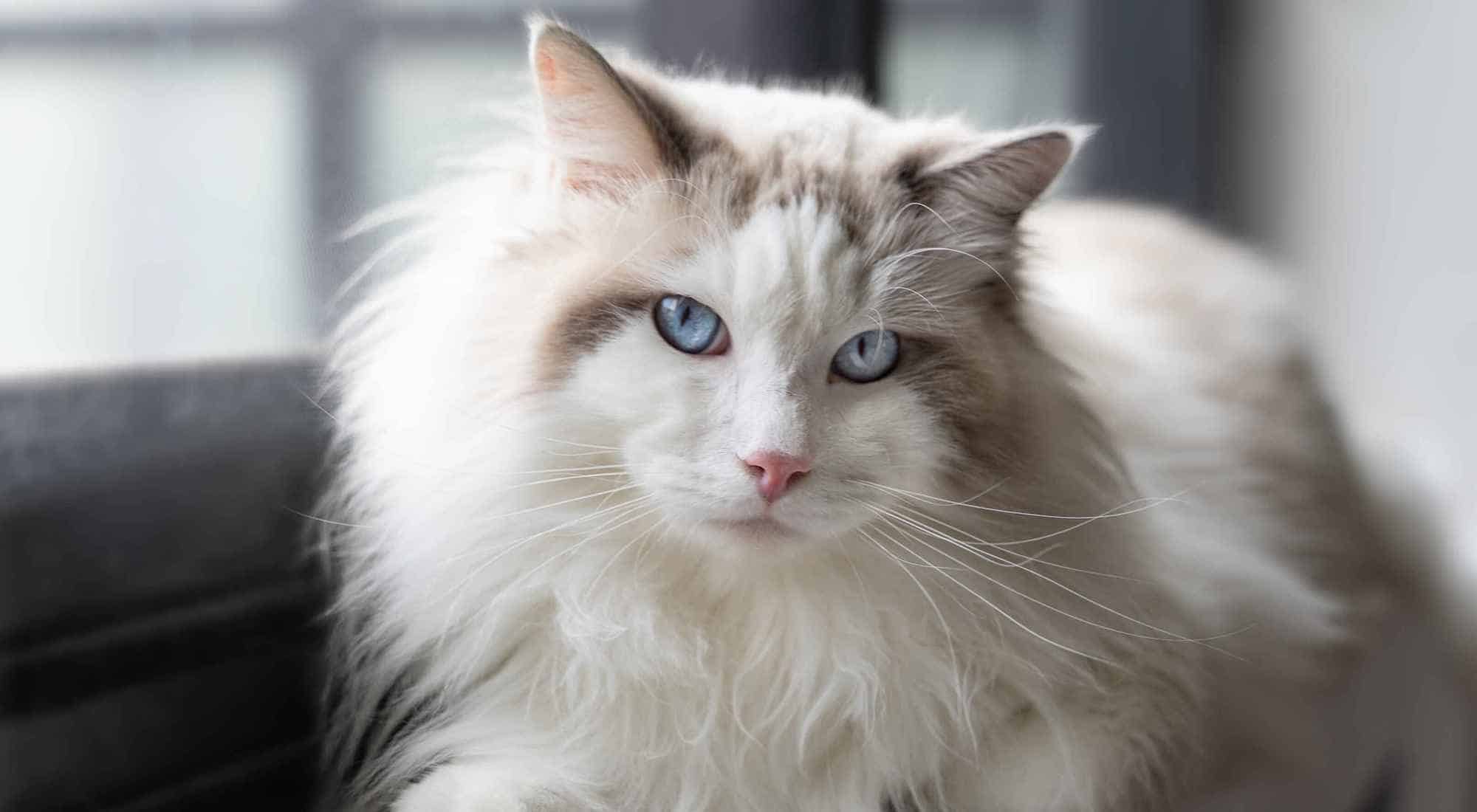
If you have a cat, you have probably done the math. You know roughly how old they are, you know roughly how old you are, and you have wondered whether you are going to outlive them or they are going to outlive you. It is one of those questions that sits in the back of your head, especially once your cat starts getting a little gray around the muzzle or sleeping a bit more than they used to.
I have dug through the research on this, and the good news is that we actually have decent data now. A major study published in 2024 looked at nearly 8,000 cats and gave us the best lifespan numbers we have ever had. The less simple news is that the answer depends a lot on a few specific things, some of which you control and some of which you do not.
So let us walk through it. The averages, the big factors, the breed differences, what the studies actually found, and what it all means for the cat sitting on your lap right now.
The short answer
An indoor cat in a typical home with decent veterinary care lives somewhere around 12 to 15 years on average. Many live well into their late teens, and a few make it past 20. The single biggest factor is whether the cat lives indoors or outdoors. Outdoor cats have an average lifespan of just 2 to 5 years, according to researchers at the UC Davis School of Veterinary Medicine. That is not a typo. The gap between indoor and outdoor cats is enormous, and it is the single most important number in this entire article.
Beyond that, the factors that matter most are whether the cat is spayed or neutered (fixed cats live significantly longer), whether they are a mixed breed or a purebred (mixed breeds tend to win), and their sex (females outlive males by a bit). Diet, weight, and veterinary care matter too, of course, but those are harder to quantify in studies.
The 2024 UK study that gave us real numbers
For a long time, cat lifespan numbers were kind of all over the place. You would see sources saying 12 to 15 years, others saying 15 to 20, and nobody was really sure which was right because the studies were small or outdated. That changed in May 2024, when a team from the Royal Veterinary College published the first proper life tables for companion cats in the UK.
The study, led by Kendy Teng and published in the Journal of Feline Medicine and Surgery, analyzed data from nearly 8,000 cats in the VetCompass database, which pulls records from primary veterinary clinics across the UK. The overall average life expectancy from birth was 11.74 years. That number is lower than the 12 to 15 you usually see quoted, and the reason is that it includes everything, kittens who did not make it, accidents, inherited diseases, the lot. Once a cat makes it past the risky first year, their expected lifespan goes up.
Here is where it gets interesting. The study broke the numbers down by sex and breed, and the differences were bigger than you might guess.
Indoor versus outdoor: the biggest gap there is
I already mentioned the 2 to 5 year figure for outdoor cats, and I want to dwell on it for a second because it is the factor that dwarfs everything else in this article. The UC Davis researchers found that cats who live primarily outdoors have dramatically shorter lives than indoor cats, and the reasons are not mysterious. Cars, predators, diseases from other animals, fights, exposure to harsh weather, and just the general fact that the world is full of things that want to kill a small animal.
Indoor cats, by contrast, typically live 10 to 15 years, and many surpass 20 with good care. Their environment is controlled. They are not getting hit by cars, they are not getting into fights with feral tomcats, they are not picking up feline leukemia from a stray. The difference is so stark that if you take away one thing from this article, it should be this: keeping your cat indoors is the single most effective thing you can do to give them a long life.
If you really want your cat to experience the outdoors, there is a middle ground. A secure outdoor enclosure, sometimes called a catio, gives them fresh air and stimulation without the risks. Some people harness-train their cats. The point is that unsupervised outdoor roaming is what cuts years off a cat's life, not the concept of going outside itself.
Getting fixed matters more than you would guess
The second biggest factor, after indoor versus outdoor, is whether your cat is spayed or neutered. And the gap here is also surprisingly large.
A 2013 report from Banfield Pet Hospital, drawing on data from 460,000 cats, found that spayed females lived an average of 13.1 years compared to 9.5 years for intact females. That is a 39 percent difference. For males, neutered cats lived 11.8 years compared to 7.5 years for intact males, a 62 percent difference. Those are not marginal numbers.
A separate study from UC Davis, published in PLoS One, looked at over 3,100 cats who underwent post-mortem examination at the UC Davis veterinary hospital between 1989 and 2019. The researchers, led by Dr. Michael Kent, were genuinely surprised by what they found. "We were really surprised to discover that intact cats of both genders had significantly shorter life spans," Kent said. The median age of death for intact females was just 1.5 years, though that number includes kittens who may have been born with congenital problems.
Why does fixing your cat matter so much? Part of it is behavioral. Intact cats roam more, fight more, and get into more dangerous situations, especially males looking for mates. Part of it is medical. Spaying eliminates the risk of pyometra, a life-threatening uterine infection, and dramatically reduces the risk of mammary cancer. Neutering reduces testicular cancer and certain prostate issues. The veterinary consensus is that the optimal age to spay or neuter a cat is before 5 months old.
Does breed matter? Yes, but not how you might expect
Here is a finding that surprised me. The 2024 RVC study found that only two pedigree breeds tended to live longer than a plain old mixed breed cat, what the British call a moggie. Those two were the Burmese, with an average life expectancy of 14.42 years, and the Birman, at 14.39 years. A moggie came in at 11.89 years.
At the other end, the Sphynx, that hairless breed you have probably seen on Instagram, had the shortest life expectancy in the study at just 6.68 years. The Bengal came in at 8.51 years. The Norwegian Forest Cat, Maine Coon, Russian cats, and British cats all came in at just under 10 years. The Persian and Ragdoll were just over 10, and the Siamese just over 11.
This lines up with an earlier study from 2015, also published in the Journal of Feline Medicine and Surgery, that looked at over 4,000 confirmed cat deaths in England. That study found crossbred cats had a median longevity of 14.0 years, compared to 12.5 years for purebred cats. The pattern is consistent: mixed breeds, with their broader gene pools, tend to outlive purebreds. This is not a coincidence. Purebred cats are bred for specific physical traits, and some of those traits come with health problems. The flat face of a Persian can cause breathing issues. The large body of a Maine Coon is linked to heart disease. The hairlessness of the Sphynx comes with skin and dental problems.
If you already have a purebred cat, do not panic. These are averages across thousands of cats, and plenty of purebreds live long, healthy lives. But if you are choosing a cat and longevity is a priority, a mixed breed is a perfectly good bet, and a Burmese or Birman is the pedigree choice with the best numbers behind it.
Girls outlive boys, by a little
The 2024 RVC study found that female cats had an average life expectancy of 12.51 years, compared to 11.18 years for males. That is about a year and a third difference. A separate UK study that analyzed 7,708 cats receiving veterinary care in 2019 found the same pattern, attributing it partly to higher trauma rates and health issues in males. Tom cats, especially intact ones, roam more and fight more, which puts them in harm's way.
So if you have a male cat, that is one more reason to get him neutered. It takes away much of the roaming and fighting instinct that puts males at higher risk.
The surprisingly good news about old cats
One of the nicest things about the 2024 RVC study is that it did not just give us an average lifespan from birth. It built life tables, which tell you how much longer a cat is likely to live once they have already reached a certain age. And the numbers are genuinely reassuring if you have an older cat.
A cat who is 9 or 10 years old has an average of another 6.08 years ahead of them. A cat who is 12 or 13 has another 4.24 years. A cat who is 15 or 16 has another 2.72 years. And even a cat who has made it to 19 or 20 has, on average, another 1.40 years. The point is that once a cat has made it this far, they have already beaten the risks that take out younger cats, and their remaining life expectancy is better than you might assume.
If your cat is getting up there in years, do not write them off. Good care, regular vet checkups, and attention to changes in behavior or appetite can keep them going for a surprisingly long time.
What actually kills cats
The 2015 UK study that tracked 4,000 cat deaths broke down the most common causes of mortality, and the list is useful if you want to know what to watch for. The top causes were trauma, at 12.2 percent, renal disorder, at 12.1 percent, non-specific illness, at 11.2 percent, neoplasia, which is cancer, at 10.8 percent, and mass lesion disorders, at 10.2 percent.
A few things jump out. Trauma is the number one cause, and most trauma is preventable. Keeping your cat indoors eliminates the vast majority of it. Renal disorder, meaning kidney disease, is the second biggest killer and is particularly common in older cats. This is why vets push for regular bloodwork as your cat ages, because kidney disease can be managed for years if you catch it early. Cancer is also significant, and some breeds are more prone to certain types than others.
What you can actually do
Putting all of this together, here is what actually moves the needle on a cat's lifespan, based on the research:
Keep your cat indoors, or give them supervised outdoor access only. This is the single biggest one.
Get them spayed or neutered, ideally before 5 months of age. The lifespan difference is huge.
Feed them a balanced diet and keep their weight in a healthy range. The RVC study found that the average cat in their data weighed 5.5 kg, which is heavier than most vets recommend, but cats who deviated significantly from the average had shorter lives. The takeaway is not that you should overfeed your cat, but that extreme thinness or obesity both shorten life.
Take them to the vet regularly, especially as they get older. Bloodwork can catch kidney disease, thyroid issues, and diabetes early, and all three are manageable.
If you are getting a new cat and longevity matters to you, consider a mixed breed. If you want a pedigree, Burmese and Birman have the best lifespan numbers.
Creme Puff and the question nobody can answer
Every discussion of cat lifespan has to mention Creme Puff. She was a tabby cat born on August 3, 1967, in Austin, Texas, owned by a plumber named Jake Perry. She died on August 6, 2005, at the age of 38 years and 3 days. That is the Guinness World Record for the oldest cat ever, and it stands to this day. To put that in perspective, a 38-year-old cat is roughly equivalent to a 160-year-old human.
Nobody fully knows how Creme Puff lived that long. Her owner also had another cat, Granpa Rexs Allen, who lived to 34. Perry attributed their longevity to a diet that included things like broccoli, eggs, bacon, and asparagus, plus an environment with plenty of stimulation. Whether that actually explains it or whether Creme Puff just won the genetic lottery is anyone's guess. The point is that the upper end of what is possible for a cat is far beyond the average, and we do not fully understand why some cats make it that far while most do not.
So how long will your cat live?
If your cat is an indoor, spayed or neutered mixed breed, you are looking at a likely range of 14 to 18 years, with a real shot at 20 or more if you are lucky and diligent. If your cat is an outdoor purebred who is not fixed, the math is much less kind. Most cats fall somewhere in between, and the factors we talked about, indoor living, fixing, diet, vet care, are the ones that push the number up or down.
The best thing about all of this is that the two biggest factors, keeping your cat indoors and getting them fixed, are things almost every owner can do. You do not need to buy expensive supplements or follow some secret regimen. You just need to keep them safe, feed them well, and take them to the vet. The rest is partly genetics and partly luck, and neither of those is something you can control.
What you can control is giving your cat the best shot at the high end of their range. And honestly, that is all any of us can do, for our cats or ourselves.
Keep reading
If you found this helpful, you might also like our guides on how spaying extends lifespan, how diet affects longevity and why happiness matters for lifespan.
Comments (0)
Join the conversation
Sign up to share your thoughts.
Loading comments...