When to Switch Kitten to Adult Cat Food: The Complete Guide
The answer is not just about age. It is about breed, body condition, and a transition that can go wrong if you rush it

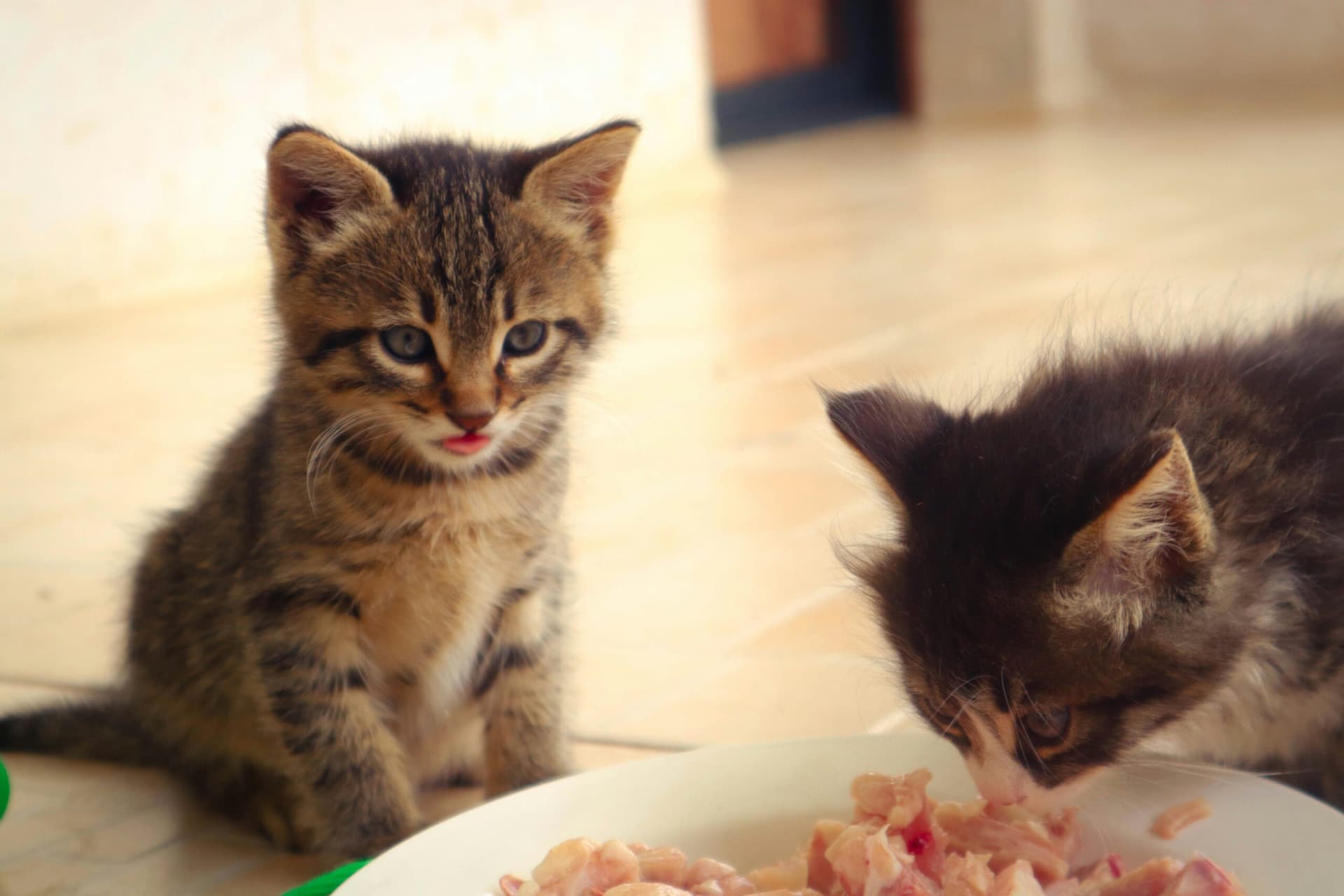
If you brought home a kitten recently, you have probably already thought about the food question. You know they are on kitten food right now, and you know that at some point they need to switch to adult cat food. But when exactly? Is it a hard date on the calendar, or is it more about size and growth? And what happens if you switch too early or too late?
I have dug through the veterinary nutrition guidelines on this, and the honest answer is that it is not a single number. It depends on your cat's breed, their growth rate, their body condition, and whether they have been spayed or neutered. There is a general rule that works for most cats, and then there is a big exception for large breeds that a lot of people do not know about.
Let us walk through when to switch, why it matters, how to do the transition without giving your cat diarrhea, and the specific situation with breeds like Maine Coons that completely changes the timeline.
The general rule: around 12 months
For most domestic cats, the answer is straightforward. You switch from kitten food to adult cat food at around 12 months of age. That is the guideline from VCA Animal Hospitals, Purina, and most veterinary nutrition sources, and it lines up with the AAHA and AAFP Feline Life Stage Guidelines published in 2021, which define the kitten stage as birth up to 1 year and the young adult stage as 1 year through 6 years.
The reason for the 12-month mark is that most cats have reached their full adult size, or close to it, by then. The Merck Veterinary Manual, which is one of the standard veterinary references, states that the kitten growth rate plateaus at around 150 to 160 days of age and that growth is usually completed within 200 to 220 days, which is roughly 7 months. But even after skeletal growth is done, cats continue to fill out with muscle and fill in their adult frame for several more months. The 12-month guideline gives that process time to finish before you cut back on the calorie-dense kitten formula.
Most veterinary sources use a slightly more precise benchmark than just age. They say a cat is ready for adult food when they have reached 80 to 90 percent of their predicted adult size, which typically happens between 9 and 12 months for standard domestic cats. If your cat is small for their age or was the runt of the litter, they might need kitten food a little longer. If they are already a solid adult size at 10 months, you are probably fine to start the transition.
The big exception: large breeds like Maine Coons
Here is where a lot of people get tripped up. If you have a Maine Coon, a Norwegian Forest Cat, or another large breed, the 12-month rule does not apply. These cats take much longer to reach full maturity, and switching them to adult food at one year can shortchange their growth.
According to the Cat Fanciers' Association, the Maine Coon is the largest recognized domestic cat breed in North America. Males typically weigh 13 to 25 pounds and can reach 40 inches from nose to tail tip. TICA, the International Cat Association, states that Maine Coons do not typically reach full maturity until they are 4 years old, and that they do not achieve their full size until they are 3 to 5 years old. This is not a slight extension of the timeline. It is a completely different growth curve.
While a typical domestic cat reaches full size around 12 months, Maine Coons are still actively building muscle and skeleton well into their third or fourth year. They reach about 80 percent of their adult size by 12 months, but the remaining 20 percent is significant when you are talking about a cat that could ultimately weigh 20 pounds. Most sources recommend keeping large breeds on kitten food until at least 18 months, and many breeders and veterinarians recommend continuing until 2 years or even longer for Maine Coons specifically.
If you have a large breed, talk to your vet about the right timeline. The general rule of 12 months is for standard domestic cats, and applying it to a Maine Coon is one of the most common feeding mistakes people make with this breed.
Why kitten food is different from adult food
To understand why the timing matters, it helps to understand what is actually different between kitten food and adult cat food. It is not just marketing. The nutritional profiles are genuinely different, and the differences are defined by AAFCO standards.
Kittens are growing rapidly. In the first few months of life, they gain 50 to 100 grams per week, according to the Merck Veterinary Manual. That growth requires more of everything, more protein, more fat, more calories, and specific nutrients in higher amounts. AAFCO guidelines require kitten food, which is labeled for 'growth and reproduction,' to contain a minimum of 30 percent protein on a dry matter basis, or 75 grams of protein per 1,000 kilocalories. Adult cat food, labeled for 'maintenance,' only requires 26 percent protein, or 65 grams per 1,000 kilocalories. That is a meaningful difference.
Kitten food also has more fat and more calories per serving. The Merck Veterinary Manual recommends that growing kittens be fed a diet containing 10 to 35 percent fat and 30 to 40 percent protein on a dry matter basis, with low fiber. Adult cats need less of all of that because they are maintaining, not growing. Kitten food also often contains higher levels of certain nutrients like DHA, an omega-3 fatty acid that supports brain and vision development, and specific vitamins and minerals that support bone growth.
The short version is that kitten food is nutrient-dense and calorie-rich because kittens are building a body. Adult food is leaner because the body is built and now just needs maintenance. Feeding the wrong one at the wrong time causes problems in both directions.
What happens if you switch too early
If you switch a kitten to adult food before they are done growing, you are cutting their intake of protein, fat, and calories at exactly the time they need those things most. The consequences depend on how early you switch and how fast the kitten is growing, but the risks are real.
A kitten who gets too few calories may grow more slowly than they should, which can mean a smaller adult size and, in severe cases, developmental issues. A kitten who gets too little protein may not build muscle and bone properly. The AAFCO protein requirements exist for a reason, and they are higher for kittens because kittens are actively constructing tissue. Shortchanging that process is not something you want to do.
This is especially a concern for large breeds. If you switch a Maine Coon to adult food at 12 months, you are cutting their nutrient intake when they still have 2 to 3 years of growth ahead of them. They may not reach their full size, and their muscle development may be compromised. This is why the large-breed exception matters so much.
What happens if you switch too late
The more common mistake, actually, is switching too late. A lot of people keep their cat on kitten food well past the first year because it feels safe, or because they just forget, or because their cat likes it and they do not want to rock the boat. The problem is that kitten food is calorie-dense, and an adult cat who does not need those calories is going to store them as fat.
VCA Animal Hospitals notes that kitten food may be too rich for adult cats, causing excessive weight gain. This is especially true for indoor cats and for cats who have been spayed or neutered. Research published in the journal Preventive Veterinary Medicine found that neutering is a significant risk factor for obesity in companion animals, because it increases appetite and decreases energy needs simultaneously. A neutered adult cat eating kitten food is getting more calories than they need from a formula designed for a growing animal, and their metabolism is already slowed by the hormonal changes from the surgery. That is a recipe for weight gain.
Obesity in cats is not a cosmetic issue. It increases the risk of diabetes, joint problems, urinary tract disease, and reduced lifespan. The 2024 RVC lifespan study we covered in the cat lifespan article found that cats who deviated significantly from the average weight had shorter lives. Keeping an adult cat on kitten food past their growth period is one of the easier ways to push them into that overweight category without realizing it.
How to do the transition without making your cat sick
Once you have decided it is time to switch, do not just swap the food overnight. Cats have sensitive digestive systems, and a sudden change in diet is one of the most common causes of vomiting and diarrhea in cats. Every veterinary source I looked at recommends the same approach: a gradual transition over 7 to 14 days.
The method is simple. You mix the old food and the new food together, gradually increasing the proportion of new food while decreasing the old. Here is the schedule that PetMD, Purina, and VCA all recommend in slightly different variations:
Days 1 to 2: 75 percent kitten food, 25 percent adult food
Days 3 to 4: 50 percent kitten food, 50 percent adult food
Days 5 to 6: 25 percent kitten food, 75 percent adult food
Day 7 and beyond: 100 percent adult food
If your cat has a sensitive stomach, take it slower. VCA recommends spreading the transition over 10 to 14 days instead of 7, with smaller increments. Watch for loose stools, vomiting, or decreased appetite during the transition. If you see any of those, slow down. If things do not normalize within 24 hours, call your vet.
One thing to keep in mind during the transition is the calorie difference. Dry kitten food is more calorie-dense than dry adult food, and wet food has more water and fewer calories per volume than dry. If you are switching between wet and dry at the same time as switching from kitten to adult, you may need to adjust portion sizes. Check the feeding guidelines on both bags and talk to your vet if you are unsure about amounts.
What about 'all life stages' food?
You may have seen cat food labeled 'for all life stages' and wondered if that lets you skip the transition entirely. The answer is: kind of, but with caveats.
AAFCO allows a food to be labeled for 'all life stages' if it meets the nutritional requirements for both growth and adult maintenance. That means it has enough protein, fat, and calories for a kitten, and it is also acceptable for an adult cat. Purina notes that if the label says it is formulated for all life stages, it is safe for both kittens and adult cats to eat.
The catch is that 'all life stages' foods are formulated to the higher standard, meaning they have kitten-level calories and nutrients. For an adult cat, especially a neutered indoor cat, that means the same overfeeding risk as staying on kitten food too long. You can feed an all-life-stages food to an adult cat, but you need to be careful about portion control. In practice, most veterinarians recommend switching to a dedicated adult maintenance formula because it takes the guesswork out of portion sizes.
Signs it is time to switch
If you are not sure whether your cat is ready, here are the practical signs that it is time to transition to adult food:
Your cat is between 10 and 12 months old and is a standard domestic breed, not a large breed.
Your cat has reached roughly 80 to 90 percent of their expected adult size.
Your cat's growth has visibly slowed or stopped, meaning they have not gained noticeable weight or size in the last couple of months.
Your cat has been spayed or neutered, which means their metabolism is already shifting and their calorie needs are dropping.
Your cat is starting to look a little chunky on kitten food, which is a sign they are getting more calories than they need.
If your cat is a large breed like a Maine Coon, ignore the first bullet and plan to keep them on kitten food until at least 18 months, preferably 2 years. Talk to your vet about the exact timeline.
The bottom line
For most cats, the switch happens at around 12 months. It is not a hard deadline, and the more accurate benchmark is 80 to 90 percent of adult size, which usually lands between 9 and 12 months for standard domestic cats. For large breeds, especially Maine Coons, the timeline extends to 18 months or 2 years because they keep growing long after other cats have stopped.
The transition itself is not complicated, but it requires patience. Take 7 to 14 days, mix the foods gradually, and watch for digestive upset. Do not rush it, and do not drag it out. And once you are on adult food, pay attention to portion sizes, especially if your cat is neutered and indoor-only. The food change is one adjustment, but the ongoing calorie management is what keeps your cat at a healthy weight for the rest of their life.
When in doubt, ask your vet. They know your cat's breed, weight, body condition, and health history, and they can give you a more specific timeline than any article can. The guidelines here are solid for most cats, but every cat is an individual, and the best feeding plan is one tailored to the specific animal sitting in your kitchen staring at you right now.
Keep reading
If you found this helpful, you might also like our guides on whether your cat food is actually safe, how long your cat will live and the spay/neuter timing decision.
Comments (0)
Join the conversation
Sign up to share your thoughts.
Loading comments...