
The Cat Lovers logoThe Cat Lovers
Search anything
The Cat Lovers logoThe Cat Lovers
Search anything
HomeCatopiaForumNewsGamesQuizzes
ArticlesBehaviorHealthNutritionView all
Pull to refresh
The Cat Lovers

A free, friendly community for cat people: questions, photos, care guides, games and a virtual cat of your own.

Explore

  • Home
  • Catopia
  • Forum
  • News
  • Games
  • Quizzes
  • Members

Articles

  • Behavior
  • Health
  • Nutrition
  • View all

The Cat Lovers v6.5.1

  • Privacy Policy
  • Terms of Service

Designed by Ctrl Shift Run

Home/News
Newshealthsenior-catsresearch

Most Older Cats Develop Several Age-Related Conditions, Long-Running UK Study Finds

A University of Liverpool study followed 209 cats from middle age for up to seven years. Muscle loss at midlife and pedigree status were linked to a higher risk of death.
By itsnickbakerPublished November 2, 2026, 1:16 PM UTCUpdated November 2, 2026, 2:23 PM UTC6 min read
SourceFrontiers in Veterinary Science
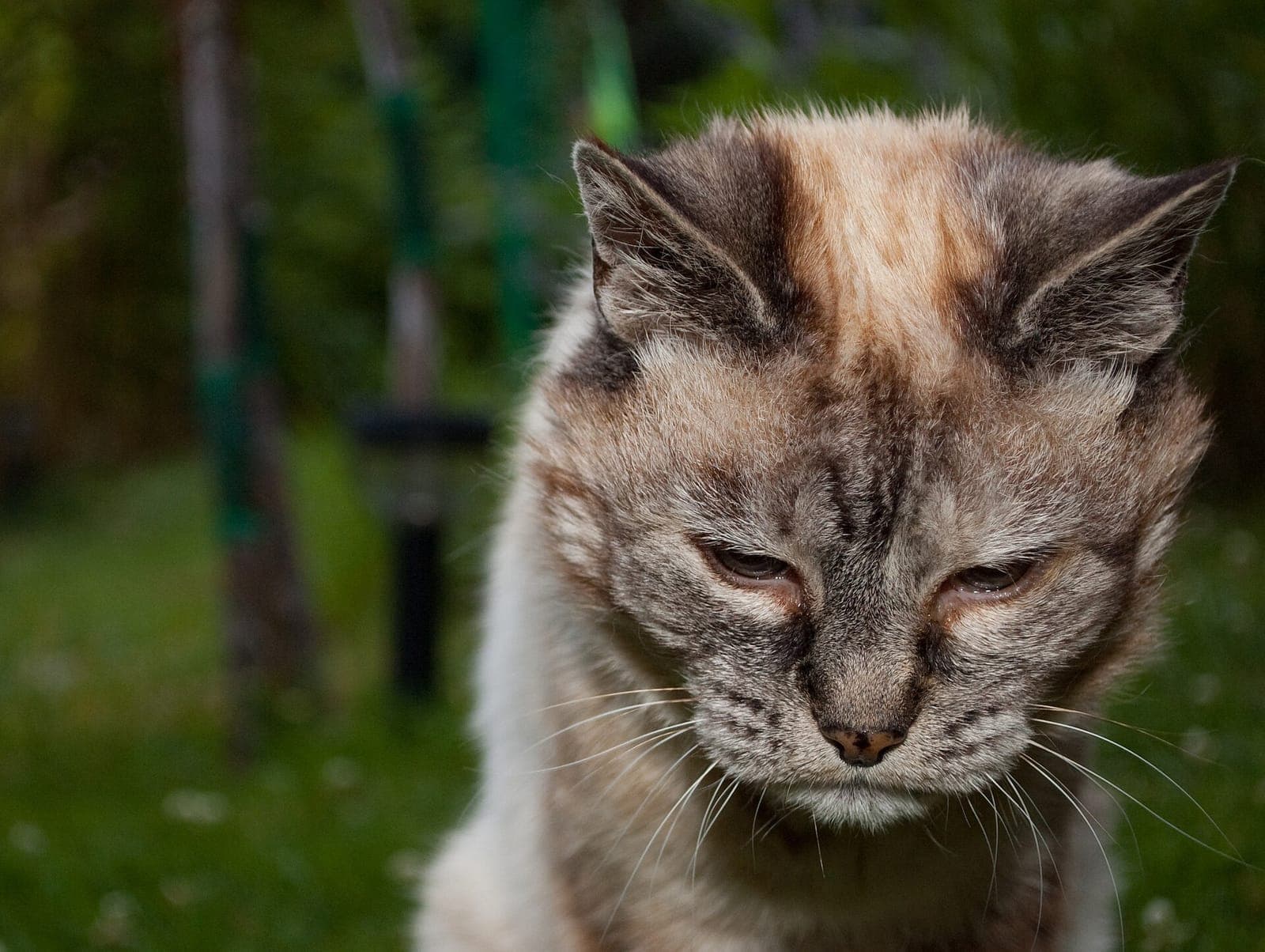
A 20-year-old cat with a tired expression. File photo, not from the Liverpool study.

A 20-year-old cat with a tired expression. File photo, not from the Liverpool study.

Photo: Dimitri Torterat, CC BY 2.0 FR, via Wikimedia Commons

Illness in later life is the norm for pet cats, not the exception, according to one of the longest studies of aging cats to date. Researchers at the University of Liverpool followed 209 client-owned cats from middle age for up to seven years and found that 96 percent developed at least one abnormality on a veterinary exam, and 84 percent developed two or more at the same time. The results were published on June 24, 2026 in Frontiers in Veterinary Science, and Health Chosun reported on them on November 2, 2026.

The paper, by first author Christine R. Pye and colleagues including Alexander J. German, is titled Patterns of morbidity, multimorbidity, and mortality in aging cats. It comes from the Cat Prospective Ageing and Welfare Study, known as CatPAWS, which began in 2017.

How the study worked

A total of 209 cats belonging to 149 owners in the north-west of England were enrolled between February 2017 and March 2020, most of them between 7 and 10 years old. The median age at enrollment was 8.1 years. Of the cats, 180 (86 percent) were mixed-breed and 29 (14 percent) were pedigree cats from 14 breeds. Nearly all were neutered, and the group was 53 percent female.

Every six months each cat had a full veterinary examination until it died or the data cutoff in January 2024. Vets recorded weight, a body condition score on a 9-point scale and a muscle condition score based on 10 places on the body. They also measured blood pressure with a Doppler device, listened to the heart, and took blood and urine samples. In all, the team carried out 1,241 visits, a median of six per cat, with a median follow-up of 4.4 years.

What the vets found

  • Dental disease: 84 percent of cats (176 cats)

  • Abnormalities on orthopedic examination: 82 percent (172 cats)

  • Heart murmurs: 59 percent (124 cats)

  • High blood pressure: about 20 percent (41 cats)

  • Chronic kidney disease: 11 percent (23 cats)

Medical disclaimer: This story is for informational purposes only and is not a substitute for professional veterinary advice. Always consult a qualified veterinarian for health concerns about your cat.
Share this article

More cat news

  • Cats and Owners Show Matching Oxytocin Patterns, Japanese Study FindsNov 2, 2026
  • Nepal Tests Lab-Made Scent Markers to Keep Tigers and Leopards Away From LivestockNov 2, 2026
  • Scientists Name Leopardus tilcayo, the First New Wild Cat Species in More Than a CenturyNov 2, 2026
  • Kazakhstan Releases a Tiger in Bid to Restore the Caspian Tiger's Lost RangeNov 2, 2026
All cat news

Comments (0)

Join the conversation

Sign up to share your thoughts.

Log inSign up

Loading comments...

Cancer: 9 percent (19 cats)
  • Overactive thyroid: about 9 percent (18 cats)

  • Diabetes: about 2 percent (4 cats)

  • Some of these are findings on examination rather than confirmed diagnoses. Orthopedic problems were identified mainly by hands-on examination and not confirmed with X-rays, and heart murmurs were not followed up with heart ultrasound in most cats. The authors say dental disease was probably higher than in other studies because the cats were older and a careful oral exam was done at every check-up.

    Several conditions at once

    Only 9 of the 209 cats (4 percent) stayed free of any abnormality, while 175 (84 percent) developed two or more. The most common combination, dental disease with orthopedic abnormalities and a heart murmur, affected 103 cats, or 49 percent. No cat that developed high blood pressure, an overactive thyroid, diabetes or kidney disease had it on its own. Of the 41 cats with high blood pressure, 28 also had a heart murmur, nine had an overactive thyroid and nine had kidney disease. High blood pressure became much more likely in male cats after about 10 years of age.

    The authors point out that multiple conditions make care harder. An overactive thyroid can mask kidney disease, and common painkillers for joint pain raise concerns in cats with kidney problems, yet leaving pain untreated affects welfare.

    How long the cats lived

    Fifty-nine of the 209 cats (28 percent) died during the study, at an average age of 11.6 years. Forty-eight were euthanized. Cancer was the leading cause of death, accounting for 18 deaths (31 percent), including six from lymphoma, followed by cardiovascular disease with eight (14 percent), endocrine disorders with five (9 percent), kidney disorders with four (7 percent) and sudden unexplained death with four (7 percent). None of the cats died in a road accident, which the authors suggest may reflect older cats spending less time outdoors.

    The median life expectancy of the group was estimated at 15.2 years, and 53 percent of the cats were still alive at 15. Pedigree cats had a median life expectancy of 12.7 years compared with 15.8 years for mixed-breed cats. During follow-up, 13 of the 29 pedigree cats (45 percent) died, compared with 46 of the 180 mixed-breed cats (26 percent).

    Muscle loss and pedigree status

    The study looked at which factors at enrollment were linked to dying during follow-up. Two stood out. Pedigree cats had roughly double the hazard of death compared with mixed-breed cats, with a hazard ratio of 2.62 (95 percent confidence interval 1.39 to 4.93). Cats with mild muscle loss at middle age had a similar increase compared with cats with normal muscle, with a hazard ratio of 2.01 (1.13 to 3.60). A hazard ratio compares how fast events happen in one group against another, so a value near two means about twice the rate over the same period. Having four or more conditions at enrollment was also a risk factor.

    The authors say muscle condition at middle age can predict future risk, which makes it worth recording during routine exams. Muscle loss can follow chronic pain from joint disease and can also occur in old age without other disease. For prevention, they suggest adequate dietary protein and, where suitable, gentle strength-building activity such as interactive play. Health Chosun noted that the World Small Animal Veterinary Association advises checking muscle by feeling along both sides of a cat's spine. Body weight mattered too: cats that were overweight or obese at enrollment were at greater risk of death after age 11, and a body condition score of 5 or 6 out of 9 is currently considered ideal.

    The pedigree finding should be read with care. Only 29 cats from 14 breeds were in that group, too few to analyze any single breed. The paper notes that earlier studies have found life expectancy varies widely between breeds, and it raises inbreeding as one possible reason pedigree cats may live shorter lives on average.

    Funding and limitations

    The work was funded by Royal Canin, a pet food company that is part of Mars Petcare. The paper says the funder was not involved in the study design, data collection, analysis, writing or the decision to publish. One author is a Royal Canin employee, and several others have held posts or studentships funded by Royal Canin, according to the paper's disclosures. Two authors have also received fees or gifts for educational material, speaking or consulting.

    • The sample was relatively small, so rarer conditions such as diabetes may have unreliable estimates.

    • All cats came from one part of England and their owners brought them for regular exams, so the results may not apply everywhere.

    • Twenty-eight percent of cats were lost to follow-up, most often because owners stopped responding to the clinic's messages. The death rate may therefore be underestimated.

    • Cats were only followed from middle age, which can lead to an overestimate of life expectancy because cats that die younger are left out.

    • It is an observational study, so it shows associations and cannot prove that muscle loss or breed causes earlier death.

    What owners can take from it

    The study is ongoing, with 243 cats now taking part, the oldest an 18-year-old tabby called Pou Pou, according to Health Chosun. The authors conclude that strategies for healthy aging should begin at or before middle age. For owners, the practical lesson is general: regular check-ups matter more as cats get older, and it is reasonable to ask your veterinarian to assess your cat's weight, body condition and muscle condition at each visit. Any concern about a specific cat should go to a veterinarian.

    This report is based on the paper in Frontiers in Veterinary Science (DOI 10.3389/fvets.2026.1813450) and coverage by Health Chosun on November 2, 2026.