Scientists Name Leopardus tilcayo, the First New Wild Cat Species in More Than a Century
A male cat living in a Bolivian sanctuary turned out to belong to a species no one had described, and the DNA work behind it splits the tiger cats into five species.
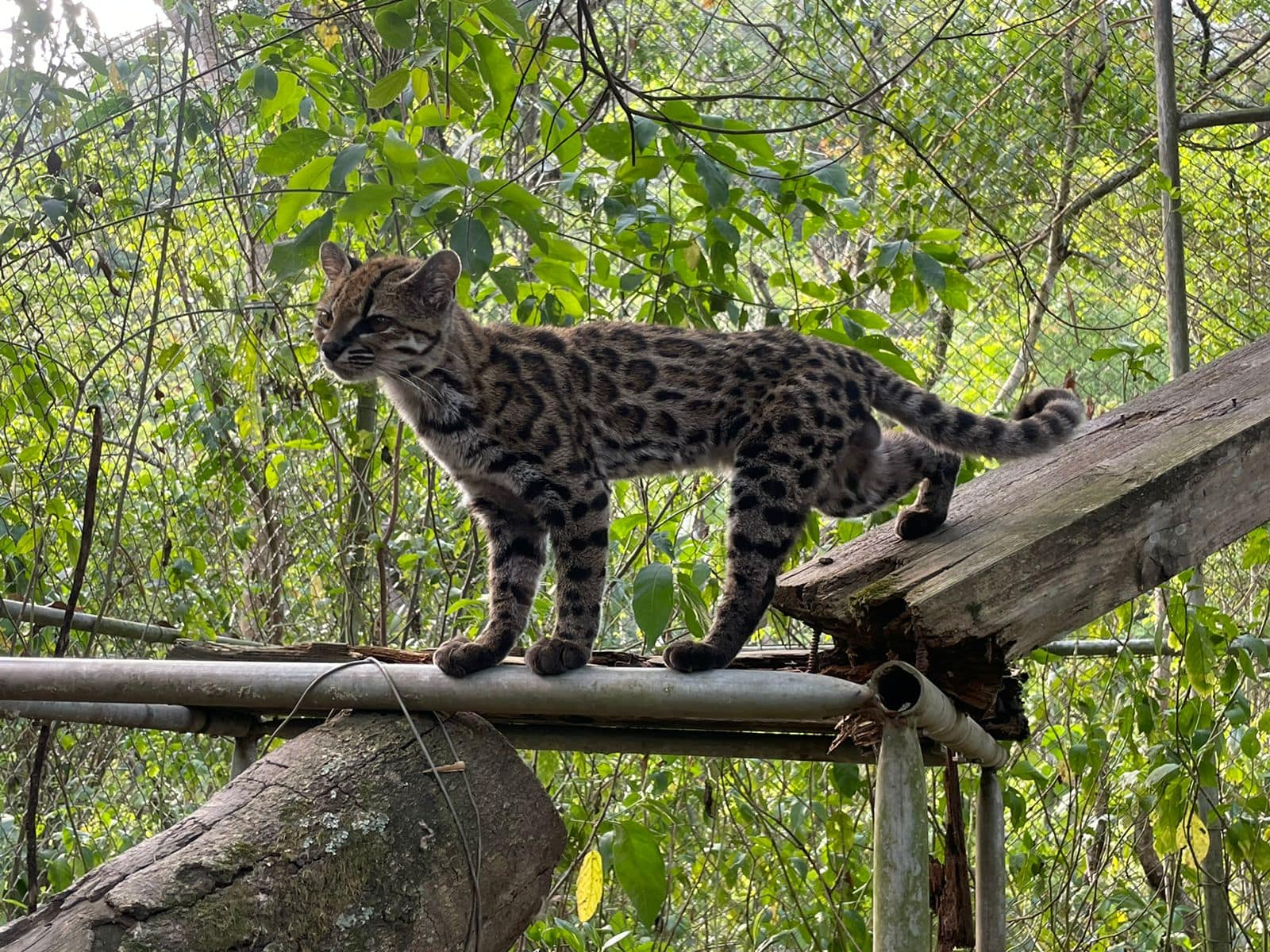
Tigrino, the male cat at a Bolivian sanctuary that scientists identified as the first known Leopardus tilcayo.
Photo: Paola Nogales Ascarrunz, CC BY-SA 4.0, via Wikimedia Commons
A small spotted cat from the cloud forests of Bolivia has been identified as a species new to science, the first living cat species to be formally named and described in more than a century. Known locally as the tilcayo, it was given the scientific name Leopardus tilcayo in a paper published on September 17, 2026 in the journal Current Biology. The same work concluded that the South American animals known as tiger cats are five species, not three.
A cat smaller than a house cat
The tilcayo measures about 46 centimeters (18 inches) long and weighs around 1.4 kilograms (3 pounds), which makes it smaller than an average domestic cat. Study author Paola Nogales-Ascarrunz, a Bolivian biologist and National Geographic Explorer, describes its fur as light brown with irregularly shaped rosettes across the body.
It lives in the Yungas, a mountainous region on the eastern slope of the Andes where the forest is often wrapped in cloud. Very little is known about its biology. Remains of small rodents found in scat suggest they are part of its diet, and camera-trap images suggest it may be more active at night. How it reproduces, and what hunts it, are still unknown.
How a sanctuary cat led to the discovery
The story began with a male cat that a local resident found as a kitten and took for a domestic cat. He was taken to the La Senda Verde animal sanctuary in Bolivia and became known as Tigrino. According to National Geographic, Nogales-Ascarrunz got a call from the sanctuary in 2017 about what they described as a weird cat with a small, scrunched-up face, short rounded ears and long whiskers. As he grew, his behavior showed that he was not a house cat. BBC Newsround reported that he is now about 10 years old.
Tigrino did not match the descriptions of tiger cats, which were mostly based on animals from Brazil.
This made us wonder, what tiger cat do we actually have in Bolivia?
Nogales-Ascarrunz told Reuters that question started the investigation. She had also heard of sightings of small wild cats elsewhere in the Yungas that no scientist had looked into.
More cat news
- Cats and Owners Show Matching Oxytocin Patterns, Japanese Study Finds
- Most Older Cats Develop Several Age-Related Conditions, Long-Running UK Study Finds
- Nepal Tests Lab-Made Scent Markers to Keep Tigers and Leopards Away From Livestock
- Kazakhstan Releases a Tiger in Bid to Restore the Caspian Tiger's Lost Range
Comments (0)
Join the conversation
Sign up to share your thoughts.
Loading comments...