How Many Cat Breeds Are There? 40 to 70+ (It Depends Who You Ask)
The answer depends on who you ask, and the real number is more complicated than you think

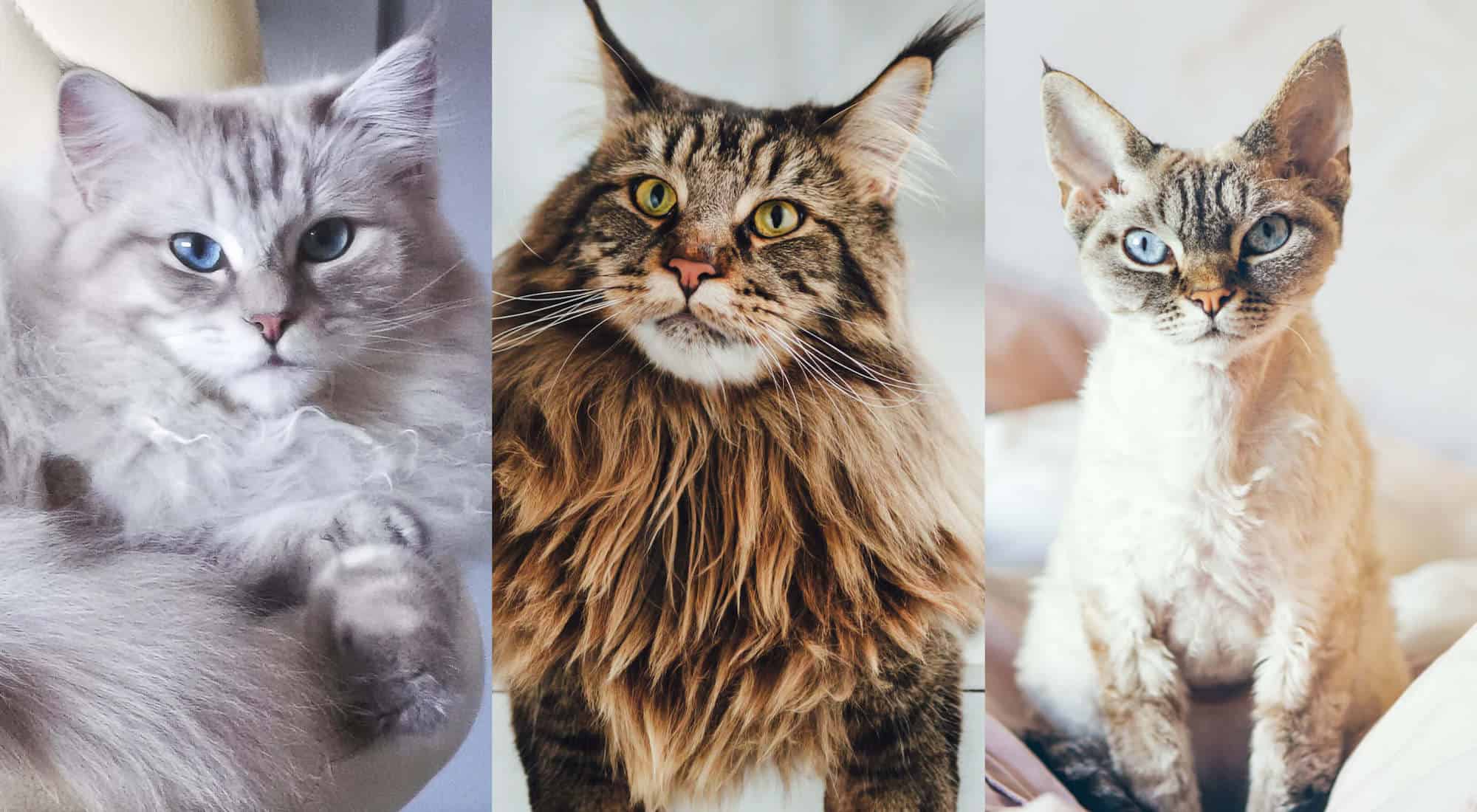
If you have ever tried to count cat breeds, you have probably run into a frustrating problem. You look it up and one source says 45. Another says 73. Another says over 100. A fourth says it does not matter because 95 percent of cats are not pedigreed anyway. So what is the actual number?
The honest answer is that there is no single number, and the reason there is no single number is that there is no single authority that decides what counts as a cat breed. Unlike dogs, where the American Kennel Club is the dominant registry in the United States and most people accept its list as the standard, cats have multiple major registries around the world, and they do not agree. Each registry has its own rules, its own standards, and its own opinion on which breeds deserve recognition.
This article is going to walk through the actual numbers from each major registry, explain why they disagree, cover how a breed goes from an idea to an officially recognized standard, and give you a picture of the cat breed landscape that is a lot more interesting than a single number would suggest.
The short answer
Depending on which registry you ask, there are between 40 and 73 recognized cat breeds in the world. The Cat Fanciers' Association, the oldest and most well-known registry in the United States, recognizes 45 breeds. The International Cat Association, the largest registry by breed count, recognizes 73 breeds. The Fdration Internationale Fline, the major European registry, recognizes about 50. The Governing Council of the Cat Fancy in the UK recognizes 40. The World Cat Federation, based in Germany, recognizes about 69.
If you take the union of all breeds recognized by at least one major registry, you get a number somewhere around 90 to 100 distinct breeds. But that number includes breeds that only one registry accepts, breeds that are in preliminary recognition stages, and breeds where one registry counts the long-haired and short-haired versions as separate breeds while another counts them as one. So the real answer is somewhere between 40 and 100, depending on how you count, and the most commonly cited number in casual conversation is around 70 to 75.
Why the registries disagree
To understand why the numbers are so different, you need to understand what a cat registry actually does and why different registries make different choices. A cat registry is an organization that maintains pedigrees, sets breed standards, and sanctions cat shows. There are several major registries around the world, and each one operates independently.
The biggest source of disagreement is how registries handle coat length. TICA, the International Cat Association, tends to recognize long-haired and short-haired varieties of the same breed as separate breeds. So where CFA sees one American Curl, TICA sees two: the American Curl Shorthair and the American Curl Longhair. Where CFA sees one Scottish Fold, TICA sees the Scottish Fold and the Scottish Fold Longhair, sometimes called the Highland Fold. This single difference in counting method accounts for a large chunk of the gap between CFA's 45 and TICA's 73.
Another source of disagreement is which breeds a registry accepts at all. CFA recognizes the Ragamuffin, for example, while TICA does not. TICA recognizes the Bengal, the Savannah, the Munchkin, the Peterbald, the Khao Manee, and several other breeds that CFA either does not recognize or has only recently begun to accept. Some of these breeds are controversial. The Savannah, for instance, is a hybrid between a domestic cat and a wild African serval, and some registries decline to recognize hybrid breeds on ethical or welfare grounds. The Munchkin, with its short legs caused by a genetic mutation similar to the one that produces dachshund dogs, is another breed that some registries accept and others do not, due to concerns about spinal and joint health.
A third source of disagreement is the recognition process itself. Some registries are more willing to accept new breeds quickly, while others are more conservative. TICA is generally seen as the most open to new breeds, with a multi-stage process that allows breeds to progress from experimental status to full championship over time. CFA is more conservative, requiring a longer track record, more breeders, more registered cats, and a two-thirds board vote for full championship status. This means that at any given time, TICA's list is longer because it includes breeds that are still working their way through CFA's slower process.
The five major registries and their counts
Let us look at each of the major registries individually, because the differences between them tell you a lot about how the cat world works.
The Cat Fanciers' Association (CFA) - 45 breeds
The Cat Fanciers' Association was founded in 1906. It recognizes 45 pedigreed cat breeds, but recognition and championship eligibility are different stages: breeds move through CFA's advancement process before becoming eligible for championship competition. CFA records the Lykoi's advancement to championship status in 2023 and the Toybob's advancement in 2025, beginning with the 2025-26 show season. Neither breed should be described as still awaiting championship status.
CFA is known for being conservative and selective. It requires that a new breed have at least 25 breeders working with it, at least 100 cats registered, and a written breed standard before it will even consider advancement to championship status. The final step requires a two-thirds affirmative vote from the CFA Board, which is a high bar. This means CFA's list changes slowly, and breeds that are accepted are well-established.
CFA also has over 2 million registered cats and 67,000 registered catteries, making it the largest cat registry in the world by total registrations. Each year, CFA publishes its list of the most popular breeds based on registration data. For 2026, based on 2025 registrations, the top 10 were Maine Coon, Ragdoll, Persian, Exotic, Devon Rex, Abyssinian, British Shorthair, Siberian, American Shorthair, and Russian Blue. The Maine Coon has held the number one spot for two years running, which is a significant shift from the long reign of the Persian and the Exotic at the top of the list.
The International Cat Association (TICA) - 73 breeds
The International Cat Association was founded in 1979 and is the fastest-growing cat registry in the world. It recognizes 73 cat breeds, the most of any major registry. TICA's website describes these as 73 cat breeds, each with a unique set of characteristics, mannerisms, and aesthetics. The organization also has additional breeds in various stages of the recognition process, so the number continues to grow.
TICA is more open than CFA to new and unusual breeds. It was the first registry to allow household cats of unknown ancestry to compete for the same titles and awards as pedigreed cats, which is a significant philosophical difference from CFA. TICA also recognizes breeds that CFA does not, including the Bengal, the Savannah, the Munchkin, the Peterbald, the Pixiebob, the Scottish Straight, the Snowshoe, the Thai, the Australian Mist, the Burmilla Longhair, the Chaussie, the Khao Manee, the Kurilian Bobtail, the Nebelung, the Minuet (formerly called the Napoleon), and others.
As mentioned earlier, TICA also counts long-haired and short-haired varieties of the same breed separately in many cases, which inflates its number relative to CFA. If you merged the long-haired and short-haired variants that CFA counts as one breed, TICA's number would come down significantly, though it would still be higher than CFA's due to the additional breeds it recognizes.
The Fdration Internationale Fline (FIFe) - about 50 breeds
FIFe is the major European cat registry, founded in 1949. It recognizes approximately 50 breeds, though the exact number fluctuates as new breeds are added to preliminary recognition and others advance. FIFe subdivides its recognized breeds into categories, and it has a multi-stage recognition process similar to CFA's but with its own criteria.
FIFe is known for being relatively conservative on hybrid breeds. It does not recognize the Savannah, for example, due to concerns about the welfare implications of crossing domestic cats with wild servals. It also has different rules about outcrossing, coat colors, and breed standards than the American registries, which means some breeds look slightly different in FIFe shows than they do in CFA or TICA shows.
The breeds FIFe has recognized the longest, since its founding in 1949, include the Abyssinian, Chartreux, European, Manx, Persian, Russian Blue, Sacred Birman, and Siamese. More recently, FIFe has given preliminary recognition to breeds like the Bombay and the Lykoi, showing that even conservative registries do add new breeds over time.
The Governing Council of the Cat Fancy (GCCF) - 40 breeds
The GCCF is the oldest cat registry in the world, established in 1910, and it is the largest organization that registers pedigree cats in the United Kingdom. It recognizes 40 different cat breeds, making it the most conservative of the major registries in terms of breed count. The GCCF registers around 20,000 pedigree cats each year, and the most popular breeds registered are the British Shorthair, the Ragdoll, and the Maine Coon.
The GCCF operates a genetic-based register and emphasizes safeguarding the health and integrity of all breeds it recognizes. It is a member of the World Cat Congress, which is the international body that coordinates among the major registries. The GCCF also maintains a list of unrecognized breeds, which are breeds that exist but have not yet met the GCCF's criteria for full recognition.
The World Cat Federation (WCF) - about 69 breeds
The WCF was founded in 1988 in Rio de Janeiro and is now based in Germany. It is an international registry with a strong presence in Asia, Latin America, and Eastern and Western Europe, with 370 member organizations worldwide. The WCF creates breed standards for about 68 to 69 pedigreed breeds, though its website lists 111 breeds as recognized or accepted as of 2020, which includes preliminary and provisional breeds.
The WCF organizes breeds into categories by coat length: longhair, semilonghair, shorthair, and a separate category for the Sphynx and other hairless breeds. It also has its own EMS code system for identifying breeds, colors, and patterns, which is used by breeders and show judges. The WCF is generally more open to breeds from non-Western origins, including breeds from Russia, Asia, and Latin America, which gives it a broader international flavor than the American or UK registries.
How a new cat breed gets recognized
Now that you know how many breeds each registry recognizes, you might be wondering how a breed gets on the list in the first place. The process is long, involved, and different at each registry, but the general pattern is similar across all of them. Let us walk through CFA's process as an example, since it is the most well-documented.
It starts with a breeder or group of breeders who have a cat or group of cats with distinctive, heritable characteristics. These might be a natural mutation, like the hairless gene that produced the Sphynx, or a deliberate crossbreeding program, like the one that produced the Bengal by crossing domestic cats with Asian leopard cats. The breeders develop a written standard describing what the ideal cat of this breed should look like, and they begin breeding toward that standard.
At CFA, the first official step is acceptance into the Miscellaneous class. This requires the breed to have a written standard, an active breed committee, and a minimum number of cats and breeders. The breed can be exhibited at shows but does not compete for championships. From there, the breed can advance to Provisional status, which requires more breeders, more registered cats, and a simple majority vote from the CFA Board. In Provisional, the breed gets a platform to exhibit at more shows and receive feedback from judges.
The final step is advancement to Championship status. This is the hardest step. It requires at least 25 breeders working with the breed, at least 100 cats registered, and a two-thirds affirmative vote from the CFA Board. The two-thirds threshold is intentionally high, because CFA wants to make sure that a breed is well-established, genetically healthy, and breeding true to standard before it grants full recognition. The whole process can take a decade or more.
TICA has a similar multi-stage process but is generally faster and more flexible. Breeds can enter at the Registration stage, advance to Preliminary New Breed, then to Advanced New Breed, and finally to Championship status. TICA also has a New Trait category for cats that have a distinctive trait, like a new coat type or ear shape, that might eventually become the basis for a new breed. The Lykoi, a breed that looks like a werewolf due to a partial hairlessness mutation, went through this process at both TICA and CFA, achieving championship status at CFA in 2023.
Natural breeds vs. man-made breeds
Not all cat breeds were created the same way. There is a meaningful distinction between natural breeds and man-made breeds, and understanding it helps explain why the cat breed landscape looks the way it does.
Natural breeds are breeds that developed on their own, without deliberate human breeding, in a specific geographic region. These cats adapted to their local environment over centuries or millennia, and their distinctive appearance is the result of natural selection and genetic isolation. The Egyptian Mau is a natural breed, considered the only naturally spotted breed of domestic cat, with a history that traces back to ancient Egypt. The Korat is a natural breed from Thailand, one of the oldest stable cat breeds in the world, described in the Tamra Maew, or Cat-Book Poems, a Thai manuscript dating from 1350 to 1767. The Siamese, the Russian Blue, the Turkish Angora, the Turkish Van, the Norwegian Forest Cat, and the Maine Coon are all considered natural breeds.
Man-made breeds, by contrast, were deliberately created by breeders through selective breeding or crossbreeding. The Bengal was created by crossing domestic cats with Asian leopard cats. The Savannah was created by crossing domestic cats with African servals. The Chausie was created by crossing domestic cats with jungle cats. The Toyger was designed to look like a miniature tiger by crossing specific tabby cats with Bengal cats. The Serengeti was developed to look like a wild serval but without using any actual serval blood, by crossing Bengals with Oriental Shorthairs. The Exotic Shorthair was created by crossing Persians with American Shorthairs to get a Persian-like cat with a short, easy-care coat.
Some breeds fall in between. The Persian is ancient in origin but has been extensively modified by selective breeding over the past 150 years, particularly in the United States, where the flat-faced or peke-faced Persian became the show standard. The British Shorthair was originally a natural landrace cat from Britain but was deliberately developed into a standardized breed by Victorian-era cat fanciers. The line between natural and man-made is not always clean, and many breeds have elements of both.
Hybrid breeds and the controversy around them
One of the most contentious areas of the cat breed world is hybrid breeds. These are breeds created by crossing domestic cats with wild cat species. The most well-known are the Bengal, which crosses the Asian leopard cat with a domestic cat, and the Savannah, which crosses the African serval with a domestic cat. Others include the Chausie, from the jungle cat, and the Caracat, from the caracal.
The controversy around hybrid breeds is real and worth understanding. Organizations like FOUR PAWS, an international animal welfare organization, have raised concerns about the ethics of breeding hybrid cats. The concerns include welfare issues for the wild parent cats, behavioral challenges in early-generation hybrids, which can be more aggressive and less adaptable to indoor life than later generations, and the broader question of whether it is appropriate to create pets by crossing wild and domestic species.
Different registries handle this differently. TICA recognizes the Bengal, the Savannah, and the Chausie. CFA recognized the Bengal in 2018 but does not recognize the Savannah. FIFe does not recognize the Savannah and has restrictions on other hybrids. The GCCF does not recognize the Savannah. This is one of the clearest examples of how the registries disagree based on philosophical differences, not just counting methods.
It is worth noting that later-generation Bengals and Savannahs, typically F4 and beyond, are generally considered fully domestic in temperament and behavior. The wild ancestry is many generations back, and the cats behave like normal domestic cats with distinctive appearances. The welfare concerns are primarily about the early-generation breedings and the wild parent cats, not about the pets that end up in homes.
Coat mutations and the breeds they created
A surprising number of cat breeds exist because of a single genetic mutation that affected the coat. These mutations appeared spontaneously in the general cat population, were noticed by breeders, and were then developed into distinct breeds through selective breeding. Understanding these mutations helps explain why there are so many breeds that look distinctive but are genetically very similar.
The most famous coat mutation is hairlessness. The Sphynx, the most well-known hairless breed, has a fine layer of peach-fuzz-like hair but appears hairless. The gene responsible is a recessive mutation in the KRT71 gene, which controls hair follicle development. The same gene, when mutated differently, produces the curly coat of the Devon Rex. So the Sphynx and the Devon Rex are related at the genetic level, even though they look completely different.
Other rex mutations produce curly coats in different breeds. The Cornish Rex has a mutation that produces a tight, wavy coat with no guard hairs. The Selkirk Rex has a dominant mutation in KRT71 that produces a plush, curly coat. The LaPerm has a dominant rex mutation that produces a soft, curly coat that can range from wavy to tight ringlets. The Tennessee Rex is a newer breed with a recessive rex mutation. Each of these mutations appeared in a different cat, in a different place, and was developed into a separate breed.
Coat length is another major source of breed distinction. The long-hair gene is recessive, and long-haired cats appear spontaneously in any cat population. Some breeds, like the Maine Coon, the Norwegian Forest Cat, and the Siberian, are naturally long-haired, having evolved in cold climates where long fur provided survival advantage. Others, like the Persian, were deliberately bred for long hair. And many breeds have both long-haired and short-haired versions, which, as we discussed earlier, is one of the main reasons TICA's breed count is higher than CFA's.
Ear shape is another mutation that created breeds. The American Curl has ears that curl backward due to a dominant mutation. The Scottish Fold has ears that fold forward due to a different dominant mutation, which is also linked to a cartilage disorder that can cause joint problems. The Elf cat, a newer breed, combines the Sphynx hairlessness with the American Curl ear curl. These are all examples of single mutations being developed into distinct breeds.
Why dogs have more breeds than cats
If you are a dog person as well as a cat person, you might have noticed that there are a lot more dog breeds than cat breeds. The AKC recognizes about 200 dog breeds, and the Fdration Cynologique Internationale, the international dog registry, recognizes over 300. Why the difference?
The answer comes down to history and purpose. Dogs have been bred for thousands of years to perform specific jobs. There are herding dogs, hunting dogs, guarding dogs, pulling dogs, retrieving dogs, and ratting dogs, each with a body type and temperament suited to its task. A border collie that herds sheep and a greyhound that hunts by sight are shaped by completely different selection pressures, and over centuries, those pressures produced dramatically different animals. The genetic variation between dog breeds is enormous, comparable to the variation between different species.
Cats, by contrast, were never bred for jobs. They had one job, which was pest control, and they were good at it without any selective breeding. As a Scientific American article on cat evolution noted, the genetic variation between domestic cat breeds is very slight, comparable to that seen between adjacent human populations, such as the French and the Italians. The wide range of sizes, shapes, and temperaments seen in dogs, from the Chihuahua to the Great Dane, simply does not exist in cats. A Maine Coon and a Singapura are both recognizably cats, and their genetic differences are minor. A Great Dane and a Chihuahua are barely recognizable as the same species.
Most cat breeds were developed within the past 150 years, mainly in Europe and the United States, and they were bred almost entirely for aesthetic traits rather than for specific jobs or behaviors. This is why cat breeds differ mainly in coat length, coat color, coat texture, face shape, and body type, rather than in the dramatic functional ways that dog breeds differ. It is also why the total number of cat breeds is lower than the number of dog breeds. There was less time, less selective pressure, and less reason to create as many distinct types.
The 95 percent that are not pedigreed
Here is a fact that puts all of this breed counting in perspective. According to the CFA, around 95 percent of pet cats are not pedigreed. In the UK, the GCCF's data suggests that 89 to 92 percent of cats are of non-pedigree lineage. Worldwide, the estimate is even higher, at 98 to 99 percent. The vast majority of cats on this planet are not any breed at all. They are just cats.
These non-pedigreed cats are variously called domestic shorthairs, domestic longhairs, moggies, or random-bred cats. They are not mixed breeds in the way that a labradoodle is a mixed breed, because they are not crosses between known pedigreed parents. They are simply the result of random breeding within the general cat population, which is what cats have been doing for thousands of years. A study published in 2021 in the journal Animals analyzed the genetics of UK non-pedigree cats and found that random-bred cats are distinct from mixed or cross breeds, as the latter names suggest derivation from pedigree animals. Most random-bred cats are just cats, with no particular breed ancestry.
This is worth keeping in mind when you read about breed counts. Whether there are 40 or 73 or 100 recognized breeds, the truth is that the overwhelming majority of the world's cats belong to none of them. Your average tabby cat sleeping on your couch is not a failed example of a breed. They are the real thing, the original model, the cat as it has existed for thousands of years. The breeds are the exception, not the rule.
The most popular breeds right now
Even though most cats are not pedigreed, the breeds that people do choose tell us something about what people value in cats. The CFA's annual popularity rankings, based on registration data, give us a picture of which breeds are trending.
For 2026, based on 2025 registrations, the top 10 CFA breeds were Maine Coon, Ragdoll, Persian, Exotic, Devon Rex, Abyssinian, British Shorthair, Siberian, American Shorthair, and Russian Blue. The Maine Coon took the top spot for the second year in a row, which is notable because it dethroned the Ragdoll, which had been number one for several years before that. The Persian, which was the most popular breed for decades, has settled into third place. The Exotic, sometimes called the lazy person's Persian because it has the Persian look without the grooming demands, holds steady at fourth.
In the UK, the GCCF's registration data tells a different story. The most popular breeds there are the British Shorthair, the Ragdoll, and the Maine Coon. The British Shorthair's dominance in the UK makes sense, as it is a British native breed with a long history in that country. The differences between the US and UK popularity lists show that breed preferences are partly cultural and partly driven by what is available and well-known in each region.
Regional breeds you have probably never heard of
One of the things that makes counting cat breeds complicated is that many breeds are regional, recognized by one registry but not others, and virtually unknown outside their home country. Here are a few examples that show how diverse the cat breed world really is.
The Aegean is a natural breed from Greece, one of the few cat breeds that originated in that country. It is a semi-longhaired cat that developed naturally on the Greek islands. It is not recognized by CFA but is recognized by TICA.
The Australian Mist is a breed developed in Australia by crossing Burmese, Abyssinian, and domestic shorthair cats to create a short-haired cat with a spotted or marbled coat and a gentle temperament. It is recognized by TICA but not CFA.
The Kurilian Bobtail is a natural breed from the Kuril Islands, a chain of islands between Russia and Japan. It has a distinctive short, pom-pom-like tail, similar to the Japanese Bobtail but with a different genetic basis. It is recognized by TICA and WCF.
The Khao Manee is a natural breed from Thailand, known for its white coat and often odd-colored eyes, one blue and one gold. It is one of the newest breeds accepted by CFA, and it is also recognized by TICA.
The Thai is a breed that represents the traditional, old-style Siamese cat, with a more moderate body type than the modern show Siamese. It is recognized by TICA but not by CFA, which considers it part of the Siamese breed.
The Transylvanian is a breed from Romania, recognized by the WCF. It is a large, muscular cat with a semi-longhaired coat, and it is virtually unknown outside of Eastern Europe.
The German Longhair, or Deutsch Langhaar, is a natural breed from Germany recognized by the WCF but not by most other registries. It is a large, long-haired cat similar in type to the European Longhair.
How the number keeps changing
One of the reasons there is no fixed answer to how many cat breeds there are is that the number keeps changing. New breeds are being developed and recognized all the time. The Lykoi achieved CFA championship status in 2023. The Toybob achieved CFA championship status for the 2025-26 show season. TICA adds new breeds to its registry regularly, and several breeds are currently in the pipeline at various stages of recognition.
At the same time, breeds occasionally disappear. A breed may fall out of favor, with too few breeders to maintain a healthy population, and the registry may move it to inactive status. This does not happen often, because registries are reluctant to delist breeds that have been recognized, but it does happen. More commonly, a breed's numbers may dwindle to the point where it is technically still recognized but rarely seen at shows.
The trend over the past few decades has been toward more breeds, not fewer. As cat ownership has grown globally, and as cat fancy has spread to new regions, particularly in Asia and Latin America, new breeds from those regions are being developed and seeking recognition. The WCF, with its strong international presence, has been particularly active in recognizing breeds from non-Western countries. If you check the breed count in five years, it will almost certainly be higher than it is today.
Does breed matter for your cat?
If you have a pedigreed cat, the breed tells you something about what to expect in terms of appearance, and something about temperament, though temperament varies a lot within breeds. Maine Coons are generally friendly and sociable. Persians are generally calm and quiet. Siamese are generally vocal and demanding. Bengals are generally high-energy and intelligent. These are tendencies, not guarantees, and individual cats vary more than the breed descriptions suggest.
If you have a non-pedigreed cat, which is the far more likely scenario, the breed question is mostly irrelevant. Your cat is a domestic shorthair or domestic longhair, which is a category, not a breed. This does not mean your cat is inferior. It means your cat is a member of the vast majority of cats on this planet, and it has the advantage of genetic diversity, which tends to produce healthier animals. Pedigreed cats, like all purebred animals, are more susceptible to certain genetic conditions because of their smaller gene pools. Egyptian Maus can carry pyruvate kinase deficiency. Persians can have polycystic kidney disease. Maine Coons can carry a gene for hypertrophic cardiomyopathy. These are not reasons to avoid pedigreed cats, but they are reasons to buy from breeders who test for genetic conditions and breed responsibly.
For most cat owners, the breed is a matter of curiosity, not necessity. A cat is a cat. Whether yours is a pedigreed Maine Coon or a random-bred tabby from the shelter, the relationship you build with them is the same. The breeds are interesting, and the history of how they were developed is fascinating, but the cat on your lap does not care what registry says about them. They care that you are warm and that you have food.
The bottom line
So how many cat breeds are there? The most accurate answer is that it depends on who is counting and how they count. The Cat Fanciers' Association says 45. The International Cat Association says 73. The Fdration Internationale Fline says about 50. The Governing Council of the Cat Fancy says 40. The World Cat Federation says about 69. If you combine all the breeds recognized by at least one major registry, you get somewhere around 90 to 100, but that number includes duplicates, preliminary breeds, and counting-method differences.
If you want a single number for casual conversation, somewhere around 70 is a reasonable answer, since that is close to TICA's count and TICA is the most inclusive major registry. But if you want to be accurate, you should say that the number depends on the registry, explain why, and let people draw their own conclusions. The fact that there is no single answer is not a flaw in the system. It is a reflection of the fact that the cat world is diverse, international, and full of people who care deeply about different aspects of what makes a cat a cat.
And remember, whatever number you settle on, it represents a tiny fraction of the world's cats. The other 95 to 99 percent are just cats, doing what cats do, without a registry or a standard or a breed name. They are the original model, and they are doing just fine.
Cat breed FAQ
How many cat breeds are there?
There is no single number. The Cat Fanciers' Association recognizes 45 breeds, the International Cat Association 73, the major European registry FIFe about 50, the Governing Council of the Cat Fancy 40 and the World Cat Federation about 69. Counting every breed that at least one major registry accepts gives roughly 90 to 100, and the figure most people quote in casual conversation is 70 to 75.
Which registry recognizes the most cat breeds?
The International Cat Association (TICA) recognizes the most, at 73. Part of the gap comes from TICA counting long-haired and short-haired versions of a breed, such as the American Curl, as separate breeds, and TICA is also generally the most open to recognizing new breeds.
Why do cat registries disagree about the number of breeds?
Three things drive it: how each registry counts coat length, which breeds it accepts at all (hybrid breeds like the Savannah and the short-legged Munchkin divide registries), and how quickly it is willing to recognize new breeds.
What is the most popular cat breed?
In the CFA's 2026 rankings, based on 2025 registrations, the Maine Coon took the top spot for the second year in a row, followed by the Ragdoll and the Persian. In the UK, the GCCF's registration data puts the British Shorthair, the Ragdoll and the Maine Coon at the top.
Is a tabby or domestic shorthair a cat breed?
No. Domestic shorthair and domestic longhair are categories for non-pedigreed cats, and tabby describes a coat pattern. According to the CFA, around 95 percent of pet cats are not pedigreed, and worldwide estimates are 98 to 99 percent, so most cats belong to no breed at all.
Keep reading
If you found this helpful, you might also like our guides on why large breeds need kitten food longer, how breed affects lifespan and whether catnip affects all breeds.
Further reading
Love learning about cats? Adopt a virtual cat pet and level it up by joining our community.
Comments (0)
Join the conversation
Sign up to share your thoughts.
Loading comments...